
In one sentence
A comforter is a finished, filled top layer used on its own. A duvet is normally an insert placed inside a removable duvet cover. Choose the comforter for one-piece simplicity and the duvet for easier surface washing and style changes.
Comforter vs duvet at a glance
| Decision | Comforter | Duvet system |
|---|---|---|
| Construction | One finished, quilted piece | A filled insert plus removable cover |
| Routine cleaning | The whole comforter must fit the machine or cleaner | Wash the cover regularly; clean the insert less often |
| Changing the look | Replace or layer over the complete comforter | Swap only the cover |
| Warmth | Depends on fill amount and construction | Also depends on the insert; the cover adds only a little |
| Setup | Put it directly on the bed | Fasten insert to cover and redistribute after washing |
| Best fit | Low-fuss, ready-made bedding | Flexible styling and easier surface care |
The decision in two profiles
Choose a comforter if…
You want one piece that comes off the bed and goes back on without ties, buttons or aligning corners. It is the simpler setup, especially when your washer can handle the full size.
Choose a duvet if…
You want to wash the fabric touching your body more often, change color without replacing the insert or protect a costly down or wool fill from everyday wear.
What a comforter is
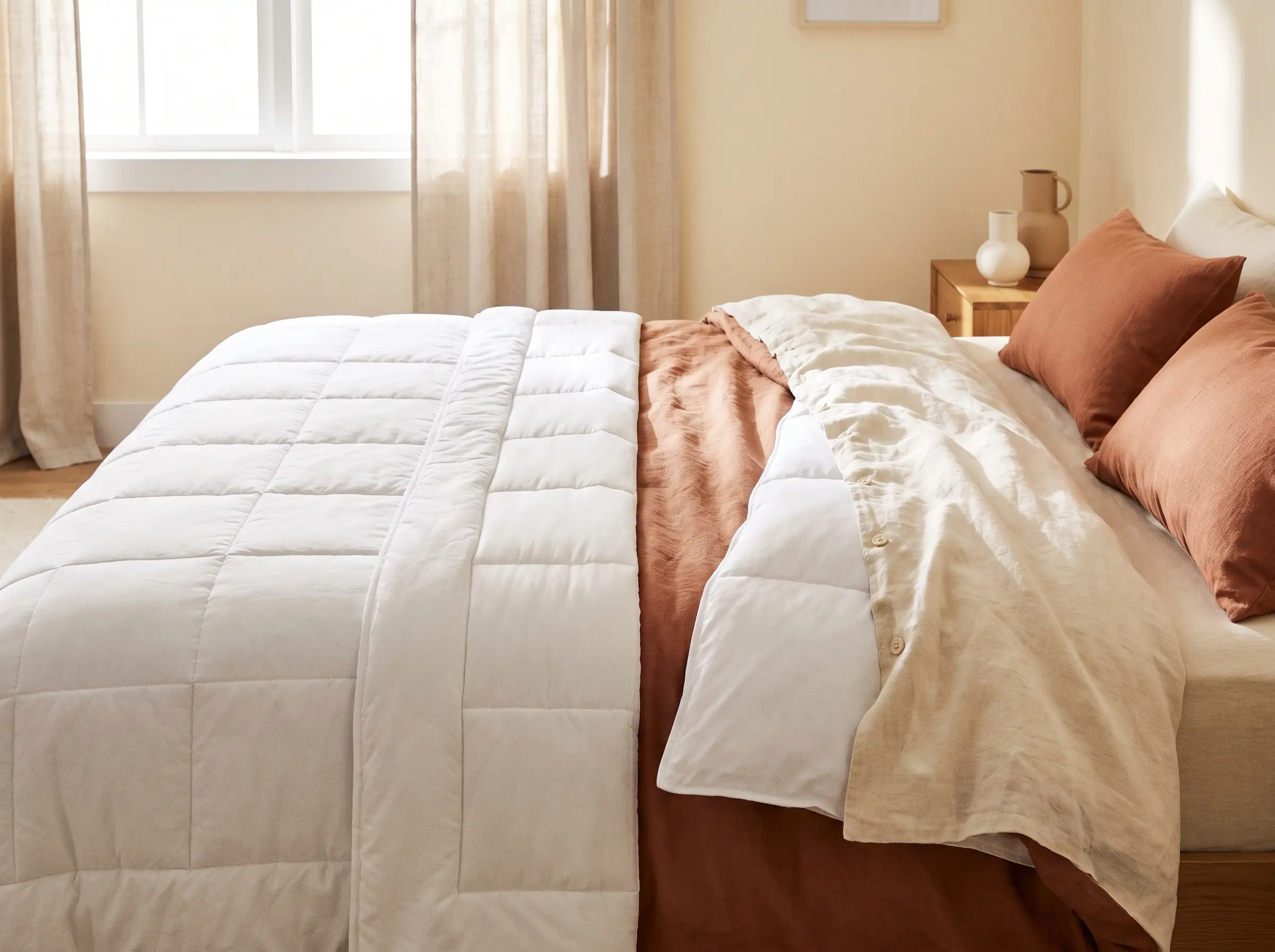
A comforter is a filled blanket with its outer fabric and internal batting permanently joined by stitching. It is sold as a finished bed layer, often in a color or print, and does not require another cover. Down, polyester, wool and cotton can all appear inside; the word comforter describes the format, not the fill.
Because the shell is not removable, cleaning means washing or professionally cleaning the entire item. That is straightforward for a washable Twin synthetic comforter and much less convenient for a King down or wool model. Check machine capacity and the sewn-in label before treating easy care as a given.
What a duvet and duvet insert are
In US retail language, a duvet system has a filled insert and a separate cover. The insert resembles a plain comforter and often has corner loops. Ties, buttons or snaps inside the cover connect to those loops so the insert does not collapse into one corner.
The cover functions like a very large pillowcase: it provides the visible color and the surface you wash most often. The insert supplies nearly all the insulation. Changing from cotton percale to linen may alter feel and breathability, but it does not turn a lightweight insert into a winter insert.
Which is warmer? Format is not the answer
A duvet is not automatically warmer than a comforter. Total fill weight, fill type, loft, stitching and room temperature determine insulation. A high-fill winter comforter can be warmer than a lightweight duvet insert; a thin cotton insert can be cooler than a lofty synthetic comforter.
Compare warmth tiers such as lightweight, all-season and ultra-warm, then verify what the maker means. Down fill power describes loft per ounce but not total warmth. Hot sleepers should prioritize lower fill weight and breathable shells; cold sleepers need adequate insulation rather than simply choosing the word duvet.
- Fill and fill weight determine more than the label
- Baffle construction can reduce cold spots in lofty down
- A cover slightly changes feel but adds limited insulation
- Room temperature and personal heat matter
Cleaning, cost and long-term ownership
A duvet cover is easier to wash than a bulky insert, so the duvet system wins for frequent surface cleaning. It can also extend insert life by catching body oils, makeup and pet hair. The trade-off is regular removal, refitting and the upfront cost of buying both pieces.
A comforter may cost less as a complete bed solution, but replacing the color means replacing or covering the whole item. If it cannot fit your washer, commercial laundry costs can erase that initial advantage. Compare ownership around your real routine: washer size, pets, allergies, styling changes and willingness to handle corner ties.
Why the names are confusing
The vocabulary changes by country and retailer. In much of the UK, duvet refers to the filled bed layer used with a cover. In the US, duvet can mean the insert, the cover or the two-part system, while comforter usually means the finished one-piece layer. Australians commonly use doona.
Retailers also market some plain white comforters as duvet inserts because they include corner loops. Rather than trusting the title, inspect the construction: is a removable cover included, recommended or required; does the item have attachment loops; and is its shell designed to be visible?
Frequently asked questions
Why do Americans use comforters instead of duvets?
US shoppers use both. Comforters are common because they are sold as one finished piece with no cover to fit. Duvet systems are also widespread, especially for shoppers who want a washable cover or changeable look. Retail terminology—not a universal national preference—creates much of the confusion.
Can I use a regular comforter as a duvet insert?
Often yes, if it fits the cover and does not bunch excessively. Corner loops make attachment easier; without them, internal ties may not hold the comforter securely. Compare actual dimensions because duvet covers and comforter labels are not standardized.
Why do Americans call a duvet a comforter?
The terms overlap in US retail. A plain filled layer can be sold as a comforter when used alone or as a duvet insert when designed for a cover. Check whether the listing describes a removable cover, attachment loops and a finished outer shell.
Do hotels use a duvet or comforter?
Hotels use several systems, including duvet inserts with removable covers, comforters and layered sheets or coverlets. Laundering process and brand standards matter more than the category name, so a hotel-style appearance does not prove one specific construction.
Is a duvet warmer than a comforter?
Not inherently. Warmth comes mainly from fill type, total fill amount, construction and the selected warmth tier. Compare those specifications rather than assuming a duvet is warmer.
Which is easier to clean?
A duvet system is usually easier for routine cleaning because the cover is removable. The insert still needs periodic fill-specific care. A washable comforter can be simple too, provided it fits your machine.
Sources and editorial method
We checked definitions and practical distinctions against the sources below. Product recommendations live in separate buying guides with their own criteria and disclosures.
The bottom line
Choose the format around maintenance and styling; choose the actual product around fill, warmth, dimensions and care. A comforter minimizes setup. A duvet protects the insert and makes the visible layer easier to wash or replace.