
In one sentence
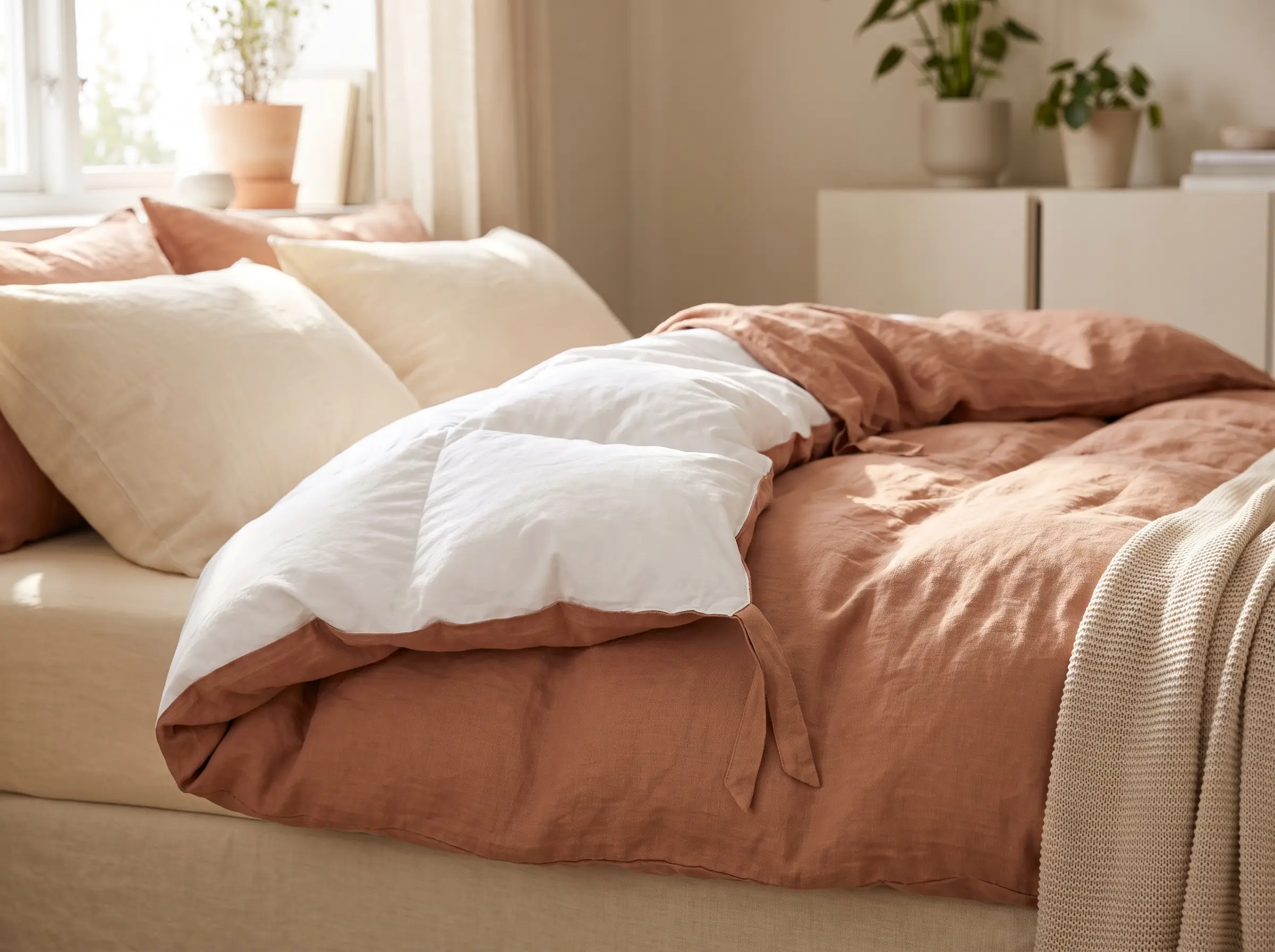
A duvet is a filled insert used inside a removable duvet cover. The insert provides warmth; the cover protects it and can be washed or restyled separately. In US stores, the insert may also be labelled a duvet insert or comforter.
A duvet has two working parts
The insert
A filled inner layer made with down, down alternative, wool, cotton or another fiber. Its fill amount and construction provide nearly all the warmth.
The cover
A removable fabric shell that closes around the insert. It protects the fill, creates the visible look and is the part cleaned most frequently.
How a duvet works
The insert sits inside the cover and the two layers move as one. Corner ties, loops, snaps or buttons connect them; the cover then closes along one edge. A correctly sized insert fills the corners without folding over itself or leaving large empty borders.
The insert is normally plain because it is not the decorative surface. The cover can be percale, sateen, linen or another washable fabric. You can change that cover while keeping the same insert, much as you change a pillowcase without replacing the pillow.
Is a duvet just a blanket?
It is a bed covering, but not usually a single blanket. Blanket commonly describes one woven or knitted layer. A duvet insert contains loose or battened fill held between two shells, creating more loft and insulation. The removable cover makes the complete duvet system two separate pieces.
Quilts and coverlets are generally thinner decorative layers with limited loft. Comforters are filled like duvet inserts but finished for use without a separate cover. These definitions overlap across brands, so construction and care instructions are more reliable than the product title.
What goes inside a duvet insert
Down offers high loft for relatively little weight. Down alternative can be easier to wash and avoids animal-derived fill. Wool feels flatter and heavier while handling moisture well. Cotton batting is breathable and gently weighted but less lofty. Each can be a duvet insert when the shell and attachment points are designed for a cover.
Choose warmth separately from material. Lightweight, all-season and winter labels are not standardized, so compare published fill weight, intended room conditions and your own tendency to sleep hot or cold. For down, fill power describes loft per ounce; it does not reveal total warmth by itself.
- Down: high warmth-to-weight and loft
- Down alternative: accessible and often washable
- Wool: steady warmth with gentle weight
- Cotton: flatter, breathable natural batting
Duvet size and fit
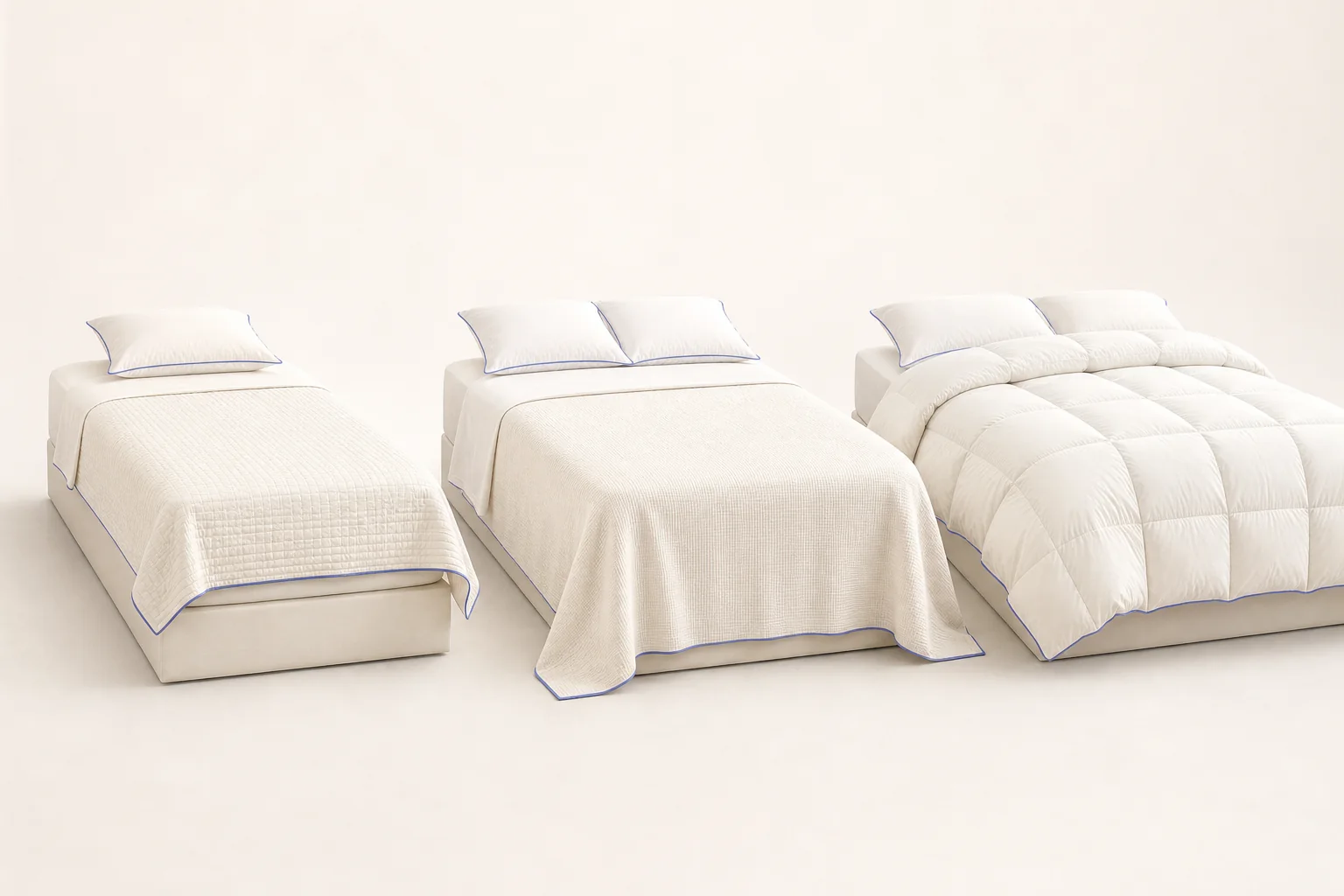
Match actual width and length rather than trusting Queen or King alone. Labels vary across makers, and some covers are deliberately smaller than their inserts to create a fuller appearance. Too much difference can bunch the insert; too little can leave loose corners.
Measure the mattress and decide how much side drop you want. Then compare both cover and insert dimensions. Corner loops should line up with the internal ties. A Full/Queen label is especially broad, so the inches matter more than the name.
How often a duvet needs cleaning
Wash the cover according to its label on a routine similar to other bed linens. The protected insert generally needs cleaning much less often, but spills, odor, pets, allergies and direct contact shorten the interval. Always follow the insert label because down, wool, cotton and synthetic fill require different methods.
A cover reduces wear but does not make the insert maintenance-free. Air it when appropriate, treat penetrating spills promptly and ensure the fill is completely dry after washing. If a large insert cannot move freely in your home machine, use suitable commercial capacity or professional care.
How to put a duvet inside its cover
- 01Turn the duvet cover inside out and spread it flat with the opening at the foot of the bed.
- 02Place the insert on top, align all four corners and fasten the cover's internal ties or snaps to the insert loops.
- 03Starting at the closed top edge, roll the cover and insert together toward the open end.
- 04Turn the cover opening around each end of the roll, close it, then unroll toward the head of the bed and shake the fill evenly into the corners.
Frequently asked questions
Is a duvet the same as a comforter?
They are similar filled bed layers, but a duvet normally means an insert used inside a removable cover. A comforter is finished for use on its own. Some US products can serve both roles, especially when they include corner loops.
What is the point of a duvet?
The removable cover protects the expensive or bulky insert, is easier to wash and lets you change the bed's appearance without replacing the fill. The insert can therefore be cleaned less often when household conditions allow.
Is a duvet just a blanket?
Not usually. A complete duvet is a filled insert plus removable cover. A blanket is generally one woven or knitted layer without a separate shell and loose fill.
Do you put a comforter inside a duvet cover?
You can when the comforter fits the cover and does not bunch. Corner loops help secure it. A purpose-built duvet insert is usually plain and sized for this role, while a decorative comforter may be intended to remain uncovered.
Do you sleep directly under a duvet?
You sleep under the covered insert. Whether you also use a top sheet is a personal and regional choice. The cover is the layer touching you and should be washed regularly according to its care label.
What is a duvet called in America?
US retailers commonly use duvet insert for the filled inner layer and duvet cover for the removable shell. Comforter usually means a filled piece used alone, although product naming overlaps.
Sources and editorial method
We checked definitions and practical distinctions against the sources below. Product recommendations live in separate buying guides with their own criteria and disclosures.
The bottom line
A duvet is a maintainable two-part bedding system: invest in the insert for the right warmth and fill, then choose the cover for feel, washing and style. Verify dimensions and attachment points before combining pieces from different brands.