
In one sentence
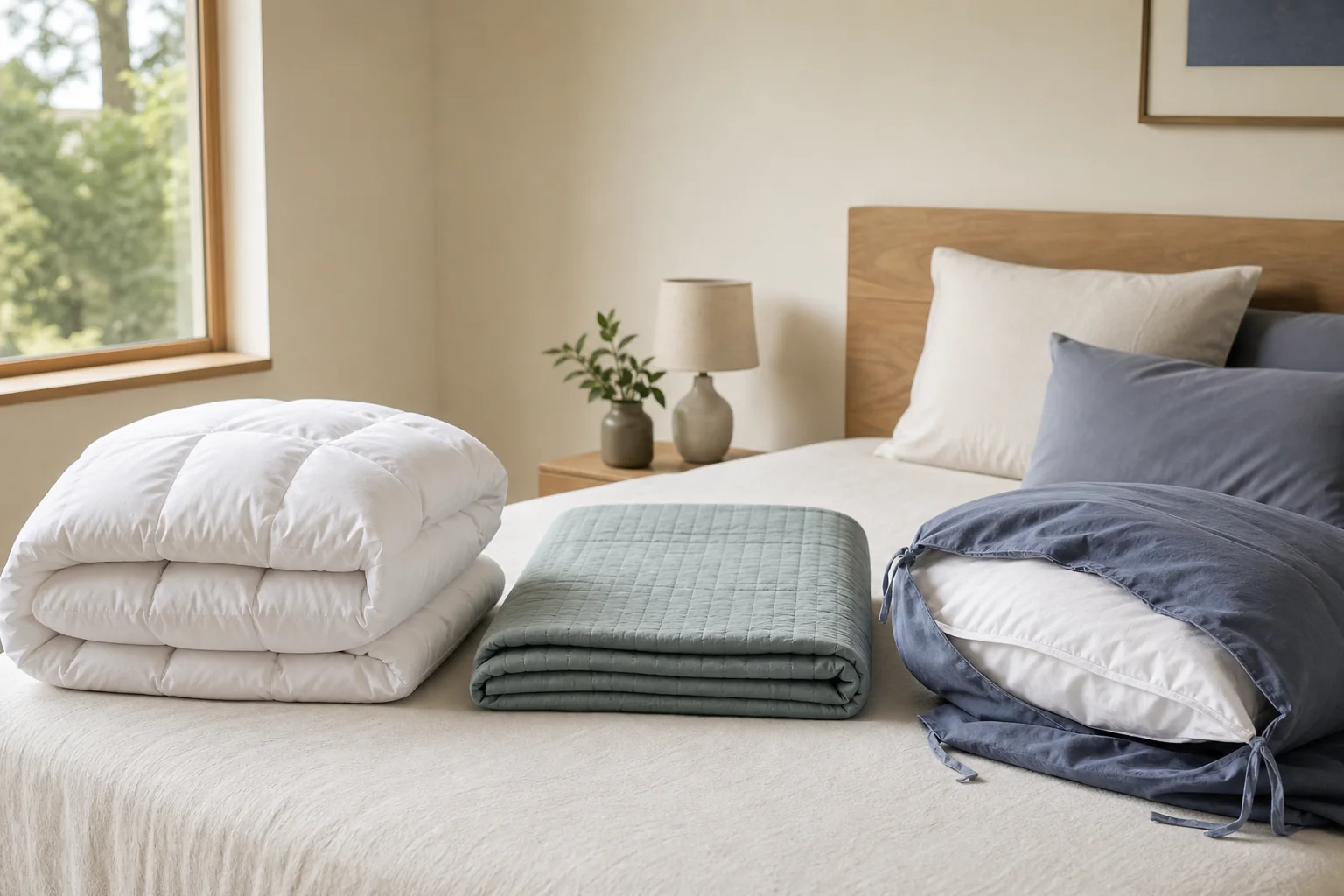
Choose a comforter for more loft and insulation; choose a quilt for a flatter, easier-to-layer bed covering. Material, batting weight and care label still matter more than the category name.
Comforter vs quilt at a glance
| Decision | Comforter | Quilt |
|---|---|---|
| Construction | Filled shell with noticeable loft | Three stitched layers with thin batting |
| Warmth | Usually warmer at comparable size | Usually lighter; useful for layering |
| Look | Puffy, soft silhouette | Flat, patterned or stitched texture |
| Cleaning | Bulky; may need a large machine | Often easier to fit, but label controls |
| Best for | Cold rooms or one main top layer | Warm rooms, layering or decorative texture |
Choose by the bed you want
Choose a comforter if…
You want one lofty top layer and enough fill to carry most of the warmth.
Choose a quilt if…
You want a thinner washable-looking layer that can work alone in warmth or over another blanket in cold weather.
Construction creates the difference
A comforter encloses down, wool, cotton or synthetic fill inside a shell, with stitching that limits migration. A quilt traditionally joins a decorative top, thin batting and backing with close stitching.
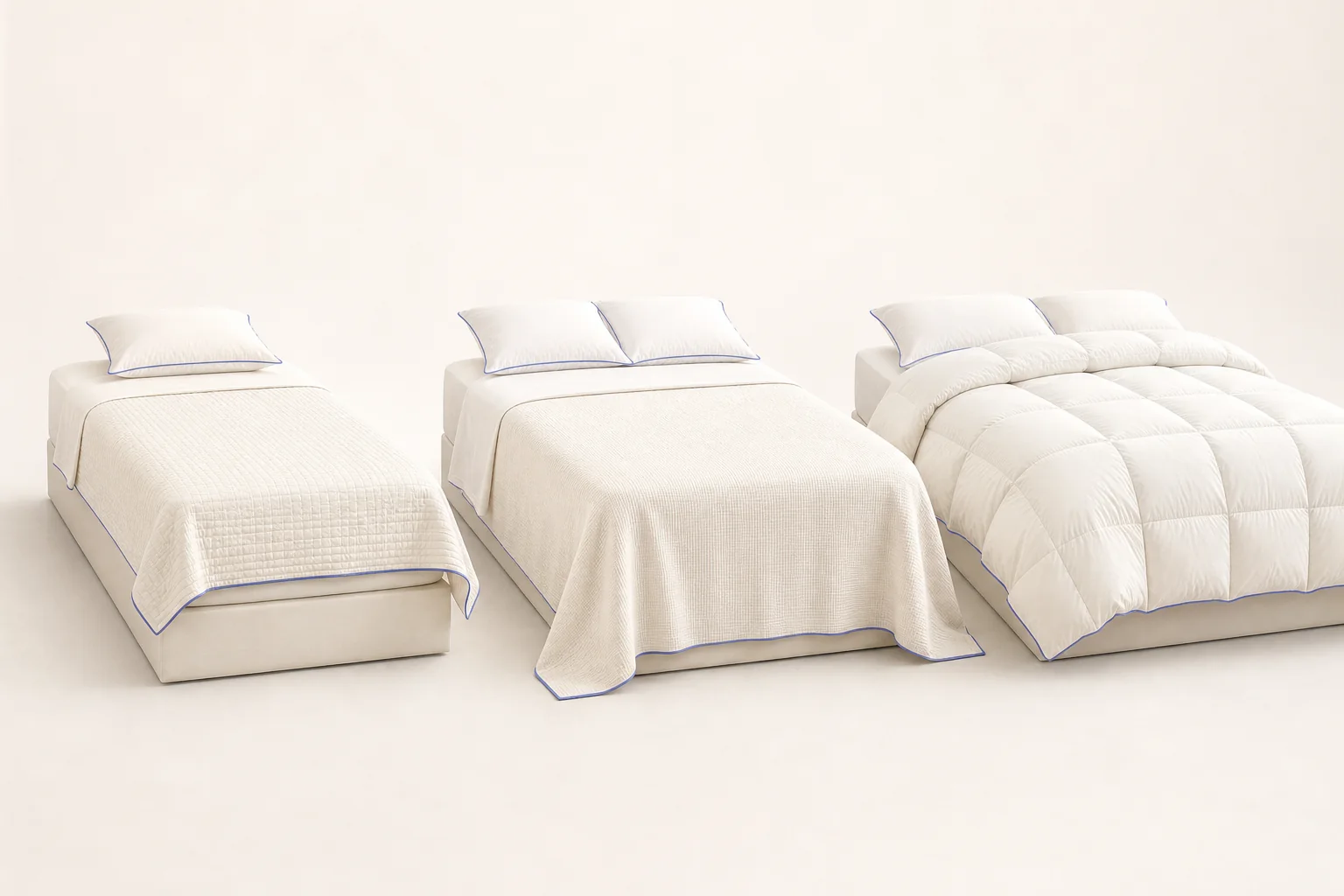
Those forms affect drape: comforters rise away from the mattress; quilts follow it. Neither term identifies a specific fiber or quality level.
Which one keeps you warmer?
A comforter is usually warmer because it contains more loft and trapped air. A heavy quilt can out-warm a very light comforter, so compare batting, weight and room temperature rather than relying only on names.
Quilts are strong seasonal layers: alone in summer or paired with a blanket in winter. Comforters suit sleepers who prefer one substantial layer.
Care, styling and ownership
A quilt's lower bulk often makes laundering and storage easier, but delicate stitching or natural batting can still require special care. Comforters may exceed a home washer's capacity.
Quilts foreground pattern and stitching; comforters create a soft continuous surface. Choose the maintenance routine and silhouette you will actually keep.
Frequently asked questions
What keeps you warmer, a quilt or a comforter?
Usually a comforter because its fill has more loft, but actual warmth depends on material and fill amount. A heavy quilt can be warmer than a lightweight summer comforter.
Source: Sleep Foundation, Parachute, The Company Store
Are quilts meant to be slept with?
Yes. A quilt can be a breathable main layer in a warm room or part of a layered system in cooler weather.
Source: Sleep Foundation, Parachute, The Company Store
Do people use quilts as comforters?
Yes, when a thinner finished top layer provides enough warmth. The main difference is construction and loft, not permission to use one on the bed.
Source: Sleep Foundation, Parachute, The Company Store
Are you supposed to use a comforter as a blanket?
A comforter is itself a filled bed covering and can be used directly as the main top layer. Follow its care label and use a top sheet or washable cover according to your routine.
Source: Sleep Foundation, Parachute, The Company Store
Sources and editorial method
We checked definitions and practical distinctions against the sources below. Product recommendations live in separate buying guides with their own criteria and disclosures.
The bottom line
Choose the comforter when loft and one-layer warmth lead. Choose the quilt when a flatter profile, visible stitching and flexible layering matter more.