
In one sentence
Start with an exact insert-to-cover dimension match, then choose cotton percale for crisp airflow, sateen for smoother drape, linen for airy texture, flannel for cold rooms or microfiber for low cost and fast drying. Verify fiber percentages, closure, internal anchors and complete-item care before buying.
Choose the cover by the job it must do
| Priority | Strong starting point | Verify before purchase |
|---|---|---|
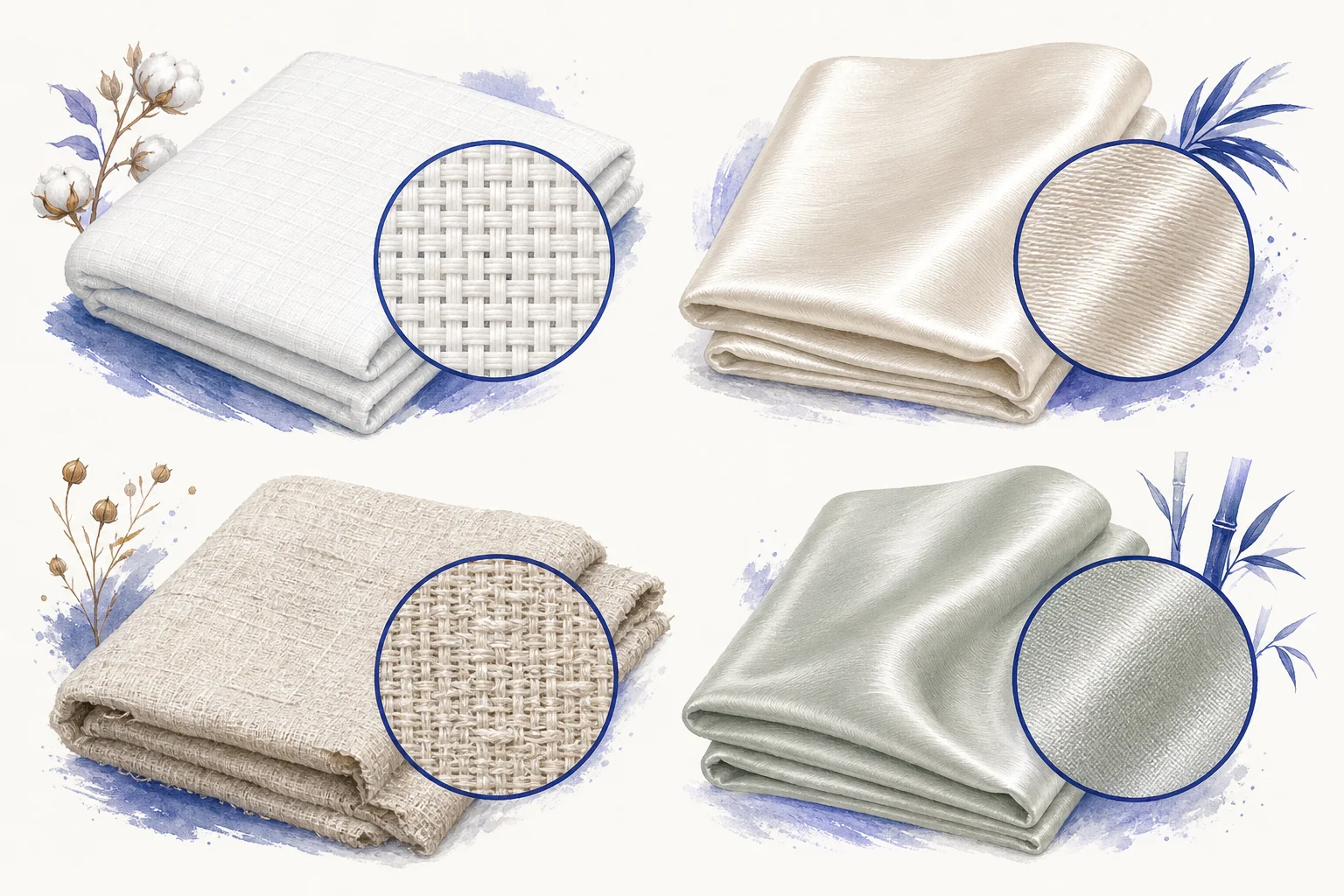
| Cool, crisp feel | Cotton percale | Fiber percentage, weave and care |
| Smooth drape | Cotton sateen | Do not confuse weave with warmth of the insert |
| Airy texture | Linen | Texture, shrinkage guidance and return terms |
| Cold-room softness | Cotton flannel | Fabric weight and pilling expectations |
| Low price / quick dry | Polyester microfiber | Exact fiber label and heat limits |
Who this guide is—and is not—for
Useful when you already own an insert
Measure that insert first and shortlist covers by finished inches rather than Queen or King wording alone.
Not a substitute for an insert guide
A cover changes contact feel, maintenance and appearance; it cannot turn a warm insert into a genuinely lightweight one.
How we evaluate covers without pretending to test them
This is a source-led category comparison. We use published fiber content, weave, finished dimensions, closure, internal attachment points, care instructions and return terms. We do not assign laboratory scores or claim hands-on durability where none occurred.
The live DFS SERP mixes editorial roundups, retailer categories and user discussions. That makes a specification-first framework more useful than copying a ranking whose variants and prices can change.
Fit is the first pass/fail check
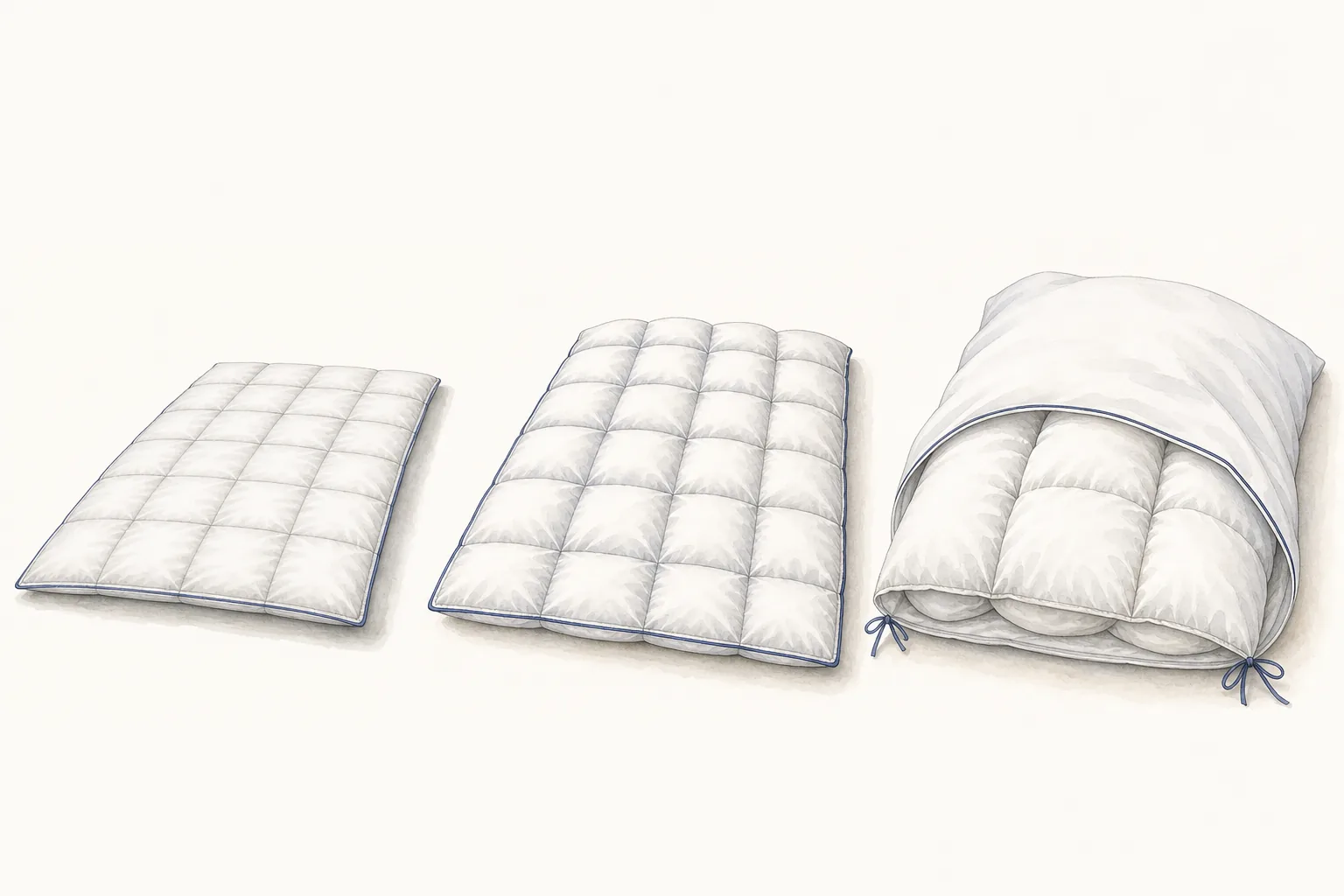
Measure the insert flat after it has fully lofted. Compare width and length with the exact selected cover; named sizes vary by brand and country. A modest intentional difference can create fullness, but a large mismatch leaves empty edges or compressed chambers.
Internal ties only reduce movement when the insert has corresponding loops. They cannot correct a cover that is several inches too large.
Separate fiber from weave and finishing
Cotton is a fiber; percale and sateen are weaves. Linen is a different bast fiber. Rayon or lyocell labels describe regenerated fibers even when the marketing headline names bamboo or eucalyptus.
FTC guidance covers household bedding and requires accurate generic fiber disclosure. Read the percentage label instead of relying on words such as natural, hotel or luxury.
Inspect the opening and every anchor
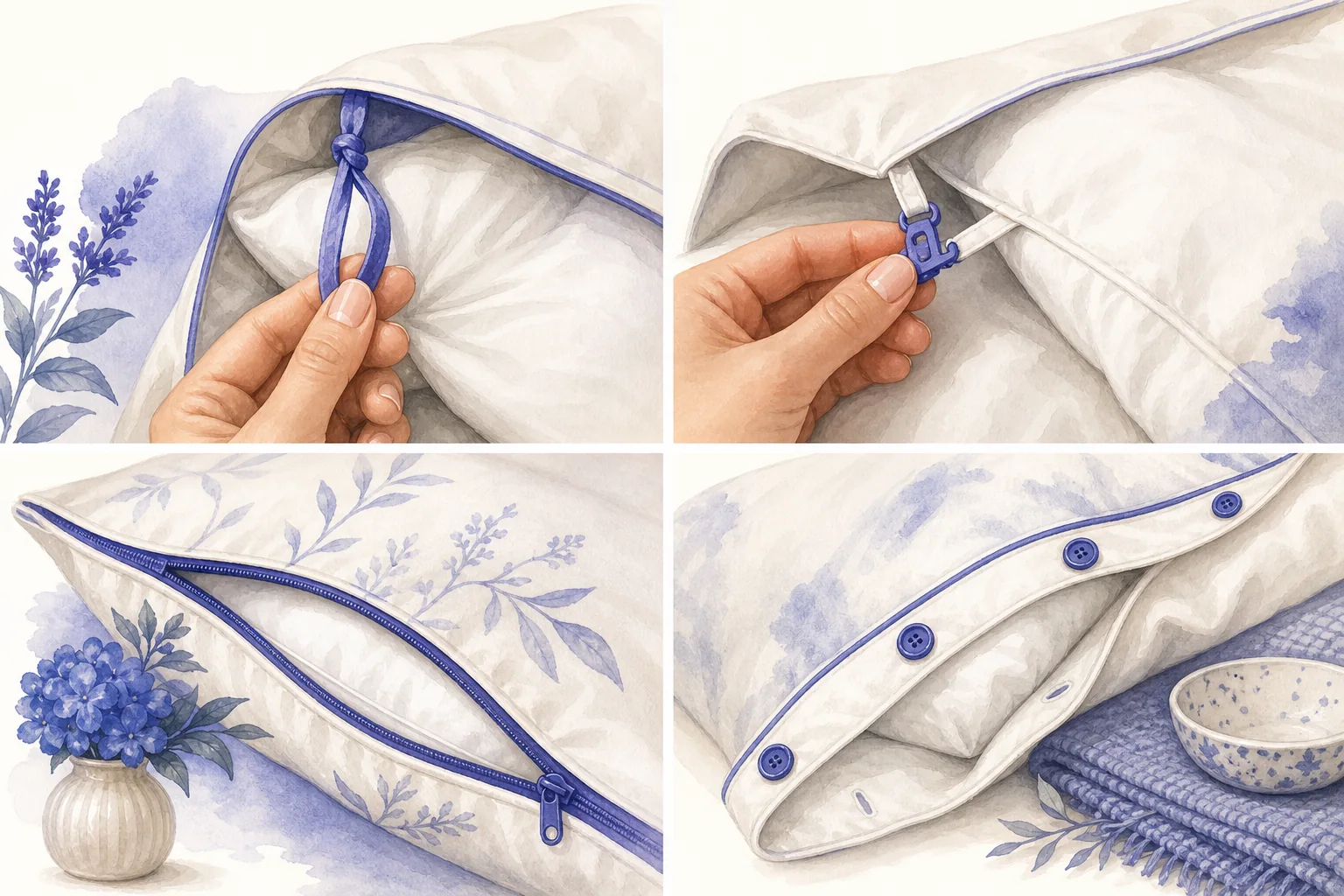
Buttons are individually repairable; a protected zipper closes quickly; envelope closures avoid hard hardware. Construction quality matters more than the closure name: look for reinforcement, a covered zipper track and enough opening width to insert the fill without straining seams.
Check the number and placement of internal ties or snaps and whether the insert offers compatible loops.
Make the care routine part of the price
A removable cover is valuable because it can be washed more often than the bulky insert, but only if its label and your equipment support the routine. Check water temperature, drying method, shrinkage notes and whether decorative finishes have separate limits.
Do not treat machine washable as permission to ignore the delivered label. Launder dark or saturated colors according to maker directions and confirm return terms before washing.
Build a transparent shortlist
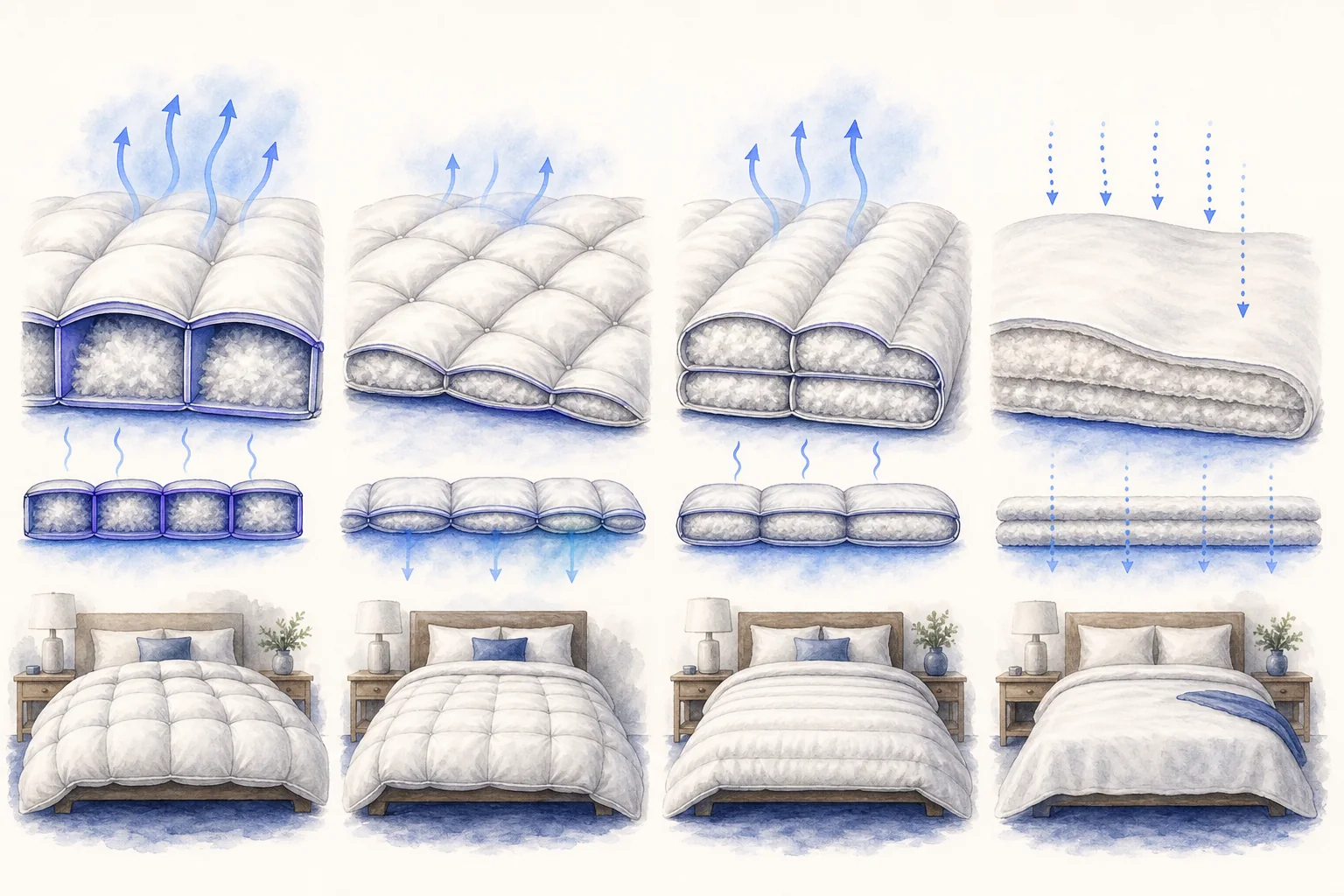
Record seven facts for every candidate: exact size, fiber percentages, weave, fabric weight if published, closure, internal anchors and care. Add price and returns only after those facts pass.
The retailer link below is a current category search, not a claim that every displayed item meets this framework. Re-check the selected variant on the product page.
Frequently asked questions
What material is best for a duvet cover?
Cotton percale is a versatile cool, crisp starting point; linen favors airy texture, sateen smoother drape, flannel warmth and microfiber price and quick drying. The best choice depends on contact feel, room climate and care.
Source: FTC household textile labeling guide, The Company Store duvet cover guide, Sleep Foundation duvet-cover guide
Should a duvet cover be the same size as the insert?
Usually start with closely matching finished dimensions, not just matching size names. Follow the maker's intended pairing and measure both pieces because labels are not standardized.
Source: FTC household textile labeling guide, The Company Store duvet cover guide, Sleep Foundation duvet-cover guide
How much should a good duvet cover cost?
Price alone does not establish quality. Compare exact fiber, weave, dimensions, construction, care and returns; a costly cover with poor fit is still the wrong choice.
Source: FTC household textile labeling guide, The Company Store duvet cover guide, Sleep Foundation duvet-cover guide
Do duvet covers need corner ties?
Ties are helpful when the insert has compatible loops, but accurate fit remains the foundation. Avoid sharp improvised attachments that can puncture the shell.
Source: FTC household textile labeling guide, The Company Store duvet cover guide, Sleep Foundation duvet-cover guide
Sources and editorial method
We checked definitions and practical distinctions against the sources below. Product recommendations live in separate buying guides with their own criteria and disclosures.
The bottom line
Choose the cover as a washable, skin-contact component: measured fit first, then verified fiber and weave, then closure, ties and care. Marketing adjectives come last.