

Quick answer
Wash an uncovered comforter roughly every one to two months under ordinary use. If it touches your body without a top sheet, weekly washing may be more appropriate. A comforter protected by a regularly washed duvet cover can often go much longer, provided there are no stains, odors, allergens or care-label conflicts.
For the full cleaning process, see how to wash a comforter safely.
Comforter washing schedule by exposure
| Situation | Practical starting point | Wash sooner when |
|---|---|---|
| No duvet cover; top sheet used | Every 1–2 months | Visible soil, odor, heavy sweat or illness |
| No top sheet; comforter touches skin | About weekly | The sleeper sweats heavily or has active allergies |
| Duvet cover washed regularly | Insert may stretch toward 1–2 years | Spills penetrate, odors develop or allergens are a concern |
| Pets sleep on the bed | Every 2–4 weeks, if the label permits | Mud, dander, accidents or fleas are present |
| Allergy-sensitive household | Use a tighter schedule agreed with your clinician | Symptoms rise or dust-mite control is the goal |
Why there is no single perfect interval
A comforter under a washable duvet cover is exposed very differently from one that touches skin every night. A top sheet catches body oils and sweat; a duvet cover protects both surfaces; neither prevents every allergen or spill from reaching the insert. That is why useful guidance begins with exposure rather than repeating a universal monthly rule.
Published recommendations also vary. Martha Stewart's expert-led guidance gives a general one-to-two-month baseline, but says an insert under a duvet cover may stretch to one or two years and a comforter used without a top sheet may need weekly cleaning. Allergy guidance can be more aggressive because the goal is reducing dust-mite allergen exposure, not merely keeping bedding visibly fresh.
Five reasons to wash it sooner
Calendar intervals are only a baseline. Wash promptly after a spill reaches the fill, after illness when laundering is appropriate, or when the comforter develops a persistent odor. Visible body-oil marks and clumped fill are also signals that routine maintenance has fallen behind.
Pets increase hair, dander and outdoor soil. Heavy night sweating increases moisture and skin-oil contact. Allergy symptoms may justify a tighter schedule or an allergy-proof cover, but frequent washing only helps when the care label and machine capacity allow it. Damaging the fill with an undersized washer is not a useful hygiene strategy.
- A spill penetrated the shell or duvet cover
- Odor remains after airing
- Pets leave hair, dander or outdoor soil
- Night sweats regularly dampen the bedding
- Allergy symptoms increase in bed
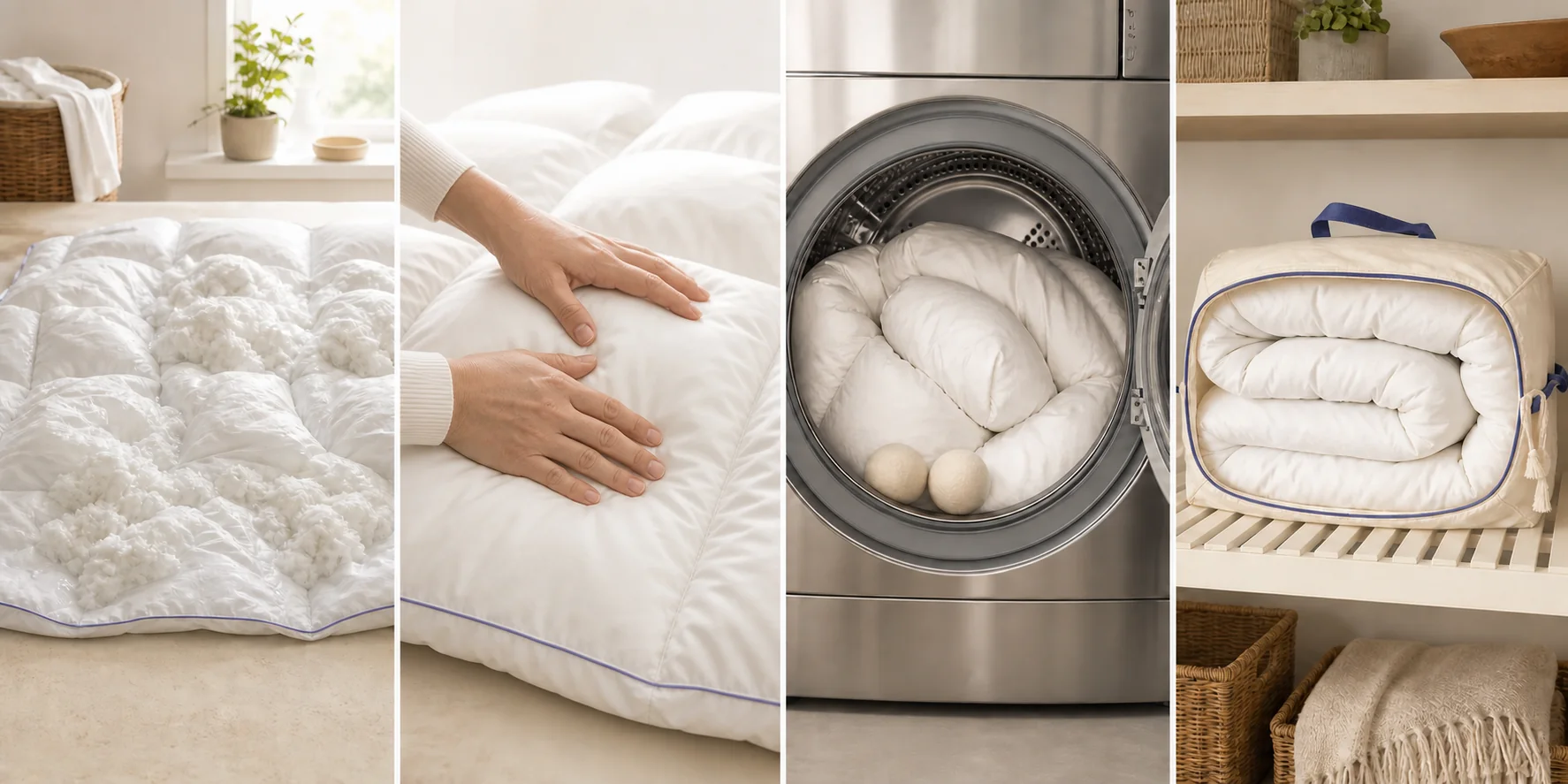
Duvet cover versus comforter insert
Wash a removable duvet cover with the rest of your bed linens according to its label. Because it is lighter and dries faster, the cover is the practical first line of protection. Close buttons or zippers before washing and treat stains before they set.
The insert is bulkier and more sensitive. Down can clump if detergent remains or drying stops early; wool may felt or shrink; cotton batting can shrink; polyester can be damaged by excessive heat. Always let the insert's sewn-in label override a generic schedule. If the item is too large to move freely in your washer, use a suitable commercial-capacity machine or a professional cleaner.
Does using a top sheet change the schedule?
Yes. A top sheet reduces direct contact between your skin and the comforter, so it catches much of the sweat, skin oil and cosmetic residue. Wash that sheet with your fitted sheet and pillowcases. Under ordinary conditions, the comforter can then follow the one-to-two-month baseline rather than a skin-contact schedule.
A top sheet is not a seal. Sweat, dust and pet dander still migrate, and the upper surface remains exposed. Treat the interval as a starting point and use odor, staining and household conditions to decide whether to move it forward.
Keep a comforter fresher between washes
Air the bed before making it, address small stains immediately and use a washable duvet cover when the insert is expensive or difficult to clean. Avoid eating in bed and keep pets off the comforter when practical. These steps reduce full wash cycles, which saves water and limits wear on stitching and fill.
When a wash is due, check seams before loading, use the amount and type of detergent permitted by the label, rinse thoroughly and dry completely. Damp internal fill can develop odor or mildew even when the outer fabric feels dry. Redistribute the fill during drying and do not store the comforter until every section is dry.
Frequently asked questions
Are you not supposed to wash your comforter?
Most comforters need periodic cleaning, but the method depends on the sewn-in care label. Some are machine washable, some require a wool-specific method or cold soak, and some call for professional cleaning. Do not assume bulky bedding belongs in a household washer.
Source: Martha Stewart: comforter washing frequency, SELF: allergist-informed bedding guidance, Whirlpool: washing a comforter
How often should I wash my comforter if I use a top sheet?
Every one to two months is a reasonable starting point under ordinary use because the top sheet reduces direct skin contact. Wash sooner for spills, odor, heavy sweating, pets, illness or allergy needs.
Source: Martha Stewart: comforter washing frequency, SELF: allergist-informed bedding guidance, Whirlpool: washing a comforter
Is it okay to wash bedding once a month?
Monthly can be reasonable for the comforter itself, but sheets and pillowcases generally need cleaning much more often because they contact skin directly. Adjust the comforter schedule for covers, pets, sweat, allergies and the care label.
Source: Martha Stewart: comforter washing frequency, SELF: allergist-informed bedding guidance, Whirlpool: washing a comforter
How long should a comforter last you?
There is no fixed lifespan. Construction, fill, wash frequency and drying quality matter. Replace it when fill remains uneven, warmth is lost, seams fail, odor persists after proper cleaning or the shell can no longer contain the fill.
Source: Martha Stewart: comforter washing frequency, SELF: allergist-informed bedding guidance, Whirlpool: washing a comforter
Should you wash a new comforter before using it?
Follow the manufacturer guidance. Washing can remove storage or packaging residue, but a dry-clean-only or specialist-care comforter should not be placed in a machine merely because it is new.
Source: Martha Stewart: comforter washing frequency, SELF: allergist-informed bedding guidance, Whirlpool: washing a comforter
Sources and methodology
We cross-checked practical guidance against manufacturer care instructions and established editorial or standards sources. Always follow the sewn-in care label on your own product.