
Quick answer
Start with how warm your room and body run. Then choose a fill you can maintain, calculate the required width from your mattress and confirm that your washer—or a local commercial machine—can handle the size.
Comforter fills compared
| Fill | Strength | Trade-off | Best fit |
|---|---|---|---|
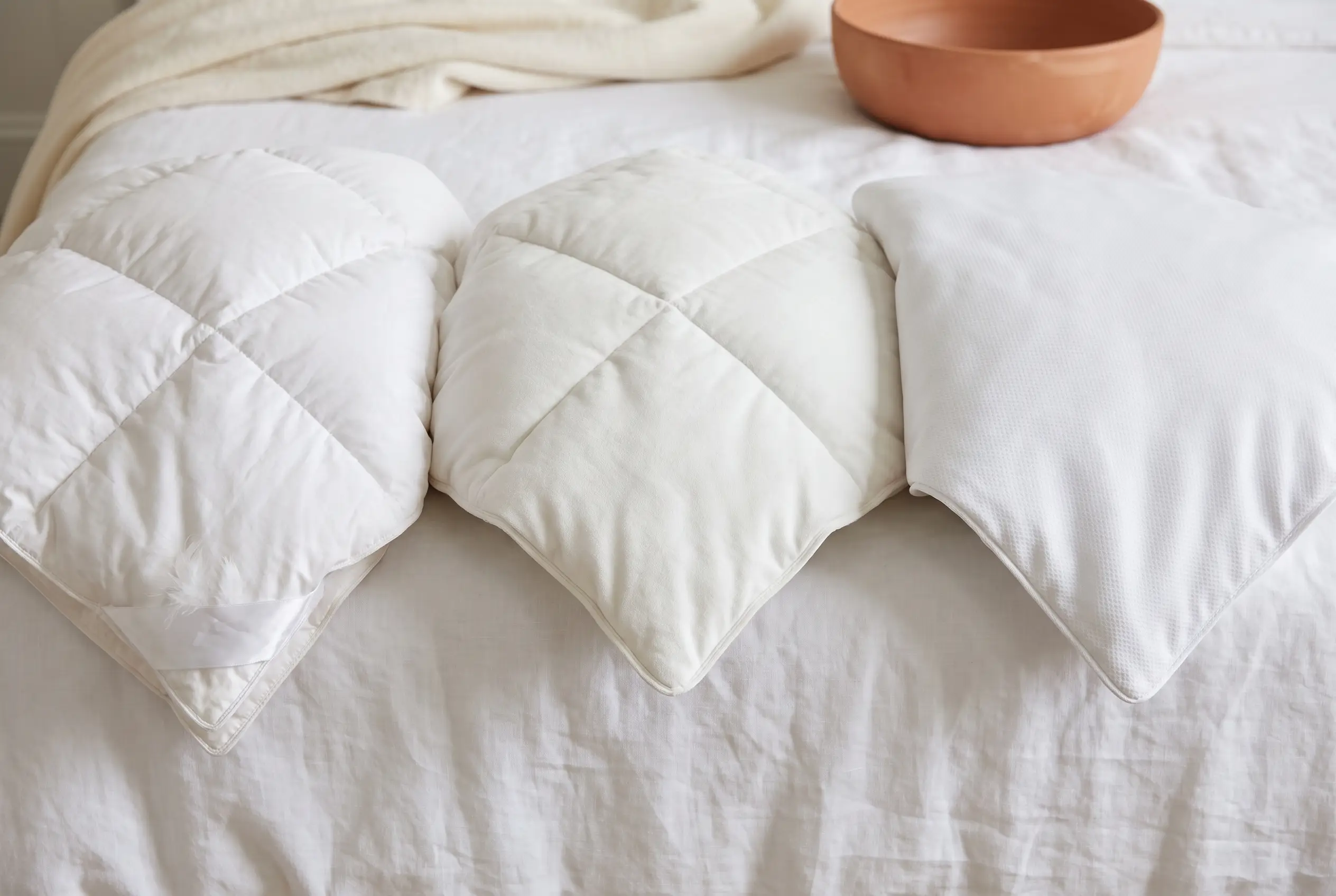
| Down | High warmth-to-weight and loft | Cost, allergies and specialist care | Cold sleepers who dislike heavy bedding |
| Down alternative | Washable, accessible and animal-free | Often heavier for equivalent warmth | Easy care and allergy-aware homes |
| Wool | Moisture management and stable warmth | Heavy; care varies | Variable temperatures and natural-fill buyers |
| Cotton | Breathable and familiar | Lower loft and insulation | Warm climates and summer |
| Cooling fibers | Temperature-management features | Claims and performance vary | Persistent hot sleepers |
1. Choose the warmth band
Use bedroom temperature and your own sleep pattern, not the season printed on the box. A hot sleeper in a heated room needs a different product from a cold sleeper in an unheated bedroom.
Look for an explicit warmth tier—lightweight, all-season or extra-warm—and read whether the brand states fill weight or tog. Avoid assuming that thickness alone predicts warmth.
- Hot room or sleeper: lightweight
- Moderate room: all-season
- Cold room: winter or extra-warm
- Couples with different needs: two duvets can work better
2. Pick a fill you can live with
Down excels at lofty warmth without bulk. Down alternative is usually less expensive and more straightforward to launder. Wool buffers moisture and temperature but can be heavy. Cotton and lightweight plant-based fills suit warm conditions.
Certifications answer different questions: RDS addresses down supply-chain welfare, while OEKO-TEX Standard 100 tests finished textile components for specified harmful substances. Neither certificate alone proves comfort or durability.
- Down: best warmth-to-weight
- Alternative: easiest mainstream care
- Wool: moisture and temperature balance
- Cotton: simple warm-weather breathability
3. Buy by dimensions, not label
Full/Queen and King labels hide major dimensional differences. Measure the mattress width, length and height, then add twice the desired side drop to the width.
A deeper mattress and shared bed benefit from extra width. Check that the length covers the foot without swallowing a low-profile frame.
- Record mattress width and length
- Include permanent topper height
- Add two side drops to target width
- Compare actual inch measurements
4. Check the care plan before checkout
A washable label is only useful if the comforter fits your machine. Bulky bedding needs room to circulate and rinse. King sizes frequently require a large commercial front-loader.
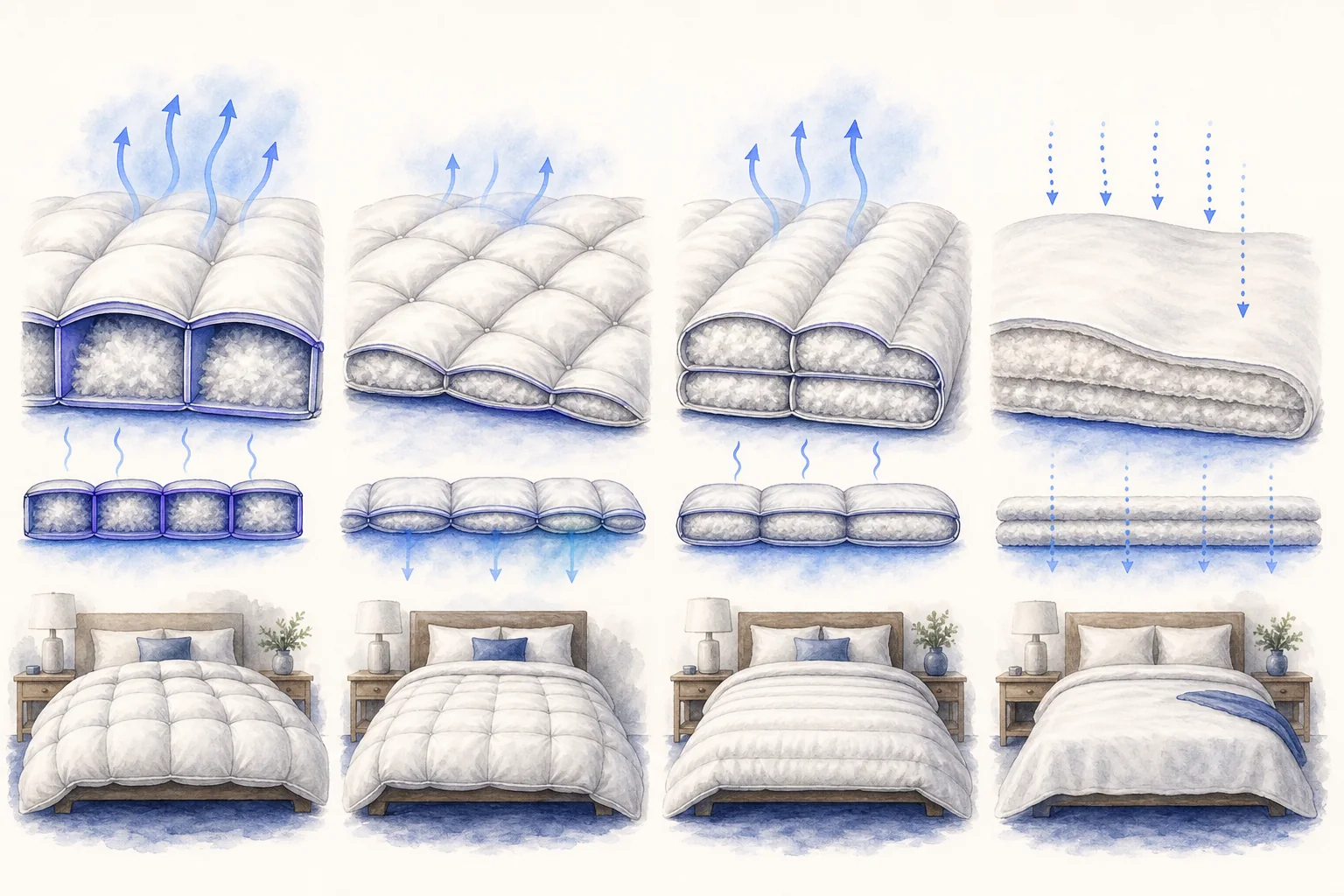
Review shell fabric, baffle construction and return policy. Box baffles limit fill migration better than simple channel stitching, while corner loops help an insert stay aligned inside a duvet cover.
- Read the sewn-in care instructions
- Confirm washer and dryer capacity
- Prefer baffle boxes for even loft
- Check trial, warranty and return costs
Frequently asked questions
What type of comforter is best?
There is no universal best. Down gives high loft at low weight; down alternative is easier to wash and avoids animal fill; wool manages moisture well; cooling constructions suit hot sleepers. Choose by room temperature and care needs first.
Source: Sleep Foundation, Responsible Down Standard, OEKO-TEX
What fill power should a down comforter have?
Fill power describes how much space one ounce of down occupies. Roughly 600–700 is versatile, while 700-plus can provide high loft with less weight. Warmth also depends on total fill weight and construction.
Source: Sleep Foundation, Responsible Down Standard, OEKO-TEX
Should a comforter be bigger than the bed?
Yes. It needs enough width to cover the mattress and drop down both sides. Add twice your desired side drop to the mattress width, then compare that target with the product's actual dimensions.
Source: Sleep Foundation, Responsible Down Standard, OEKO-TEX
Is a heavier comforter warmer?
Not necessarily. Efficient high-loft down can be warmer at a lower weight than dense synthetic fill. Compare warmth rating, fill amount and construction instead of weight alone.
Source: Sleep Foundation, Responsible Down Standard, OEKO-TEX
Sources and methodology
We cross-checked practical guidance against manufacturer care instructions and established editorial or standards sources. Always follow the sewn-in care label on your own product.