
In one sentence
Check the label, place white towels beneath the spot, blot excess liquid, test a tiny amount of compatible diluted cleaner, work from edge to center, remove residue with a barely damp white cloth and dry the area completely.
When spot cleaning is—and is not—the right method
| Situation | Spot clean? | Why |
|---|---|---|
| Small fresh drink spill | Usually | Limited surface area can be isolated |
| Small cosmetic or food mark | Often, after label and color test | Treat promptly before it spreads |
| Large body-fluid contamination | Usually no | Needs hygiene-appropriate full cleaning or professional advice |
| Musty odor across several chambers | No | Suggests moisture or broader soil |
| Silk, wool or dry-clean-only label | Only if maker explicitly allows | Water and agitation can damage material |
| Torn seam or leaking fill | No | Repair before adding moisture or friction |
Who this method suits
Use for a controlled local mark
The shell is intact, the stain is small and the label permits the proposed water and cleaner.
Escalate broader contamination
Professional or full label-approved cleaning is safer for large, unknown, oily, biological or deeply soaked stains.
The care label decides which liquid is compatible
Cotton, polyester, down, wool and silk assemblies can require different treatment. A cleaner marketed for washable cotton is not automatically safe on wool, silk, dye, trim or a dry-clean-only comforter.
FTC fiber labels help identify textile content, but the product's own care directions control the method. If the stain is valuable, unknown or on delicate material, contact the maker or a qualified cleaner before experimenting.
Blotting protects the shell and limits spread
Use a white absorbent cloth so you can see transfer and avoid adding dye. Lift or scrape loose material without grinding it into the weave, then press vertically. Work from the clean perimeter toward the center.
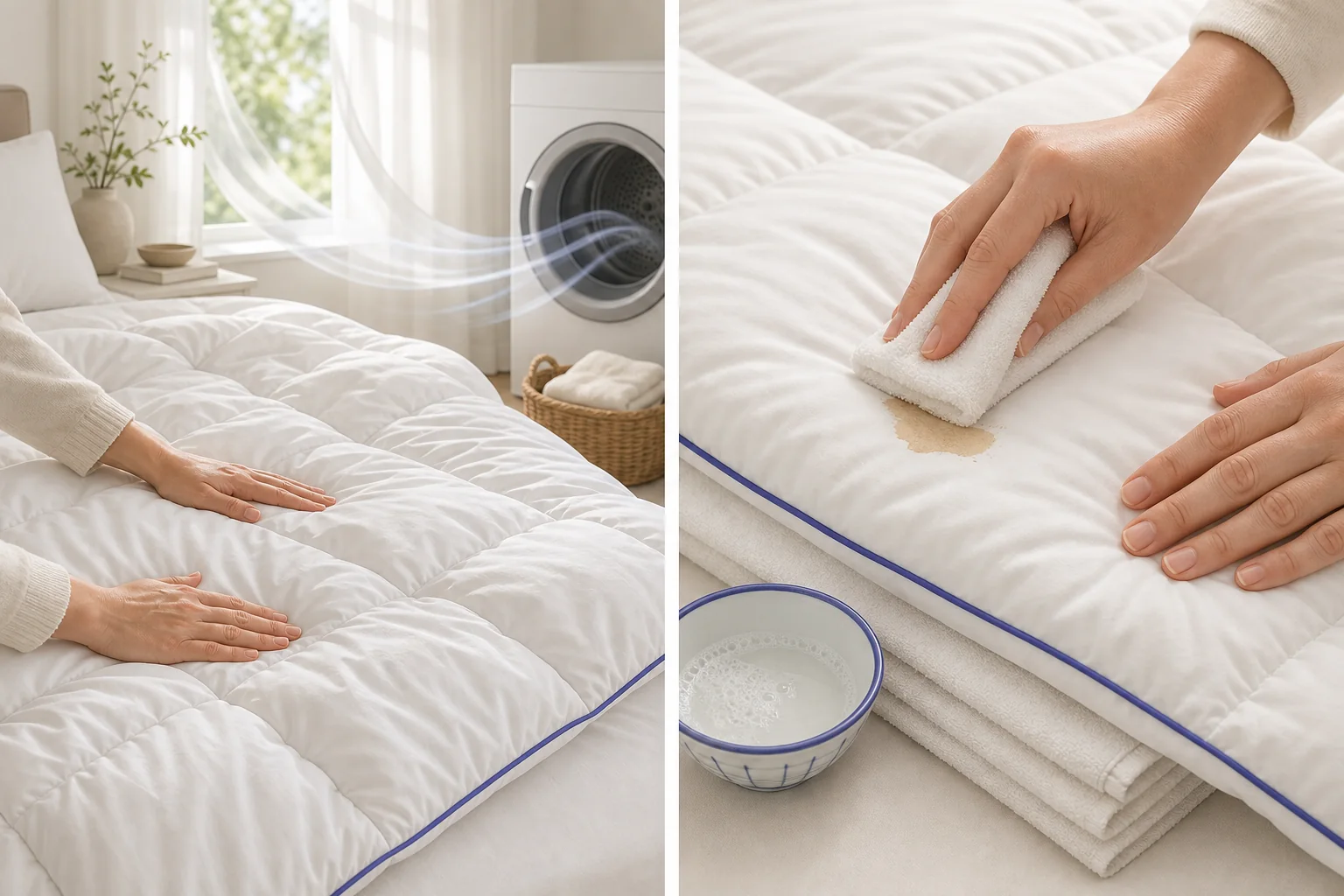
The new illustration shows dry towels beneath the shell. That barrier is important: replace it as soon as it becomes damp so dissolved soil does not move deeper into the fill.
Use the smallest effective amount of compatible solution
A mild detergent diluted according to its instructions is a common starting point for washable fabrics, but stain chemistry varies. Oily, protein, tannin and dye stains do not respond identically. Avoid improvised mixtures that combine cleaners.
Never mix chlorine bleach with ammonia, acids or other household products. Do not use chlorine on a colored or prohibited fabric, and do not assume natural fills tolerate a cleaner merely because the white shell does.
Residue matters even when the stain disappears
Detergent left in fabric can create a ring, stiff patch or rapid resoiling. Use a clean barely damp cloth to transfer residue out, rather than pouring rinse water through the comforter.
Feather the damp boundary gently and keep replacing underlying towels. If a large water ring develops or the fill becomes wet, the task has exceeded spot cleaning and may require the full care-label process.
Dry the interior—not just the visible shell
Press with dry towels and support airflow across both sides. Feel the chamber and nearby seams for cool damp areas. Do not remake the bed or pack the comforter while moisture remains.
If the label permits, a roomy low/no-heat dryer can finish drying, but do not use heat to hide a stain or odor. The full comforter washing guide explains capacity and complete drying.
Yellow marks after washing can have several causes
A yellow patch can be residual body oil, detergent, oxidation, fill showing through a wet shell or heat-related discoloration. Identify whether the mark is on the surface and whether it changes as the item dries.
Do not keep applying stronger products blindly. Compare the care label, rinse history and material; seek professional help for valuable down, silk or wool bedding when the cause remains unclear. Our wash-frequency guide helps separate routine care from stain treatment, while washable comforters reduce the practical burden when full cleaning is necessary.
Seven controlled spot-cleaning steps
- 01Read the sewn-in label and identify shell and fill; stop if local wet cleaning is prohibited.
- 02Remove any cover, place several clean white towels beneath the stained shell and keep the fill as isolated as possible.
- 03Lift solids and blot free liquid with a white cloth—do not rub the stain outward.
- 04Test the proposed diluted mild cleaner on an inconspicuous seam and wait for color or texture change.
- 05Apply minimal solution to the cloth rather than flooding the comforter; blot from the outer edge toward the center.
- 06Use a separate barely damp white cloth to lift cleaner residue, replacing the towels underneath as they absorb moisture.
- 07Press dry towels over the area, then air it with strong ventilation until shell and fill are completely dry before use or storage.
Frequently asked questions
How can I clean my comforter without washing it?
For a small compatible stain, isolate the shell with white towels, blot with minimal label-approved solution, remove residue with a barely damp cloth and dry completely. Spot cleaning does not replace full cleaning for widespread soil.
Source: OxiClean comforter and duvet guidance, Whirlpool down comforter guide, FTC textile labeling guidance
Why does my white comforter have yellow spots after washing?
Possible causes include body oils, detergent residue, oxidation, damp fill showing through or heat discoloration. Let it dry fully and identify the material and care history before treating again.
Source: OxiClean comforter and duvet guidance, Whirlpool down comforter guide, FTC textile labeling guidance
How do I get stains out of my comforter?
Treat promptly, follow the label, test first and blot edge-to-center. Large, oily, biological, unknown or delicate-material stains may require full or professional cleaning.
Source: OxiClean comforter and duvet guidance, Whirlpool down comforter guide, FTC textile labeling guidance
How can you tell if a comforter needs washing?
Widespread odor, visible soil across multiple areas, heavy exposure or contamination beyond one small spot suggests full label-approved cleaning rather than repeated spot treatment.
Source: OxiClean comforter and duvet guidance, Whirlpool down comforter guide, FTC textile labeling guidance
Sources and editorial method
We checked definitions and practical distinctions against the sources below. Product recommendations live in separate buying guides with their own criteria and disclosures.
The bottom line
Successful spot cleaning is controlled: correct chemistry, minimal liquid, inward blotting, residue removal and complete drying. Stop when the stain or moisture extends beyond a truly local area.