

In one sentence
Cotton shells generally absorb moisture and feel more breathable; polyester shells and fills are often cheaper, lighter and quicker to dry. For a fair comparison, verify shell and fill percentages separately, then compare warmth, weight and care.
Cotton and polyester comforter tradeoffs
| Factor | Cotton | Polyester |
|---|---|---|
| Moisture | Absorbs and releases moisture | Absorbs little; dries quickly |
| Feel | Depends on weave; often matte and breathable | Often smooth and light |
| Fill loft | Cotton batting tends flatter and heavier | Synthetic clusters can mimic lofty down |
| Drying | Usually slower | Usually faster |
| Price | Often higher | Often lower |
| Label clarity | Shell and fill must be checked separately | Microfiber usually means fine synthetic shell yarns |
Who each material suits
Cotton-forward construction
Good for people prioritizing absorbency, natural-fiber hand and a less lofty, grounded feel.
Polyester-forward construction
Good for budget, low weight, quick drying and easy-to-find washable loft—subject to the product label.
First separate shell from fill
A comforter has at least two textile decisions: the outer shell touching the body and the batting or clusters providing insulation. Product titles often collapse both into one vague material word.
Read fiber percentages for each component. A 100% cotton shell over 100% polyester fill behaves differently from cotton batting in a cotton shell.
Heat and moisture depend on the whole assembly
CottonWorks describes cotton as absorbent and breathable, while polyester absorbs very little moisture. Weave density, fabric finishes, fill mass and baffle construction can still outweigh fiber alone.
Neither fiber is automatically cooling. Compare GSM or fill weight, shell weave and room conditions using the comforter GSM guide.
Polyester often dries faster; cotton tolerances vary
Synthetic fill can be convenient for frequent washing, but heat may melt or deform fibers. Cotton shells and batting can shrink or dry slowly. The sewn-in care label decides the safe cycle.
A bulky item still needs free drum movement and complete interior drying. Follow the comforter washing guide rather than assuming a fiber makes every product machine-safe.
Loft and weight are not the same as softness
Polyester cluster fill can create high visual loft at modest weight. Cotton batting tends to form a flatter, denser layer. Shell softness depends on yarn, weave and finishing, not the fiber name alone.
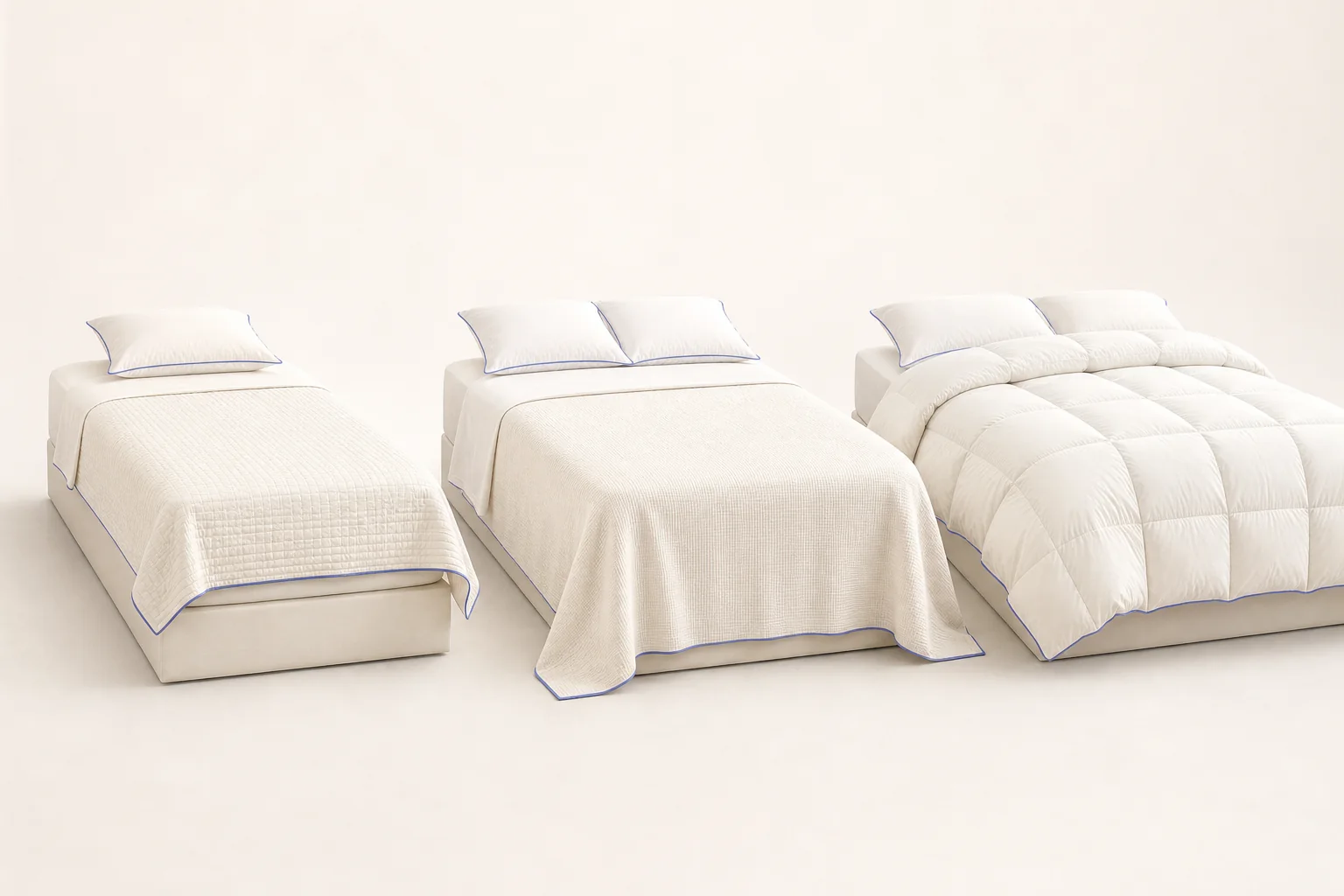
For a fluffy hotel-like silhouette, prioritize construction and recoverable loft. For an even, grounded layer, cotton batting may appeal.
Avoid unsupported safety and allergy claims
A polyester comforter is not inherently toxic, and cotton is not automatically organic, chemical-free or hypoallergenic. Certifications apply only when the exact product carries a valid claim.
People with diagnosed contact reactions should use verified material disclosures and medical advice, not generic fiber marketing.
Choose with a six-line label audit
Record shell fiber, fill fiber, fill weight, construction, dimensions and care. That compact audit prevents a common mistake: comparing a cotton cover to a polyester filling as if they were substitutes.
Our best cotton comforter and down-alternative guide handle product-shortlist intent separately from this material decision.
Frequently asked questions
Should you sleep in cotton or polyester?
Cotton generally absorbs moisture; polyester is commonly lighter and quicker drying. Comfort depends on shell weave, fill, room temperature and personal skin response—not fiber alone.
Source: CottonWorks cotton home textiles, CottonWorks home buyer's guide, FTC textile labeling guidance
Is a 100% polyester comforter bad?
Not inherently. It can be affordable and washable, but may absorb less moisture and retain odor differently. Check heat, care and verified material disclosures.
Source: CottonWorks cotton home textiles, CottonWorks home buyer's guide, FTC textile labeling guidance
What is the best fabric for a comforter?
For shells, cotton percale is a versatile breathable option; for fill, warmth and weight matter more than shell fabric. There is no universal best assembly.
Source: CottonWorks cotton home textiles, CottonWorks home buyer's guide, FTC textile labeling guidance
What kind of comforter do five-star hotels use?
Hotels use varied specifications chosen for laundering, replacement and climate. 'Hotel quality' alone is not a measurable fiber or construction standard.
Source: CottonWorks cotton home textiles, CottonWorks home buyer's guide, FTC textile labeling guidance
Sources and editorial method
We checked definitions and practical distinctions against the sources below. Product recommendations live in separate buying guides with their own criteria and disclosures.
The bottom line
Cotton favors moisture absorption and a natural-fiber feel; polyester favors price, low weight and fast drying. Verify shell and fill separately because most real comforters combine multiple materials.