
In one sentence
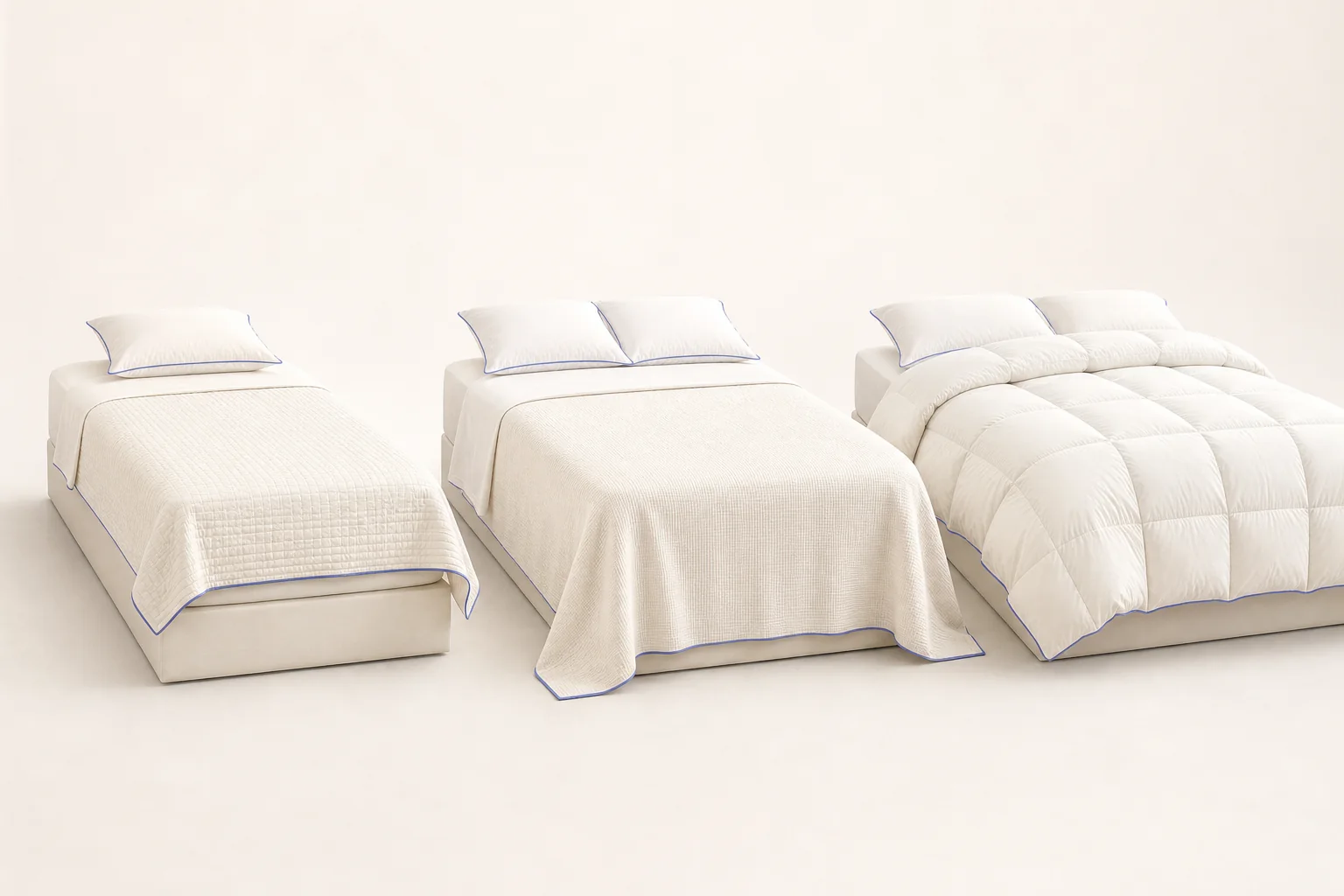
A weighted blanket is sized for your body: Northwestern Medicine says it should reach roughly from chin to feet without hanging over the bed. A weighted comforter is bed-size bedding that drapes over the edges; Baloo weights only the top-of-bed area. General blanket guidance is no more than about 10% of body weight. Sleep evidence is limited, says Cleveland Clinic.
Weighted comforter vs weighted blanket: the real differences
| Feature | Weighted blanket | Weighted comforter (Baloo brand example) |
|---|---|---|
| Size and coverage | Chin to feet; no bed-edge overhang, per Northwestern Medicine | Bed-size, with sides draping over the bed |
| Where the weight sits | Pellets or glass beads add weight; check the individual design | Glass beads in quilted pockets over the bed's top; sides and bottom unweighted |
| Weight examples, not a target | Cleveland Clinic: about 5–35 lb; Northwestern: up to about 30 lb | One brand: Full/Queen 15 or 20 lb; King/Cal King 25 lb |
| Sharing | Body-size guidance is for the individual sleeper | Brand positions larger sizes for couples; weight on each person is unmeasured here |
| Washing | Check the specific care label; no universal wash method given here | Brand says machine washable, but all comforter sizes need a commercial laundry facility |
| Duvet cover | Check the blanket's own cover and attachment instructions | Brand provides corner loops for a duvet cover |
What is a weighted comforter?
A weighted comforter combines added weight with bed-size coverage. One brand describes its version as bedding that drapes over the sides like a traditional comforter. Baloo Living says its glass beads sit in quilted pockets over the top of the mattress. The sides and bottom are not weighted. This is one brand's construction, not a rule for every product with this name.
Cleveland Clinic says weighted blankets use plastic pellets or glass beads to add weight. This differs from choosing ordinary bedding for insulation. Our comforter vs blanket guide explains the usual filled comforter and single-layer blanket categories; weighted bedding needs its own construction check.
If you search for a weighted duvet insert, check the actual dimensions, weighted area and cover attachments. Baloo's comforter can go inside a duvet cover. That example does not establish what every seller means by weighted duvet insert.
How does body-size coverage differ from bed-size coverage?
Northwestern Medicine says a weighted blanket should reach roughly from your chin to your feet. It should not hang over the bed's sides, because overhang decreases the weight on your body. UPMC also advises against buying a blanket larger than you need because it can be hard to maneuver under and remove.
Baloo's comforter takes a different approach: fabric drapes over the edges, but the hanging sides and bottom are unweighted. The brand says that design helps prevent sliding toward the floor. It does not mean that all the listed weight rests on one sleeper.
For a weighted queen comforter or weighted king comforter, separate bed fit from weight choice. Baloo lists Full/Queen at 15 or 20 lb and King, also fitting California King, at 25 lb. These are one brand's examples, not standard weights for those bed sizes.
How heavy should a weighted comforter be?
Cleveland Clinic, UCLA Health and UPMC give general weighted-blanket guidance of no more than about 10% of the user's body weight. UPMC's example is a 150 lb person with a blanket no heavier than 15 lb: 150 × 0.10 = 15. Treat this as general guidance, not proof that a particular weight is safe for you.
A shared bed-size comforter makes that comparison harder. Here is our illustrative calculation: assume 20 lb is spread equally over two sleepers, with each taking half of the weighted area. Then 20 ÷ 2 = roughly 10 lb per person. None of our sources measures that split. Position, distance between sleepers and where the bedding lies change the assumption; this is not a measured body load or a safety formula.
Do not use that calculation to justify a heavier purchase. The 10% guidance is for a person's blanket, not a validated rule for shared comforters. Check with a clinician about suitability, and make sure each user can remove the covering without help. Our comforter weight guide explains why total weight and warmth are separate decisions.
Do weighted blankets or comforters help you sleep?
There is no guarantee. Cleveland Clinic says current weighted-blanket studies are small and have limitations, so it cannot say definitively that the blankets make a big difference. We found no weighted-comforter-specific sleep study in the supplied source set. Blanket findings do not establish benefits for a shared bed-size comforter.
AASM reports on Ekholm and colleagues' 2020 trial of 120 adults with clinical insomnia and a psychiatric condition: major depression, bipolar disorder, generalized anxiety disorder or ADHD. Participants used a weighted chain blanket or a light control blanket at home for four weeks. The weighted blanket was 8 kg, about 17.6 lb; ten participants who found it too heavy received 6 kg, about 13.2 lb. The control was 1.5 kg, about 3.3 lb.
Nearly 60% of weighted-blanket users had at least a 50% reduction in their Insomnia Severity Index score, compared with 5.4% of controls. Remission, defined as a score of seven or less, was 42.2% versus 3.6%. These results apply to that study population and setup. They do not show that weighted bedding treats insomnia in everyone.
This page is not medical advice. Northwestern Medicine says weighted blankets are not medical devices. Speak with your clinician about sleep problems rather than treating a bedding choice as a treatment plan.
Who should not use a weighted blanket or comforter?
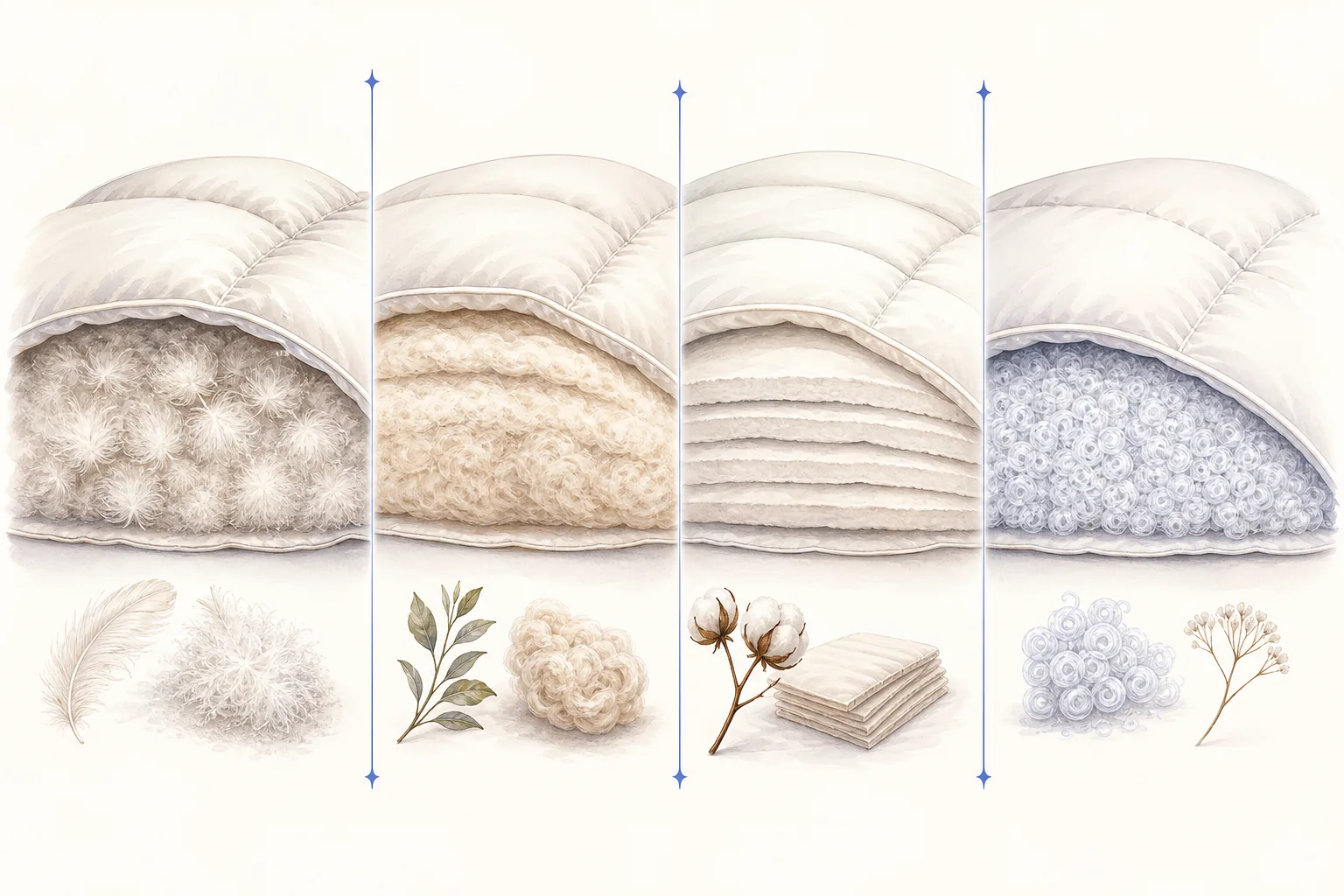
UCLA Health says never use a weighted blanket on someone who cannot remove it themselves. It names infants, young children, and older or frail adults. CPSC's safe-sleep guidance says not to use weighted blankets or weighted swaddles for babies. A bed-size comforter is not a reason to set aside these precautions.
UCLA says weighted blankets may be unsuitable for people with type 2 diabetes, asthma, sleep apnea, low blood pressure or circulatory problems. Northwestern Medicine says not to use one with heart, lung or mobility issues. UPMC advises talking to a doctor first for asthma, sleep apnea, diabetes or claustrophobia. Ask about suitability before using weighted bedding if any of these apply.
Never combine a weighted blanket with a heated blanket, says Northwestern Medicine. UPMC also advises consulting a pediatrician about use for a child. Do not treat a weight percentage or a brand's size chart as clearance for a child to use one.
Can couples share a weighted comforter?
Baloo positions its larger comforter sizes for couples sharing a bed. That is a brand use case, not evidence that the listed weight is suitable for both partners. Each person still needs to be able to remove the covering independently.
Our equal-share example above gives roughly 10 lb each from 20 lb, only if the weighted area is divided evenly. No source here measures that distribution during sleep. Do not assume half the label weight will stay on each person all night.
Another setup is two separate body-size weighted blankets, subject to the same safety checks, or ordinary comforters without added weight. The Scandinavian sleep method uses separate covers on one bed. Our guide explains that arrangement; it does not establish the safety or benefit of using weighted bedding for it.
What about warmth, duvet covers and washing?
For a weighted cooling comforter, look beyond the name. Northwestern Medicine says weighted blankets come in fabrics suited to different sleeping temperatures. Our weight guide explains that physical weight does not rank warmth reliably. A heavy feel alone does not tell you how warm the bedding will be.
Baloo says its comforter has corner loops for securing a duvet cover. Check the actual comforter and cover dimensions and attachments. The option to use a cover comes from this brand's design; it is not a feature we verified for every weighted comforter.
Baloo says its comforters are machine washable and dryer safe: cold gentle wash, then low or no heat. It also says all comforter sizes should go to a commercial laundry facility because of their larger size. Machine washable does not mean suitable for your home washer. Check the appliance's capacity instructions as the brand directs.
Our guide to how to wash a comforter covers general care. The weighted item's label and the machine instructions still control; do not transfer an ordinary comforter's wash routine to it without checking.
Frequently asked questions
Is a weighted comforter the same as a weighted blanket?
They both add weight, but coverage differs. Northwestern Medicine describes a body-size blanket from chin to feet without overhang. Baloo's bed-size comforter drapes over the edges, with weight only over the top of the bed. That comforter design is one brand's example.
Source: Cleveland Clinic: Weighted Blanket Benefits: Do They Work?, Northwestern Medicine: Hugs in a Blanket?, Baloo Living (weighted bedding brand): Weighted Comforter product page
How heavy should a weighted comforter be?
General weighted-blanket guidance is no more than about 10% of body weight: 150 lb × 0.10 = 15 lb. That is not a validated formula for a shared comforter. Ask a clinician about suitability, and each user must be able to remove it without help.
Source: Cleveland Clinic: Weighted Blanket Benefits: Do They Work?, UCLA Health: Weighted blankets can help with sleep, UPMC HealthBeat: How to Use a Weighted Blanket
Can couples share a weighted comforter?
Baloo markets larger sizes for sharing. Our illustrative 20 ÷ 2 = 10 lb each assumes equal sharing of the weighted area; no source here measures that split. It is not a safety formula. Both partners must be able to remove the covering independently.
Source: UCLA Health: Weighted blankets can help with sleep, Baloo Living (weighted bedding brand): Weighted Comforter product page
Can you put a weighted comforter in a duvet cover?
Baloo's weighted comforter includes corner loops for a duvet cover. Check the actual dimensions and attachments. This is one brand's feature, not a rule for all weighted comforters or weighted duvet inserts.
Source: Baloo Living (weighted bedding brand): Weighted Comforter product page
Who should not use a weighted blanket?
Never use one on someone who cannot remove it independently, including infants, young children, and older or frail adults, says UCLA Health. CPSC says no weighted blankets for babies. Medical conditions can make weighted bedding unsuitable; consult a clinician. Never combine it with a heated blanket.
Source: UCLA Health: Weighted blankets can help with sleep, UPMC HealthBeat: How to Use a Weighted Blanket, Northwestern Medicine: Hugs in a Blanket?, CPSC: Safe Sleep
Can you wash a weighted comforter at home?
Check its label and your machine instructions. Baloo says its comforters are machine washable but directs all comforter sizes to a commercial laundry facility because of their size. A machine-washable label alone does not establish that your home washer can handle it.
Source: Baloo Living (weighted bedding brand): Weighted Comforter product page
Sources and editorial method
We checked definitions and practical distinctions against the sources below. Product recommendations live in separate buying guides with their own criteria and disclosures.
- Cleveland Clinic: Weighted Blanket Benefits: Do They Work?
- UCLA Health: Weighted blankets can help with sleep
- UPMC HealthBeat: How to Use a Weighted Blanket
- Northwestern Medicine: Hugs in a Blanket?
- CPSC: Safe Sleep
- AASM: Study shows weighted blankets can decrease insomnia severity
- Baloo Living (weighted bedding brand): Weighted Comforter product page
The bottom line
Choose by coverage, suitability and care requirements. Body-size weighted blankets and bed-size weighted comforters distribute weight differently. The 10% blanket guideline does not resolve shared-weight questions, and sleep benefits are uncertain. Check that every user can remove the covering independently; consult a clinician about medical concerns.