
In one sentence
Choose wool for resilient natural batting and moisture buffering when its care fits your routine; choose polyester for lower cost, vegan origin and more commonly washable construction, then verify fill form, weight and exact label.
Wool and polyester fill compared
| Attribute | Wool | Polyester |
|---|---|---|
| Origin | Animal protein fiber | Synthetic polymer |
| Common form | Carded batting | Batting, staple or clusters |
| Moisture behavior | Hygroscopic vapor buffering | Low absorption; construction controls transfer |
| Odor tendency | Fiber can bind/release odor differently | May retain oily odors depending on fabric |
| Care | Often restrictive or wool-specific | Frequently machine washable, product-specific |
| Price | Usually higher | Usually lower |
| Vegan | No | Yes |
Who each fill suits
Wool
Buyers wanting natural springy batting and moisture buffering who accept animal origin, higher price and label-specific care.
Polyester
Budget or vegan buyers prioritizing easy replacement and commonly machine-washable options, with awareness of heat and microfiber tradeoffs.
Compare fill form before fiber
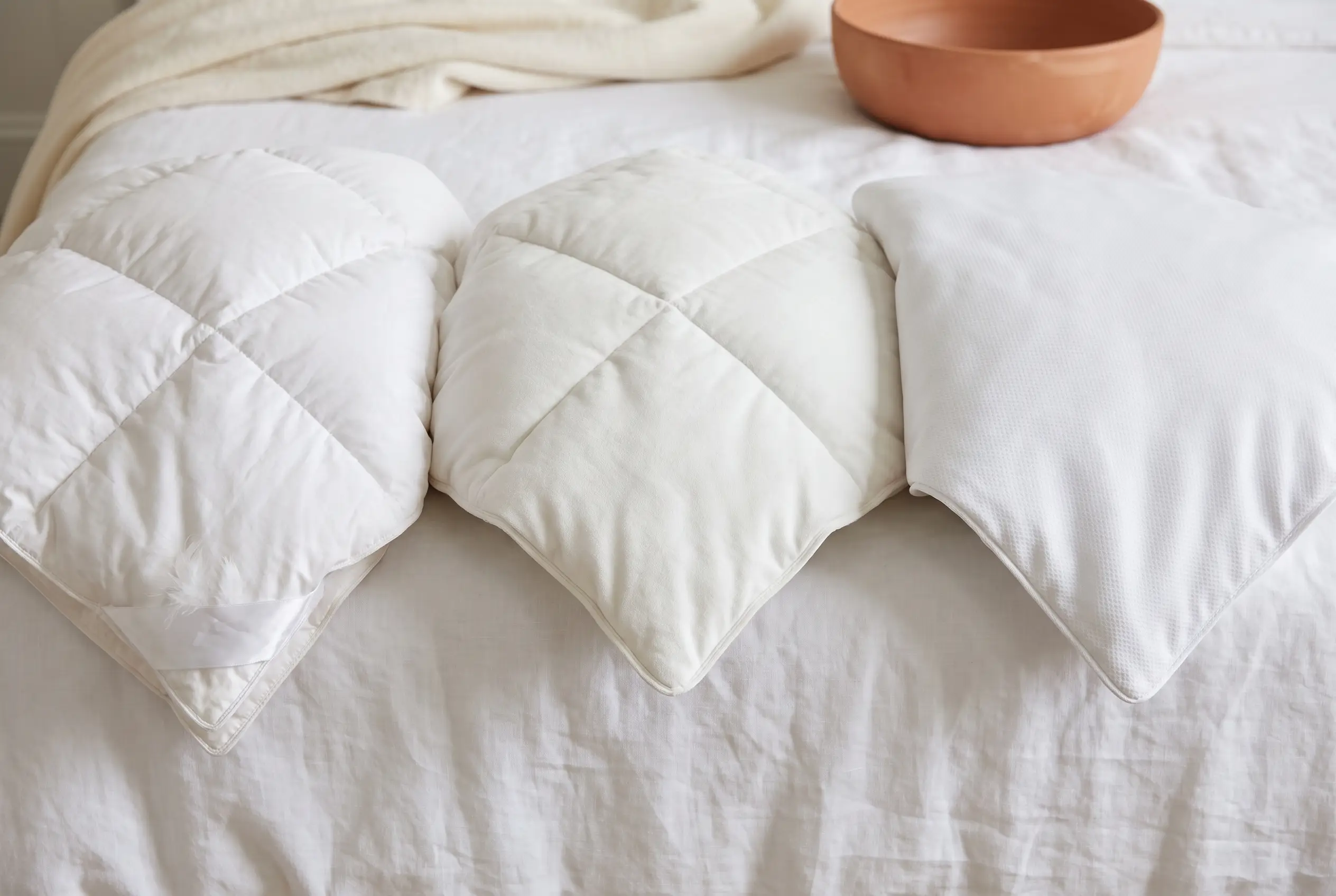
Wool comforters normally use layered carded batting. Polyester can mimic that flat form or be engineered into lofty clusters. A cluster product will not feel like a polyester batting quilt even though both labels say 100% polyester.
Record GSM or fill weight, construction and finished weight. Woolmark describes wool's crimp creating air pockets, but exact insulation still depends on how much material is present.
Wool manages vapor differently
Wool is hygroscopic and can take up moisture vapor within the fiber, helping buffer changes in the bed microclimate. Polyester absorbs little moisture into the fiber itself; airflow and wicking depend more on yarn, structure and finishes.
This does not make every wool comforter cooling or every polyester product sweaty. Shell, fill amount, humidity and sleeper still control the experience.
Polyester usually wins on care simplicity
Many synthetic comforters publish cold machine wash and low-heat dry instructions. Wool ranges from washable constructions through spot clean and professional care. Woolmark stresses following the exact label and airing where appropriate.
A washable claim still requires drum capacity. Both fills must dry completely, and heat above the label can damage polyester or shrink/felt susceptible wool.
Natural and synthetic create different impact questions
Wool is animal-derived and requires sourcing, land, welfare and processing evidence. Polyester is fossil-derived unless recycled and can shed synthetic microfibers; a recycled claim does not solve every lifecycle issue.
Compare verified durability, repair, cleaning frequency and credible certifications. Do not convert natural, recycled or vegan into a complete environmental score.
Neither fiber is universally healthiest
A finished comforter includes shell, dyes, finishes and possible blends. Wool can feel prickly through a thin shell for some users; polyester can retain heat or odor in some constructions.
Diagnosed sensitivities require clinical advice. For routine exposure, choose a cleanable product, manage humidity and use a washable cover rather than relying on unsupported hypoallergenic claims.
Frequently asked questions
Is a wool duvet better than polyester?
Wool offers resilient batting and moisture buffering; polyester usually costs less and is easier to wash. Better depends on warmth, care, ethics and budget.
Source: Woolmark wool fill innovation, Woolmark wool bedding care, FTC textile and wool labeling
What is the healthiest material for a comforter?
No material is healthiest for everyone. Verify the complete assembly, manage moisture and cleaning, and follow medical advice for diagnosed sensitivities.
Source: Woolmark wool fill innovation, Woolmark wool bedding care, FTC textile and wool labeling
Is a 100% polyester comforter bad?
Not inherently. It can be practical and washable, but warmth, odor, durability and microfiber concerns vary by construction and use.
Source: Woolmark wool fill innovation, Woolmark wool bedding care, FTC textile and wool labeling
Is 50% wool and 50% polyester good?
A blend may balance resilience, cost and care, but performance depends on how fibers are arranged and labeled. Verify fill percentages and instructions.
Source: Woolmark wool fill innovation, Woolmark wool bedding care, FTC textile and wool labeling
Sources and editorial method
We checked definitions and practical distinctions against the sources below. Product recommendations live in separate buying guides with their own criteria and disclosures.
The bottom line
Wool favors moisture-buffering natural batting; polyester favors affordability and common easy-care construction. Compare fill form and weight before making the fiber name the verdict.