
In one sentence
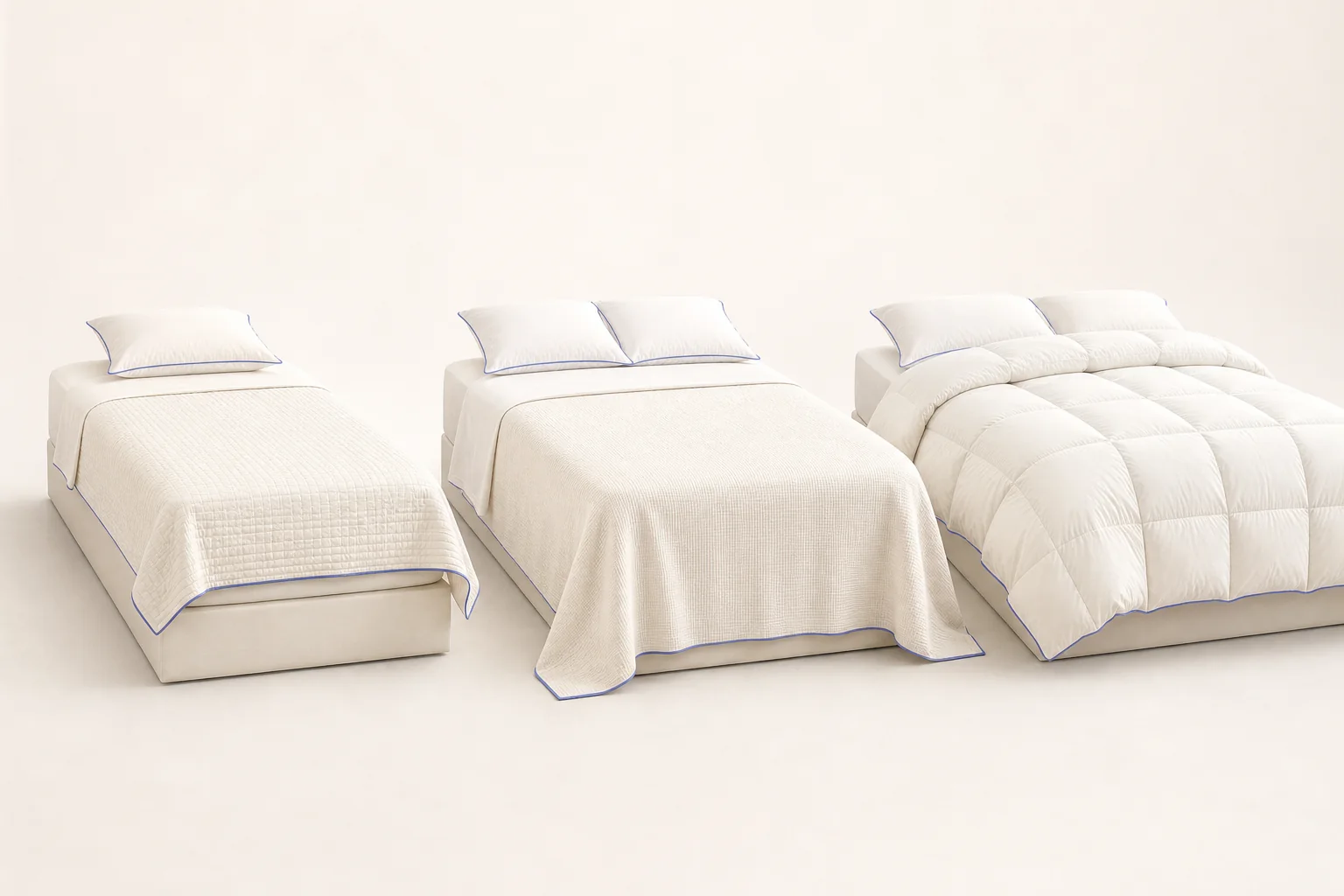
Choose a bedspread when full-bed coverage and a smooth silhouette lead the decision; choose a comforter when insulation and loft matter more than reaching the floor.
Bedspread and comforter at a glance
| Decision | Bedspread | Comforter |
|---|---|---|
| Primary role | Decorative full-bed coverage | Insulated sleeping layer |
| Typical length | Long drop, often nearly floor length | Covers mattress sides with a shorter drop |
| Profile | Smooth and relatively thin | Filled and visibly loftier |
| Warmth | Usually light to moderate | Available from lightweight to winter warm |
| Pillows | May be pulled over sleeping pillows | Usually ends below or beneath pillows |
| Storage and washing | Large footprint but relatively thin | Bulky because of fill |
Choose by the job the layer must do
A bedspread may suit you if…
You want to conceal the box spring or under-bed area, prefer a traditional smooth finish, or need light coverage in a warm room.
A comforter may suit you if…
You want the top layer to supply dependable insulation and prefer a cushioned, modern silhouette with less fabric near the floor.
Coverage—not just thickness—separates the categories
A bedspread is cut to cover most of the visible bed and commonly drapes close to the floor. A comforter is normally shorter, covering the mattress and part of the foundation. That longer drop is the clearest shopping distinction.
The terms can overlap in retail catalogs, so confirm finished measurements. The bed in a photograph may be lower than yours, and a deep mattress can consume much of the advertised drop. Use actual width and length rather than Queen or King alone.
A comforter offers the wider insulation range
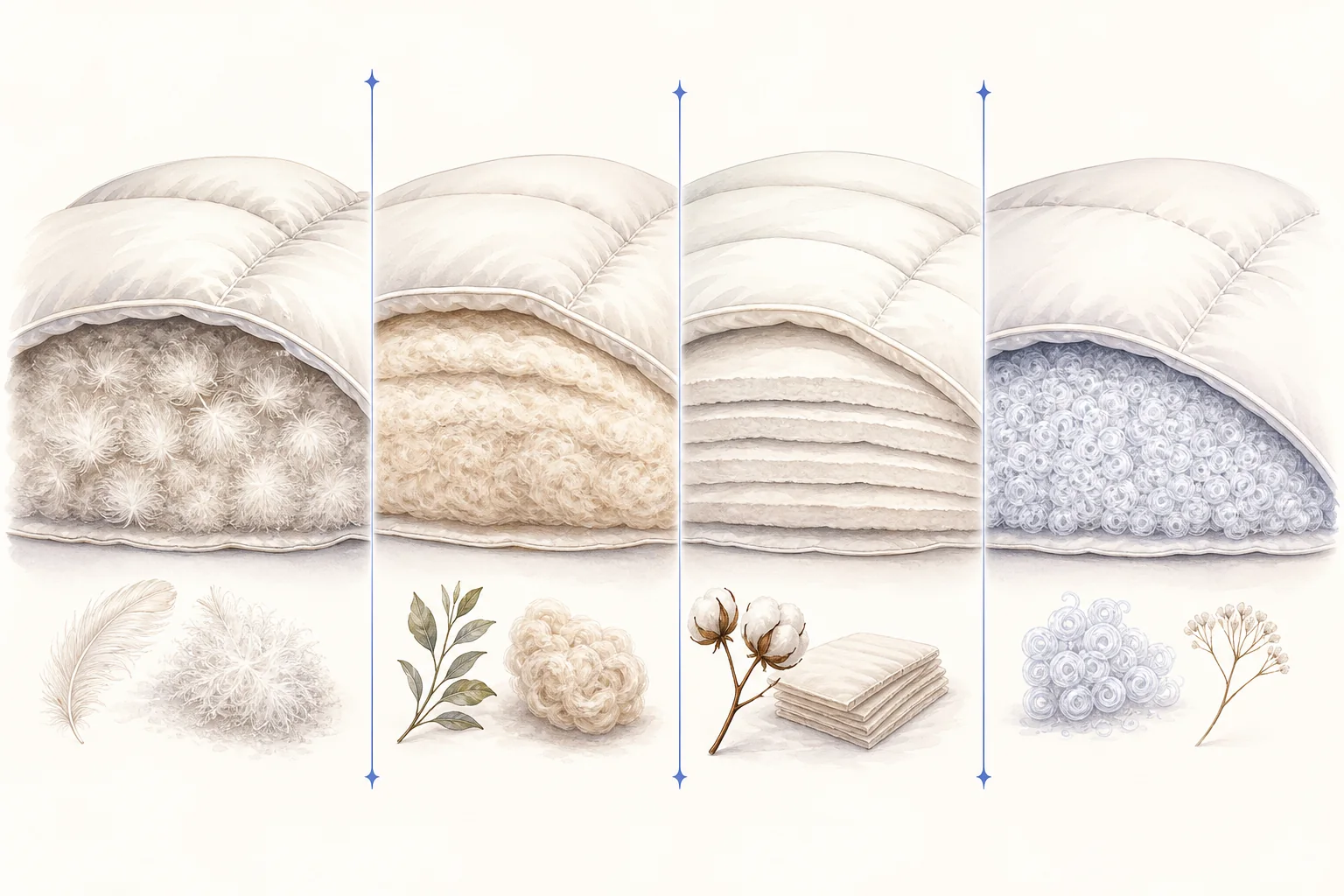
Comforters enclose a distinct fill, which may be down, synthetic fiber, wool, cotton or silk. Makers can vary the fill amount and construction to create summer, all-season and winter versions. Bedspreads are generally thinner and chosen for surface coverage.
A bedspread can still add warmth, especially when woven densely or layered over a blanket. But it is not a substitute for a warm comforter in every room. Start with bedroom temperature and your own heat preference before styling.
Calculate the drop before choosing either one
Measure the mattress width, length and top-to-floor height. For a comforter, subtract mattress width from product width and divide by two. For a bedspread intended to reach near the floor, compare that side drop with the full height from mattress top to your target hem.
Frames, foundations and toppers change the result. A bedspread can pool on a low platform, while a standard comforter may look narrow on a tall pillow-top. The size-drop calculator turns those measurements into a repeatable fit check.
Bedspreads create a smoother, more continuous finish
Traditional styling pulls the bedspread over the bed and may fold it around or over the sleeping pillows. A comforter usually creates rounded loft and is paired with separate shams or pillows at the head.
Neither appearance is inherently more current. A textured bedspread can look minimal, while a puffy comforter can feel casual or luxurious. The useful distinction is whether you want the frame concealed and how much fabric you are willing to manage daily.
Large surface area and bulky fill pose different care problems
A bedspread is thin but can be very wide, so confirm washer capacity and colorfastness. Long hems also collect dust or pet hair when they touch the floor. A comforter occupies more drum volume and takes longer to dry because water is held throughout the fill.
Follow the sewn-in label for either layer. Do not assume a thinner item is safe on a hot cycle or that a machine-washable comforter fits your machine. Complete drying matters for filled bedding.
Can a comforter be used as a bedspread?
You can style a sufficiently oversized comforter with a long drop, but it will remain loftier and may not reach the floor evenly. Oversizing also adds weight and can make washing harder. Measure before buying rather than relying on a larger size name.
If warmth and full coverage are both essential, use a correctly warm comforter plus a bed skirt or tailored foundation cover. That separates insulation from concealment and usually produces a cleaner fit.
Frequently asked questions
What is the difference between a bedspread and a comforter?
A bedspread is generally thin and sized to drape almost to the floor. A comforter contains insulating fill, looks loftier and usually has a shorter side drop.
Source: The Company Store quilts and coverlets FAQ, The Company Store bedding guide, Sleep Foundation comforter guide
What are bedspreads called now?
Bedspread is still a valid retail term. Some stores group thin bedspreads with coverlets, but dimensions reveal the difference: a bedspread is normally cut for a much longer drop.
Source: The Company Store quilts and coverlets FAQ, The Company Store bedding guide, Sleep Foundation comforter guide
Can you use a comforter as a bedspread?
Yes, if its finished dimensions create the coverage you want. It will usually look puffier, and an oversized model may be heavier and harder to wash.
Source: The Company Store quilts and coverlets FAQ, The Company Store bedding guide, Sleep Foundation comforter guide
What is the difference between a bedspread and a quilt?
Bedspread describes coverage and styling; quilt describes layered construction secured with stitching. A quilt can function as a bedspread if it is cut long enough.
Source: The Company Store quilts and coverlets FAQ, The Company Store bedding guide, Sleep Foundation comforter guide
Sources and editorial method
We checked definitions and practical distinctions against the sources below. Product recommendations live in separate buying guides with their own criteria and disclosures.
The bottom line
Pick a bedspread for long, smooth coverage and a comforter for selectable warmth and loft. If you need both insulation and concealment, separate those jobs with a comforter plus a foundation cover.