
In one sentence
Choose a coverlet for light warmth, a neat short drop or layering; choose a comforter when you want the top layer itself to provide substantial insulation.
Coverlet and comforter at a glance
| Decision | Coverlet | Comforter |
|---|---|---|
| Construction | Usually a single woven or quilted unfilled layer | Shell plus insulating fill |
| Profile | Thin and tailored | Lofty and cushioned |
| Drop | Usually reaches around the mattress or box spring | Moderate side drop; rarely floor length |
| Warmth | Light | Light through very warm |
| Best role | Styling, summer use or layering | Primary insulated top layer |
| Storage | Compact | Bulky, especially in warm weights |
Who each layer suits
A coverlet may suit you if…
You sleep warm, want a crisp hotel-like layer, or need a decorative piece that folds easily at the foot of the bed.
A comforter may suit you if…
You want one main insulated layer, prefer visible loft, or need a choice of summer, all-season and winter warmth levels.
Fill creates the biggest functional difference
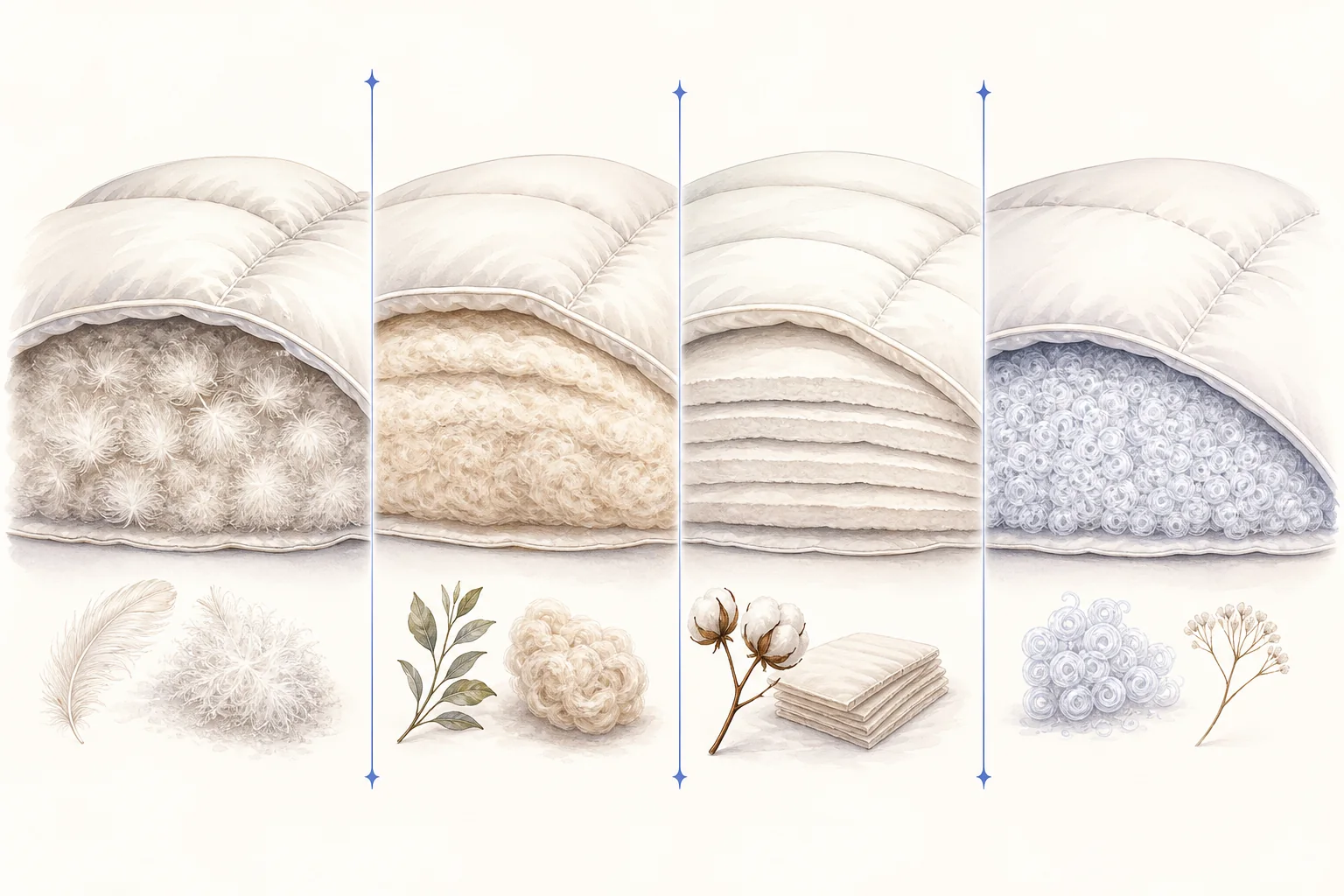
A coverlet is usually a lightweight woven or quilted bedcover without a separate insulating fill. A comforter has two shell fabrics enclosing down, synthetic fiber, wool or another fill. That construction gives the comforter its loft and broader warmth range.
Retail names are not perfectly standardized. Read the material breakdown: a product with a shell, fill percentage and box stitching behaves more like a comforter even if its marketing title is loose. The what is a comforter guide gives a full component check.
Choose by room conditions, not appearance alone
A coverlet can be enough in a warm bedroom or for someone who sleeps hot. In cooler rooms it is better treated as a layer over a blanket or under a comforter. A comforter can be selected in a lighter tier, but its fill still provides more insulation than an unfilled coverlet of similar fabric.
Couples with different temperature preferences may find a coverlet plus personal blankets more adjustable than one very warm comforter. There is no universally cooler fiber; weave, fill amount, shell and humidity all affect the result.
The silhouette depends on drop and mattress depth
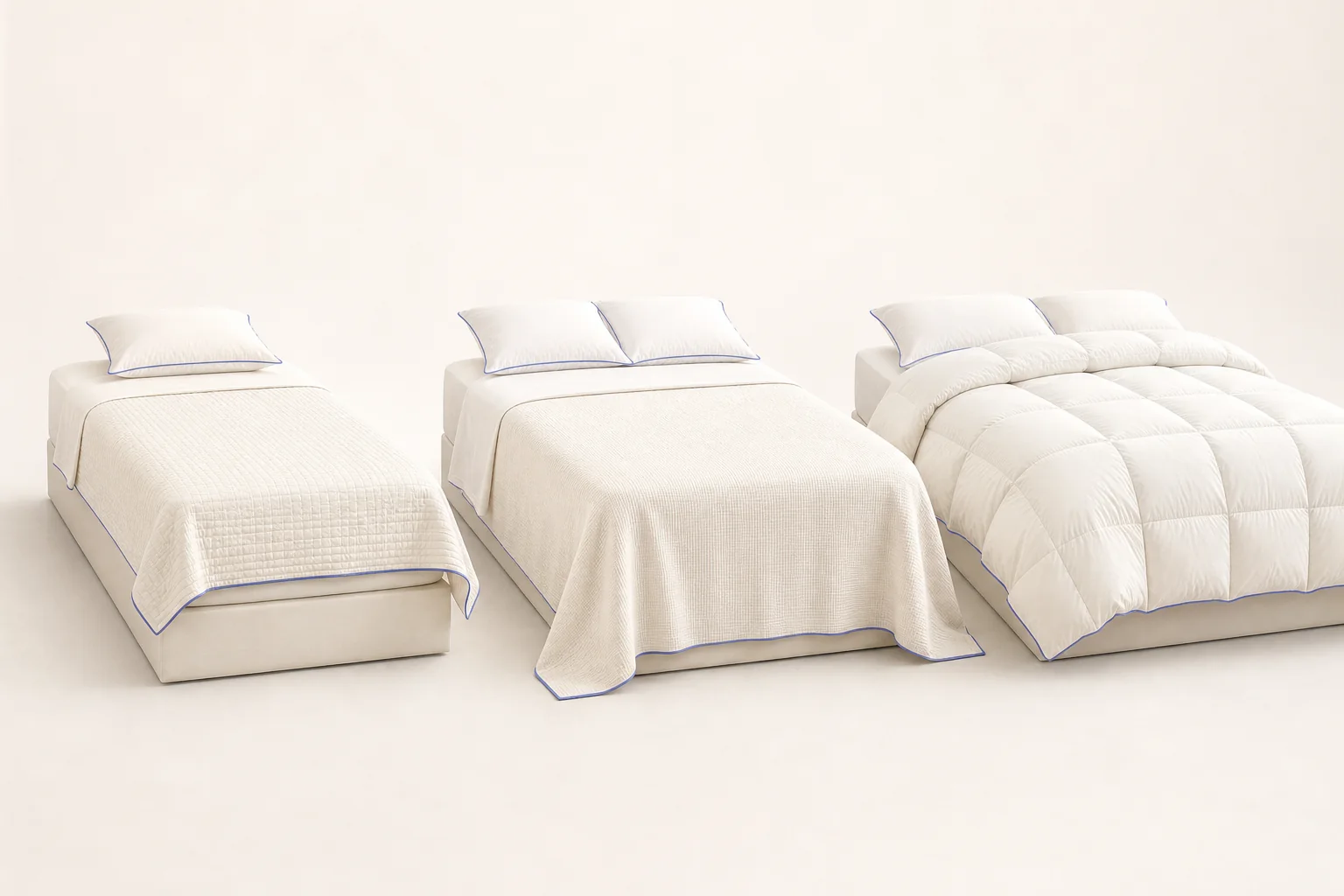
Coverlets are styled with a short, controlled drop and often leave the bed frame visible. Comforters usually cover the mattress sides but do not reach the floor. The difference can disappear in product photos if a bed is unusually low or the item is oversized.
Compare finished width with mattress width, then divide the remainder by two to estimate the side drop. Our comforter size chart explains that calculation. For nearly floor-length coverage, compare a bedspread rather than simply ordering a larger comforter.
You can use a coverlet and comforter together
The layers are complementary rather than mutually exclusive. Put the comforter over the sheets for insulation, then fold a coverlet across the lower third for texture and optional warmth. In summer, store the comforter and pull the coverlet up as the main light layer.
Avoid a stack that is heavier than you enjoy or difficult to launder. A decorative layer still collects dust and contact soil. Choose washable pieces when pets or children regularly use the bed.
Coverlets are usually easier to wash and store
Their thinner profile often fits a home washer and dries faster, but the care label remains decisive. Delicate weaves, embroidery and shrink-prone fibers may require gentle cycles or professional care.
Comforters need room to move when wet and must dry fully. A machine-washable label does not mean every household drum is large enough. Use the washing guide before forcing bulky bedding into a small machine.
A practical decision rule
If the job is primarily visual—a tailored finish, color, texture or a light summer layer—start with a coverlet. If the job is thermal—keeping you comfortably warm through the night—start with a comforter and select an appropriate warmth tier.
If you need both, buy for function separately: a correctly sized comforter underneath and a durable coverlet in the styling role. That prevents you from paying for an oversized, overly warm comforter just to achieve a longer decorative drop.
Frequently asked questions
What is the purpose of a coverlet?
A coverlet provides a thin decorative finish and light warmth. It can be the main layer in a warm room or a flexible accent over other bedding.
Source: The Company Store bedding guide, The Company Store quilts and coverlets FAQ, Sleep Foundation bedding comparison
Can a coverlet be used as a comforter?
It can replace a comforter when light warmth is sufficient, but an unfilled coverlet will not provide the same insulation in a cool room.
Source: The Company Store bedding guide, The Company Store quilts and coverlets FAQ, Sleep Foundation bedding comparison
Can you sleep with just a coverlet?
Yes, if the room and your sleep preferences make a light layer comfortable. Add a blanket or comforter when temperatures fall.
Source: The Company Store bedding guide, The Company Store quilts and coverlets FAQ, Sleep Foundation bedding comparison
What is the difference between a quilt and a comforter?
A quilt normally has thin batting secured by dense stitching; a comforter uses more fill and has a loftier profile. A coverlet can be woven or quilted but is primarily a lightweight top layer.
Source: The Company Store bedding guide, The Company Store quilts and coverlets FAQ, Sleep Foundation bedding comparison
Sources and editorial method
We checked definitions and practical distinctions against the sources below. Product recommendations live in separate buying guides with their own criteria and disclosures.
The bottom line
A coverlet is a styling and light-layer specialist; a comforter is an insulated sleep layer. Use the role you need—not the staged photo—to choose, and layer both when you want warmth plus a tailored finish.