
In one sentence
A comforter is a one-piece insulated top layer that normally needs no removable cover; it is thicker than a blanket or coverlet and differs from a duvet insert mainly in how it is designed to be used.
Comforters compared with nearby bedding terms
| Layer | Filled? | Typical coverage | Normal use |
|---|---|---|---|
| Comforter | Yes | Covers the mattress with a moderate side drop | Finished insulated top layer |
| Duvet insert | Yes | Usually sized to fit inside a cover | Insert plus removable duvet cover |
| Quilt | Usually thin batting | Moderate side drop | Thin finished layer or extra warmth |
| Blanket | No separate fill | Varies | Woven or knitted layer |
| Coverlet | Usually unfilled | Short, tailored drop | Light decorative layer |
| Bedspread | Usually lightweight | Long drop, often near the floor | Full-bed decorative coverage |
A comforter may—or may not—fit your routine
Choose one-piece simplicity
A comforter works well when you want a finished color or pattern and prefer making the bed without fitting a removable cover.
Choose a duvet system for easier cover changes
A duvet insert and washable cover may suit you better when you change the look often or want a removable layer between you and the fill.
The three parts that make a comforter
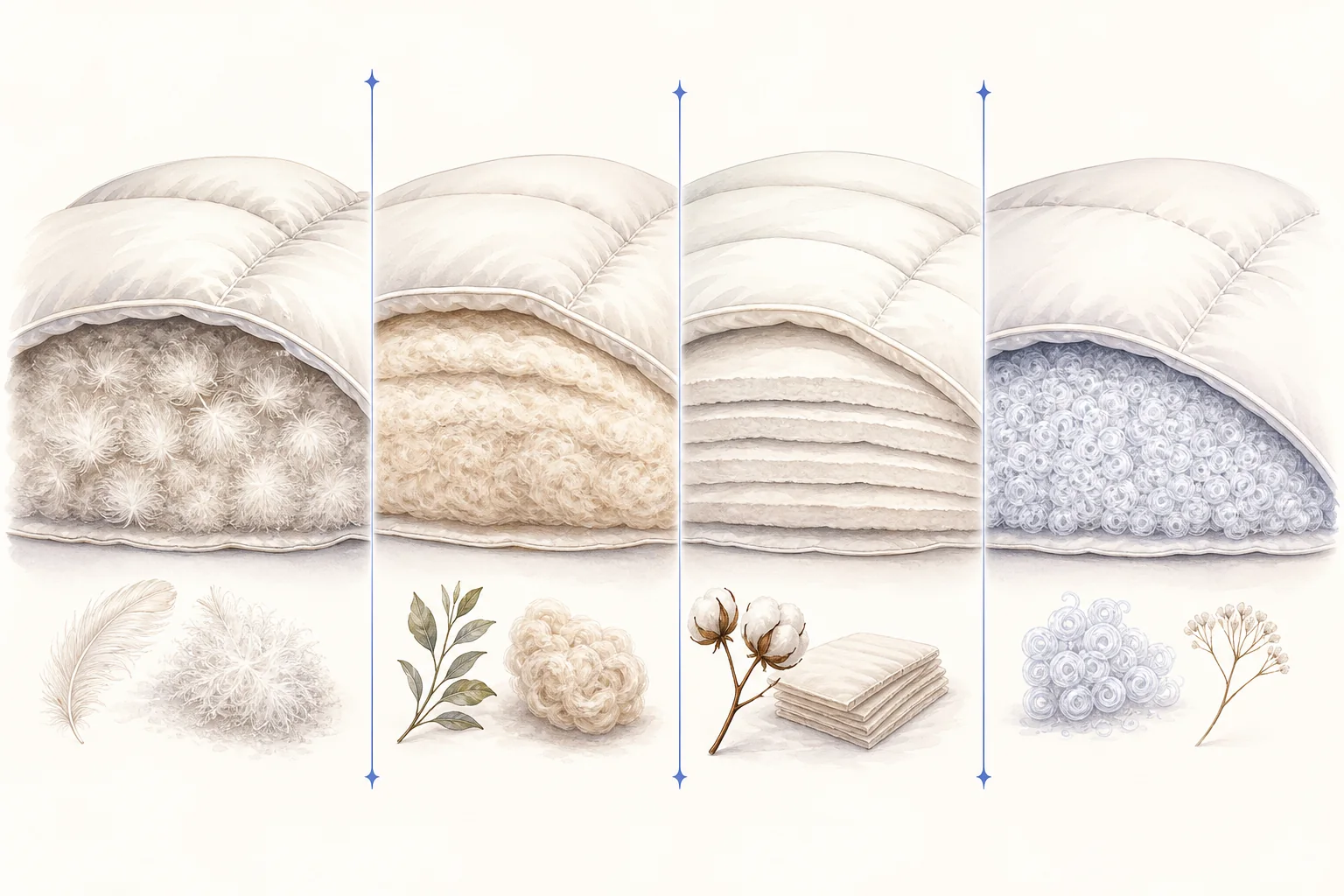
Every comforter combines an outer shell, insulating fill and stitching. Shells are commonly cotton, polyester or a blend; fill may be down, down alternative, wool, cotton or silk. The grid or channel stitching limits large-scale migration of that fill.
Those parts explain why the word describes construction rather than a fixed warmth. A thin summer comforter and a deeply lofted winter model are both comforters. Compare the warmth tier, fill amount, shell and dimensions instead of assuming all comforters perform alike.
What a comforter does on the bed
Its main purpose is to trap still air around the sleeper while providing a finished top surface. Most people place it above a fitted sheet and usually a top sheet. It can be the only insulated layer or part of a flexible stack with a blanket.
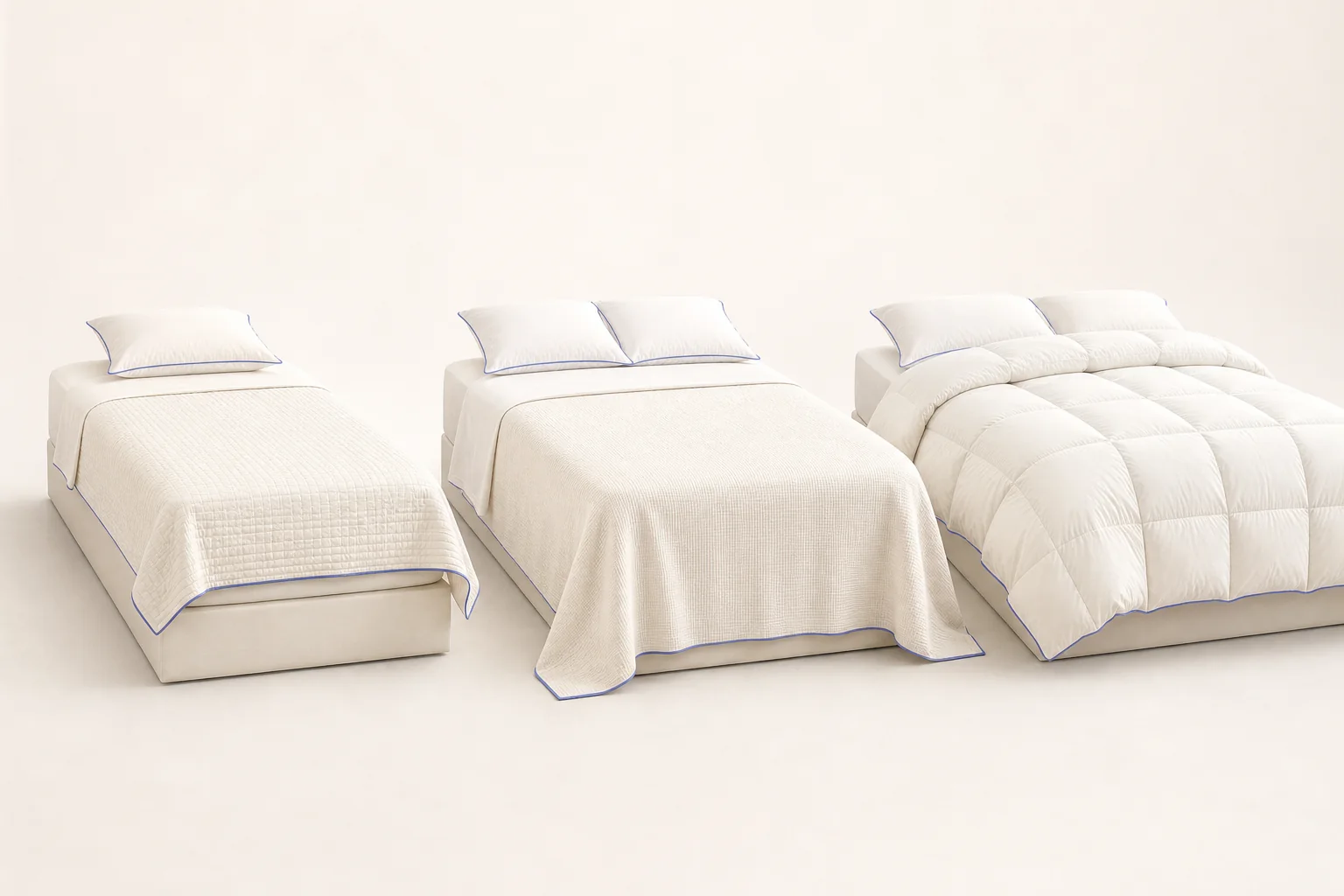
A comforter is not automatically a bedspread. It normally has a shorter drop and more loft; a bedspread is selected primarily for long, full-bed coverage. Our bedspread vs comforter guide shows why mattress depth matters to that silhouette.
Comforter versus duvet: the practical distinction
In common US retail use, a comforter is sold as the finished layer, while a duvet insert is intended to sit inside a removable cover. Both can contain the same fills and use the same internal construction, so the difference is a system choice rather than a universal material rule.
Some brands use the terms interchangeably. Check for corner loops, a pictured cover, finished decorative fabric and care directions. The complete comforter vs duvet guide helps when a listing mixes the names.
Thickness is not a reliable warmth label
Loft gives a useful visual cue, but warmth depends on fill type, fill amount, chamber design and room conditions. With down, fill power describes loft per unit weight—not the total amount of insulation in the finished comforter.
Start with your bedroom temperature and whether you sleep hot or cold. Then choose a warmth tier and check the actual product dimensions. A comforter that is too narrow creates uncovered edges even if its insulation is excellent.
Care depends on the label and machine capacity
A comforter is cleaned as one bulky item. Some are machine washable, some require a commercial-capacity machine, and others call for professional cleaning. The fill must dry completely to prevent persistent clumps and odor.
Use a duvet cover or top sheet to reduce direct soil, air the comforter between washes and follow the sewn-in label. Our comforter washing guide explains the drum-fit test and low-heat drying process.
A five-point definition check before buying
Confirm what is included, because comforter sets may add shams while duvet listings may show a cover sold separately. Read the fill composition, warmth description, finished dimensions, construction and care label before comparing price.
Treat lifestyle photography as styling, not specification. The illustration above deliberately shows silhouette and drop; your result depends on mattress width, thickness and frame height. Measure first, especially for deep mattresses.
Frequently asked questions
Is a bed comforter just a blanket?
No. A blanket is generally one woven or knitted layer, while a comforter encloses insulating fill between two shell fabrics and uses stitching to control that fill.
Source: Sleep Foundation: What Is a Comforter?, Sleep Foundation: Quilt vs. Comforter vs. Duvet, The Company Store bedding guide
What is the purpose of a comforter?
It provides insulation and a finished top surface in one piece. It can serve as the main warm layer or be combined with lighter bedding as seasons change.
Source: Sleep Foundation: What Is a Comforter?, Sleep Foundation: Quilt vs. Comforter vs. Duvet, The Company Store bedding guide
What is the difference between a duvet and a comforter?
A comforter is usually used as a finished one-piece layer. A duvet insert is normally placed inside a removable duvet cover, although retailers sometimes use the terms interchangeably.
Source: Sleep Foundation: What Is a Comforter?, Sleep Foundation: Quilt vs. Comforter vs. Duvet, The Company Store bedding guide
Is the comforter the same as a blanket?
No. Both cover the sleeper, but a comforter has a separate fill and shell construction; a blanket gets its warmth from the woven or knitted fabric itself.
Source: Sleep Foundation: What Is a Comforter?, Sleep Foundation: Quilt vs. Comforter vs. Duvet, The Company Store bedding guide
Sources and editorial method
We checked definitions and practical distinctions against the sources below. Product recommendations live in separate buying guides with their own criteria and disclosures.
The bottom line
A comforter is best understood as a finished, filled bed layer—not a warmth rating or size guarantee. Choose one by room temperature, fill, construction, dimensions and care, then verify exactly what the listing includes.