
In one sentence
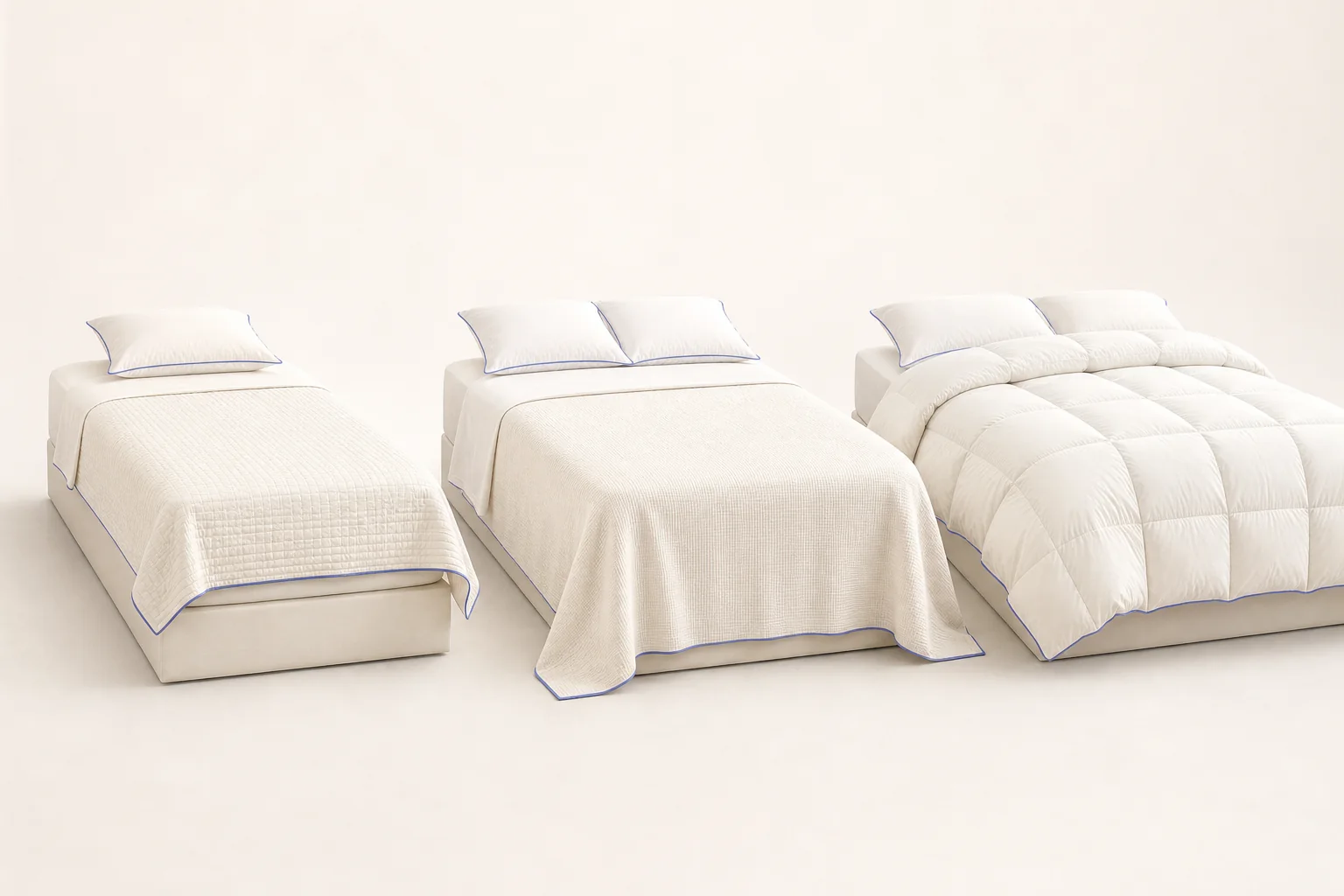
Choose a bedspread when near-floor coverage and a finished whole-bed look matter; choose a quilt when stitched batting, light-to-medium warmth and layered construction matter. Measure dimensions and inspect layers because the categories can overlap.
Bedspread and quilt compared
| Factor | Bedspread | Quilt |
|---|---|---|
| Primary meaning | Long decorative bed coverage | Layered stitched construction |
| Typical drop | Toward floor; may cover pillows | Product-specific |
| Batting | May or may not have fill | Normally contains batting |
| Warmth | Varies | Usually light to medium |
| Styling | Whole-bed formal finish | Texture, pattern and layering |
| Overlap | Can be quilted | Can be sized as a bedspread |
Best use
Bedspread
You want long side coverage, hidden bed frame or a traditional all-over finish.
Quilt
You prioritize batting, stitched texture and flexible sleeping warmth over floor-length drape.
The words answer different questions
Bedspread asks how the piece covers and dresses the bed. Quilt asks how layers are assembled. That is why a product can truthfully be both a quilt and a bedspread.
Use actual construction and measurements to resolve ambiguous titles.
Measure the drop before choosing a bedspread
Add mattress width to twice the desired side drop, then check length for foot coverage and any pillow tuck. Thick mattresses need more fabric.
Our size-drop calculator handles the arithmetic; the comforter size chart explains why generic Queen and King labels vary.
A longer drop does not guarantee more warmth
A single-layer bedspread can be lighter than a three-layer quilt. Conversely, a filled quilt may provide more insulation while covering less of the bed sides.
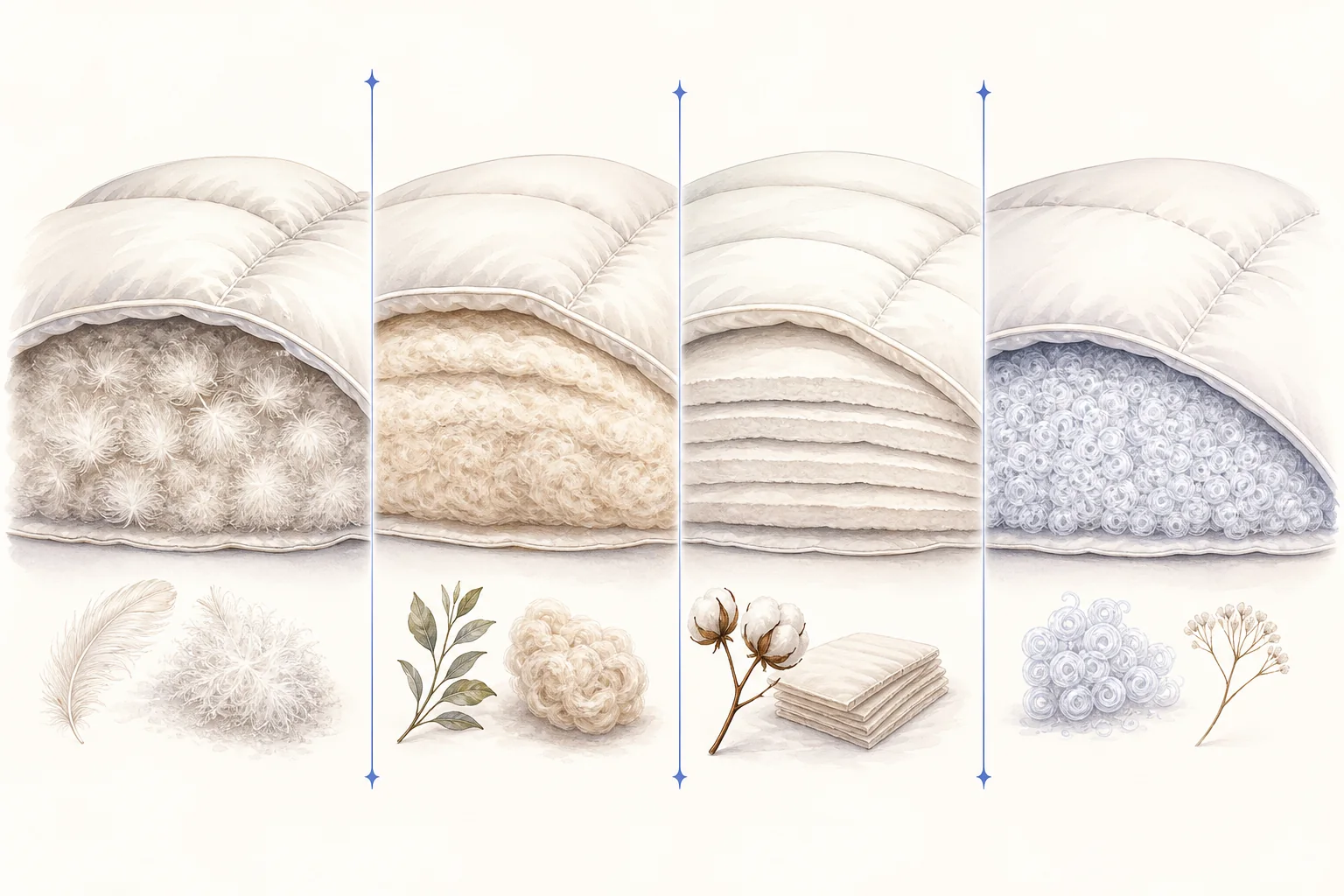
Compare fiber, batting and total weight rather than visual coverage.
Can you sleep under a bedspread?
Yes if it is clean, comfortable and suited to the temperature. Some bedspreads are mainly decorative and may feel stiff, heavy at the sides or inconvenient to launder.
A quilt is commonly designed to provide usable light warmth, although delicate heirlooms may not suit daily contact.
Choose coverage first, then construction
Decide whether floor-length drape is required. Then choose single-layer, quilted or other construction based on warmth and care.
For a shorter unfilled decorative layer, compare a coverlet instead of forcing bedspread and quilt into mutually exclusive boxes.
Frequently asked questions
Do people use bedspreads anymore?
Yes. They remain useful for long decorative coverage, traditional styling and hiding the bed base; contemporary beds also use shorter coverlets and layered quilts.
Source: The Company Store quilts and coverlets FAQ, International Quilt Museum: what are quilts, The Company Store bedding-layer guide
Can a quilt be used as a bedspread?
Yes when it is wide and long enough for the desired drop. Quilt describes construction while bedspread can describe use and coverage.
Source: The Company Store quilts and coverlets FAQ, International Quilt Museum: what are quilts, The Company Store bedding-layer guide
Can you use a bedspread as a blanket?
You can sleep under a suitable bedspread, but warmth and skin feel depend on its actual construction and materials.
Source: The Company Store quilts and coverlets FAQ, International Quilt Museum: what are quilts, The Company Store bedding-layer guide
Do you sleep under a bedspread?
Some people do; others remove a decorative bedspread and sleep under sheets or a duvet. Follow care and choose the routine that fits the product.
Source: The Company Store quilts and coverlets FAQ, International Quilt Museum: what are quilts, The Company Store bedding-layer guide
Sources and editorial method
We checked definitions and practical distinctions against the sources below. Product recommendations live in separate buying guides with their own criteria and disclosures.
The bottom line
Bedspread is primarily a coverage category; quilt is primarily a construction category. Measure the drop and inspect batting before deciding—one layer can satisfy both definitions.