
In one sentence
Choose a coverlet for the lightest tailored layer, warm rooms and easy folding; choose a quilt for more structure, visible stitching and light-to-medium warmth. Verify construction because retailers sometimes use coverlet and bedspread loosely.
Coverlet and quilt compared
| Factor | Coverlet | Quilt |
|---|---|---|
| Layers | Usually one unfilled layer | Top, batting and backing |
| Warmth | Light | Light to medium |
| Drape | Tailored; usually mattress or box-spring drop | Varies by size and batting |
| Texture | Woven, matelassé or printed | Surface stitching defines structure |
| Layering | Easy foot-of-bed layer | Can serve as primary warm-weather top |
| Care | Often straightforward | Modern versus heirloom care varies |
Who should choose which
Coverlet
Hot sleepers, compact laundry and a polished decorative finish without much insulation.
Quilt
Sleepers wanting a little more warmth, stitched texture and a standalone shoulder-season layer.
Batting separates most quilts from coverlets
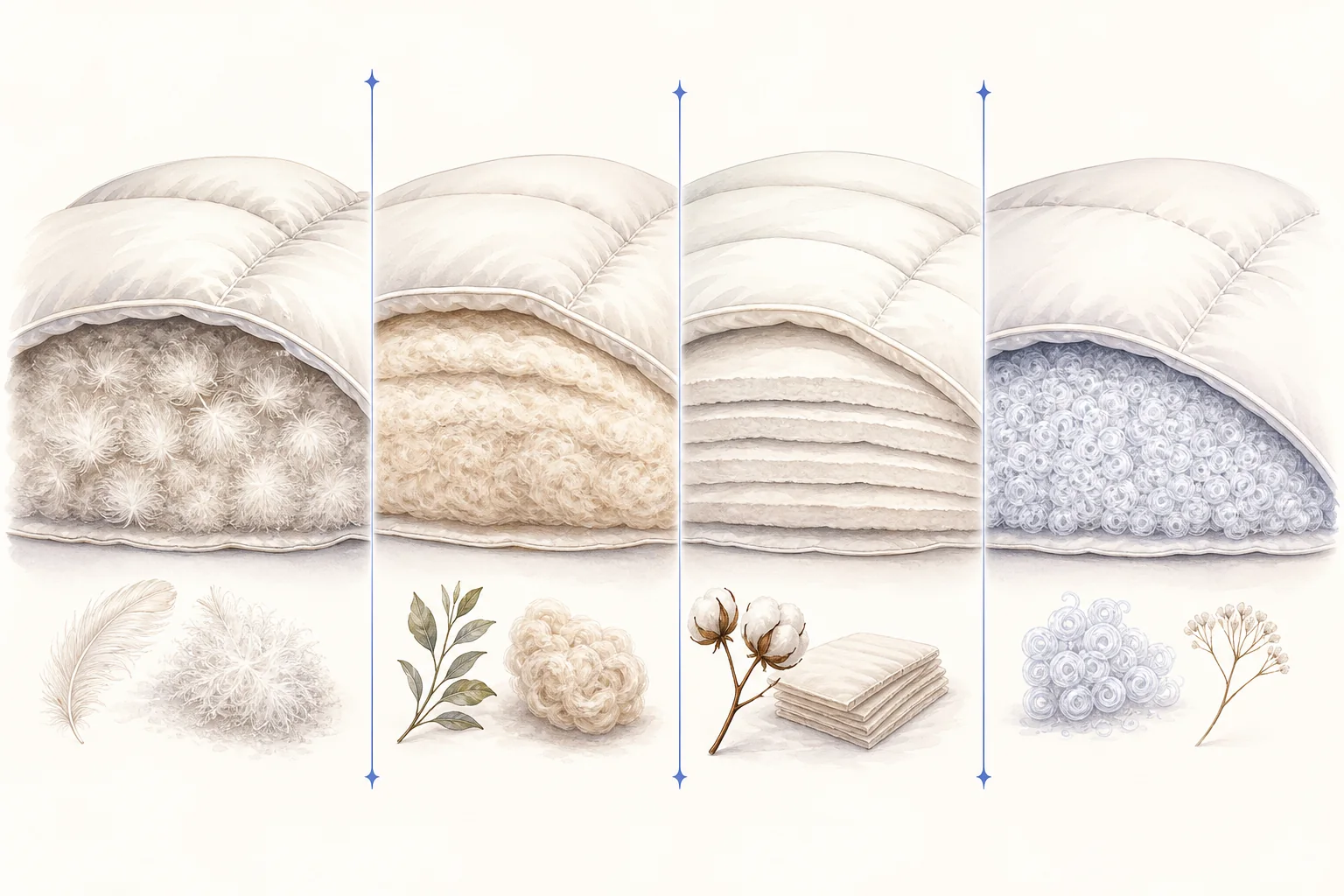
The Company Store describes quilts as two outer fabrics around batting and coverlets as a single layer without fill. That construction creates more body and warmth in a quilt.
Matelassé texture can make a coverlet look quilted even when it contains no separate batting.
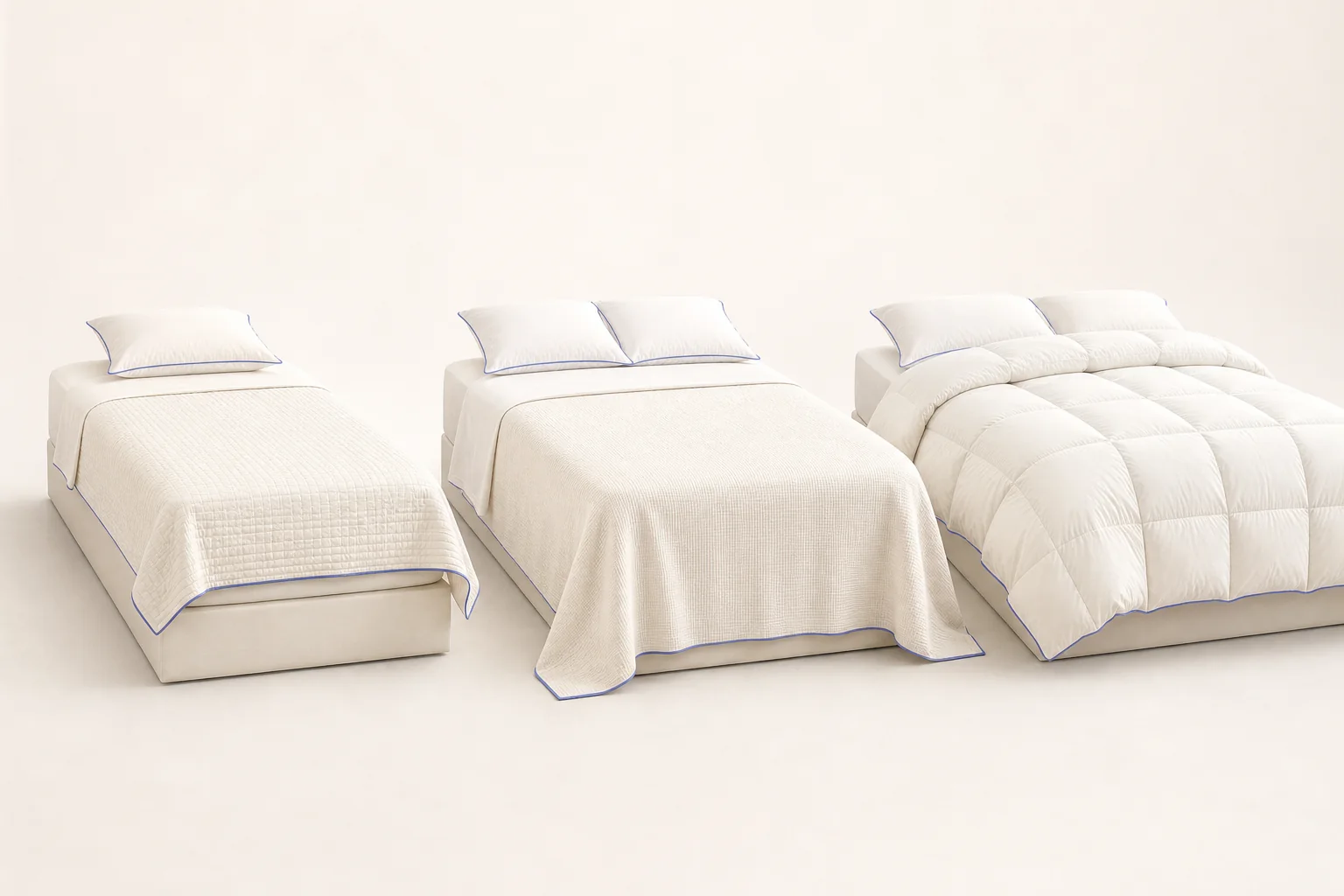
Coverlet describes a shorter, tailored top layer
A coverlet commonly reaches around the mattress or box spring rather than the floor. A bedspread is typically sized for a longer drop.
Measure the product rather than assuming the category fixes dimensions. The bedspread-versus-quilt guide addresses the longer decorative layer.
Can either be the only sleeping layer?
Yes in suitable rooms. A coverlet offers little insulation; a quilt adds batting but remains flatter than many comforters.
Cold sleepers may layer either with a duvet or comforter. Warm sleepers may prefer the coverlet alone.
Construction changes laundry risk
A light modern coverlet is often easy to fit in a washer. Quilt stitching, batting, dyes and decorative work require closer label inspection.
Do not machine wash an antique or handmade quilt based on guidance for a modern product.
Use the fill test and drop test
Ask whether an inner batting layer exists, then compare how far the measured piece falls down the bed. Those two facts resolve most naming confusion.
Choose the remaining details—fiber, color, texture and care—after the layer has the right job.
Frequently asked questions
What is the purpose of a coverlet?
It provides a thin decorative finish and a small amount of warmth, either alone in warm conditions or layered with fuller bedding.
Source: The Company Store quilt versus coverlet guide, International Quilt Museum: what are quilts, Casper coverlet versus quilt guide
Can you sleep with just a coverlet?
Yes when its light warmth suits the room and sleeper. It may be insufficient in cold conditions.
Source: The Company Store quilt versus coverlet guide, International Quilt Museum: what are quilts, Casper coverlet versus quilt guide
What is a very thin bedspread called?
It may be marketed as a coverlet, although naming overlaps. Check actual dimensions and whether it has batting.
Source: The Company Store quilt versus coverlet guide, International Quilt Museum: what are quilts, Casper coverlet versus quilt guide
Does a coverlet go over a quilt?
It can, but there is no required order. Usually the more decorative layer sits on top or is folded at the foot for adjustable warmth.
Source: The Company Store quilt versus coverlet guide, International Quilt Museum: what are quilts, Casper coverlet versus quilt guide
Sources and editorial method
We checked definitions and practical distinctions against the sources below. Product recommendations live in separate buying guides with their own criteria and disclosures.
The bottom line
Choose a coverlet for the thinnest tailored finish and a quilt for stitched batting and more warmth. Confirm layers and dimensions because retail names overlap.