
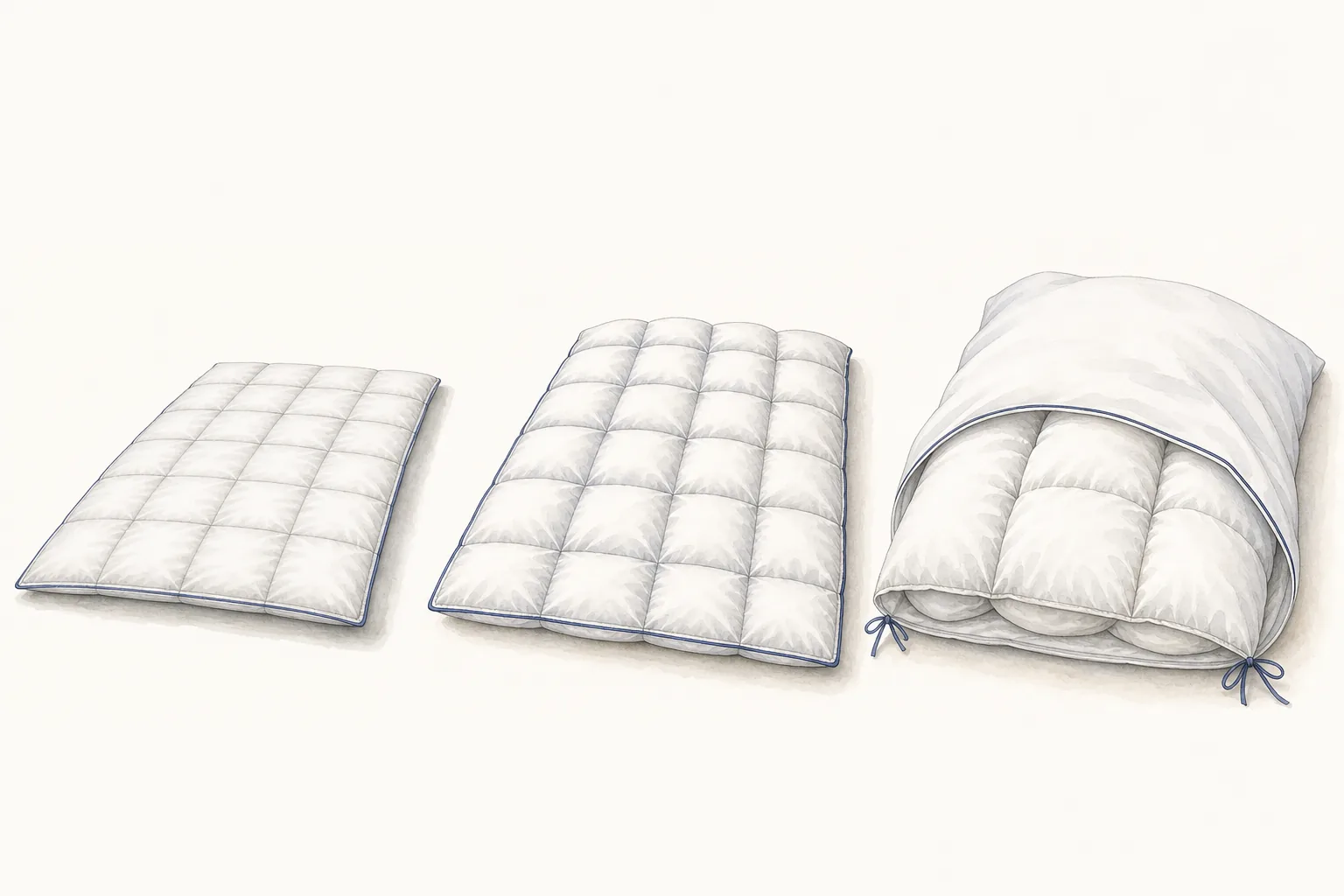
In one sentence
For high loft, compare down fill power together with actual fill weight, or a resilient down-alternative cluster fill with published weight. Favor compartmented construction, compatible cover dimensions and a warmth tier you can tolerate; the thickest-looking insert may be too hot.
What creates—or destroys—visible loft
| Specification | What it tells you | What it does not prove |
|---|---|---|
| Fill power | Down volume per unit weight under a test method | Total fill amount or warmth by itself |
| Fill weight / GSM | How much fill is present | Resilience or cluster quality |
| Baffle-box construction | Space for fill to expand between walls | That every chamber is evenly filled |
| Sewn-through construction | Controls migration with flatter seams | Poor quality; it may suit lighter warmth |
| Cover dimensions | Whether the insert can expand inside | The insert's thermal comfort |
Who should choose extra loft
Good for a cloud-like visual
Prioritize chamber depth, recovery and a correctly sized cover, then choose warmth for the room.
Skip maximum loft when…
You sleep hot, use a warm room, dislike bulky laundry or need a very light layer over the body.
Our source-led method
We compare published fill identity, fill power where relevant, fill weight, construction, dimensions, warmth tier, care and certification scope. We have not lab-tested or slept under products named by a retailer search.
DFS shows separate commercial demand for fluffy inserts and PAA questions about what actually creates loft. This page owns that construction-led choice; the generic best-duvet-insert page retains the full category.
Read fill power and fill weight together
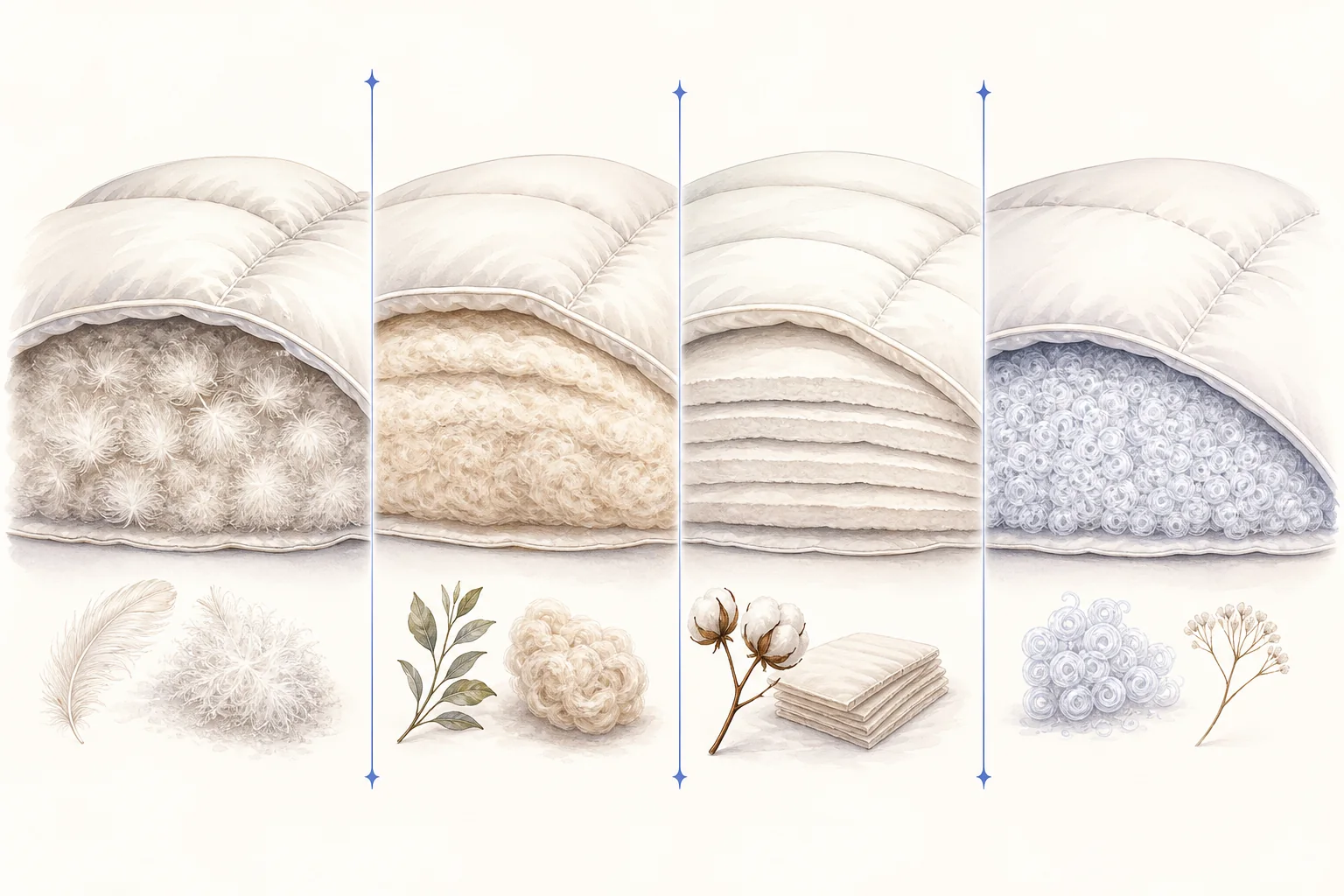
For down, higher fill power indicates that a given weight can occupy more volume under the stated method. It does not reveal how many ounces are inside. A high number with very little fill can remain light and less visually full.
For synthetic fills, GSM or total fill weight can help compare variants, but fiber geometry and recovery differ. Avoid translating a marketing number directly into warmth without construction and maker guidance.
Give the fill room to expand
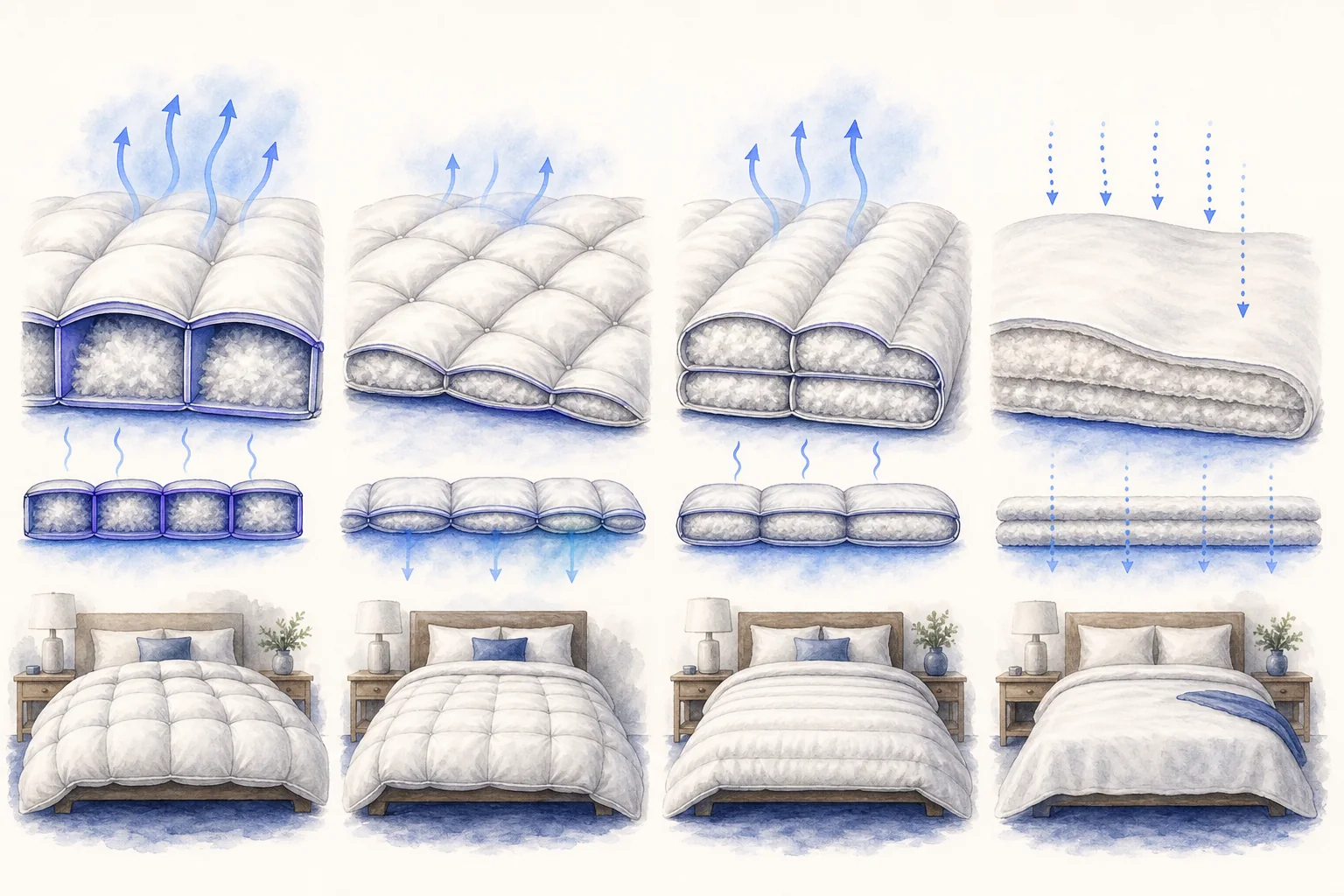
Baffle walls create three-dimensional chambers; sewn-through seams create colder, flatter lines but can suit a lighter insert. Box size and even distribution matter, and edge construction can make the perimeter appear flatter.
The illustration shows a structural progression, not a test score. Actual height changes with size, fill, humidity, compression and use.
Do not buy appearance at the cost of sleep
Loft usually traps air, so a visually full insert can also insulate strongly. Hot sleepers should look for a lighter fill amount, breathable shell and a cover chosen for contact feel instead of doubling the heaviest insert.
Warmth categories are not standardized. Compare the maker's variant description and return window rather than assuming all-season means the same thing across brands.
The cover can preserve or crush the look
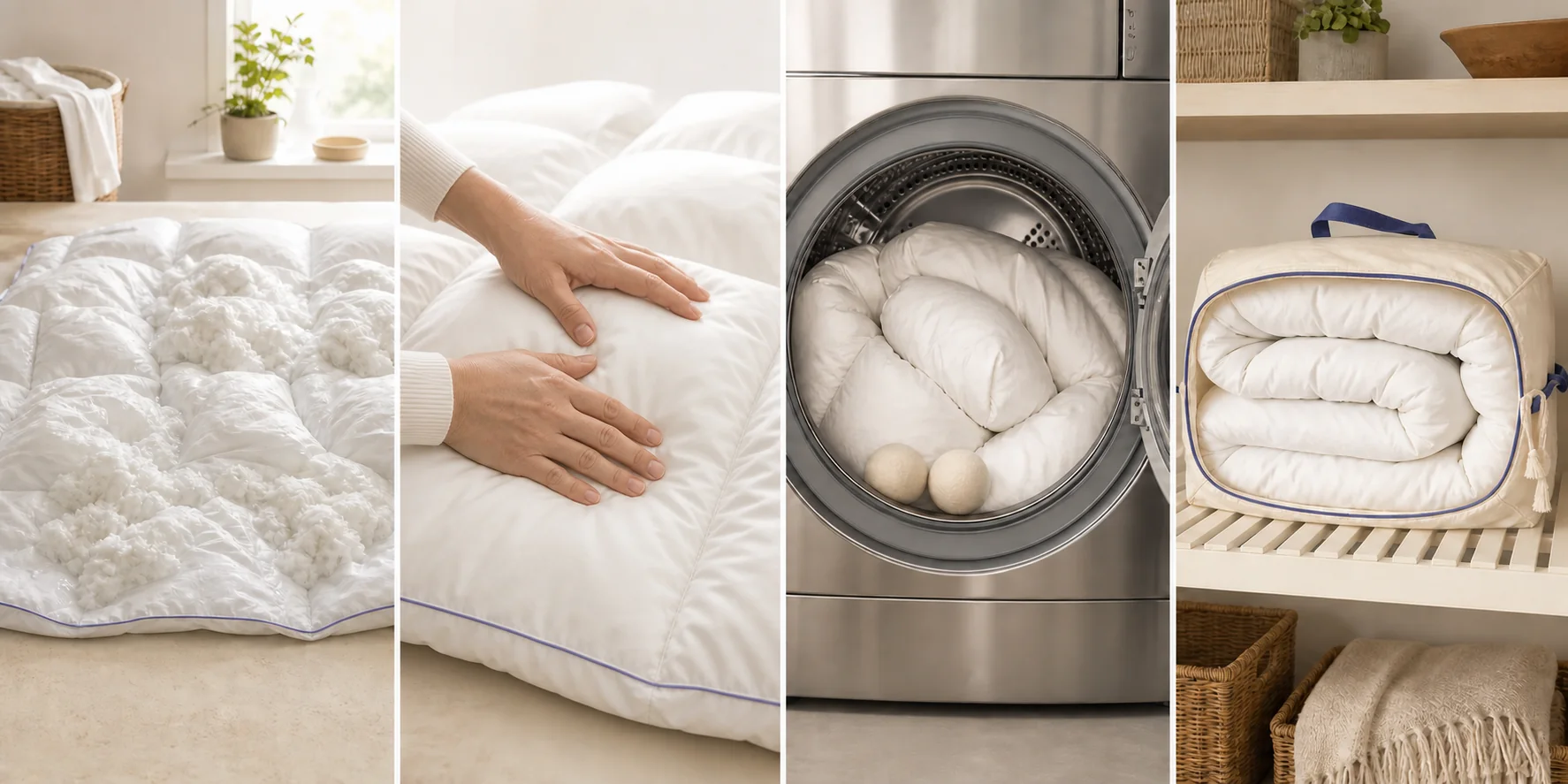
Match finished dimensions closely and connect soft corner ties to proper loops. An undersized cover compresses chambers; an oversized cover creates empty edges that look flat.
After unpacking, follow the maker's recovery and care instructions. Never use high heat or aggressive beating unless the delivered label permits it.
Use a six-field shortlist
Record fill identity, fill power or fiber specification, fill weight, chamber construction, exact dimensions and warmth tier. Then add shell, care, certification and returns.
The retailer link is a discovery route. It does not convert customer adjectives such as hotel or cloud into verified measurements.
Frequently asked questions
Which duvet insert is the fluffiest?
No universal model can be named from a photo. High fill power plus sufficient down weight, or a resilient high-volume alternative fill, compartmented construction and correct cover fit are the strongest published indicators.
Source: Sleep Foundation duvet-insert guide, FTC household textile labeling guide, Responsible Down Standard
What makes a duvet inner fluffy?
Fill structure traps air, while fill amount and baffle depth give it room to expand. Compression, moisture, broken clusters and a tight cover reduce visible loft.
Source: Sleep Foundation duvet-insert guide, FTC household textile labeling guide, Responsible Down Standard
Is a fluffy duvet insert always warmer?
Often more trapped air means more insulation, but warmth also depends on fill amount, material, chamber design, shell and room conditions. Choose a declared warmth tier rather than appearance alone.
Source: Sleep Foundation duvet-insert guide, FTC household textile labeling guide, Responsible Down Standard
Can you put two inserts in one cover?
That can create bulk but also excess heat, uneven movement and stress on ties. A single correctly specified insert is easier to fit, care for and evaluate.
Source: Sleep Foundation duvet-insert guide, FTC household textile labeling guide, Responsible Down Standard
Sources and editorial method
We checked definitions and practical distinctions against the sources below. Product recommendations live in separate buying guides with their own criteria and disclosures.
The bottom line
Buy measurable loft, not a staged cloud: pair fill power with fill amount, give it baffle space, match the cover and refuse more warmth than your room needs.