
In one sentence
Choose cotton fill for a low-loft, substantial drape and plant-based construction; choose down for maximum warmth-to-weight and airy loft, then verify fill percentages, sourcing standard, construction and care.
Cotton fill and down fill compared
| Attribute | Cotton batting | Down clusters |
|---|---|---|
| Loft | Flat to moderate | High and airy |
| Warmth-to-weight | Lower; more mass for comparable insulation | Higher with quality clusters |
| Drape | Substantial and blanket-like | Puffy and enveloping |
| Warm-room starting point | Thin cotton can work well | Choose low fill weight/light tier |
| Care | Often heavy when wet; exact label controls | Requires gentle complete drying; label controls |
| Animal origin | Plant fiber | Duck or goose undercoating |
| Key label trap | Cotton shell may hide synthetic fill | Down/feather percentages can differ |
Who each material suits
Cotton fill
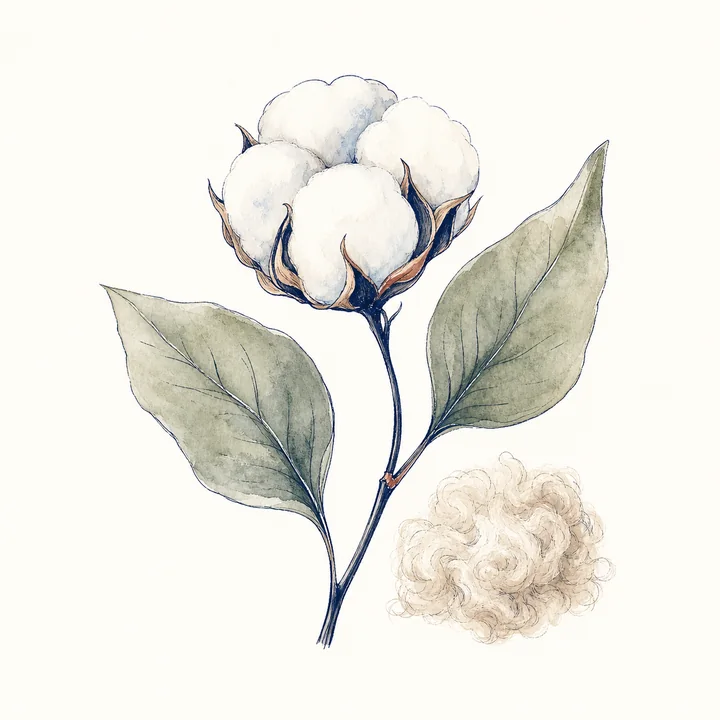
Sleepers wanting flatter natural batting, less puff and no animal-derived fill, with enough capacity for a heavy wet item.
Down fill
Sleepers prioritizing airy loft and efficient insulation who accept animal origin, sourcing verification and more exacting drying.
Separate cotton shell from cotton fill
Many down comforters have a 100% cotton shell. That does not make them cotton-filled. Read shell, fill and percentage statements separately; likewise, a product titled cotton comforter may contain polyester batting.
For down, distinguish down clusters from feather components. The down-versus-feather guide explains the structural difference, while this page compares true cotton batting with down fill.
Cotton settles; down lofts
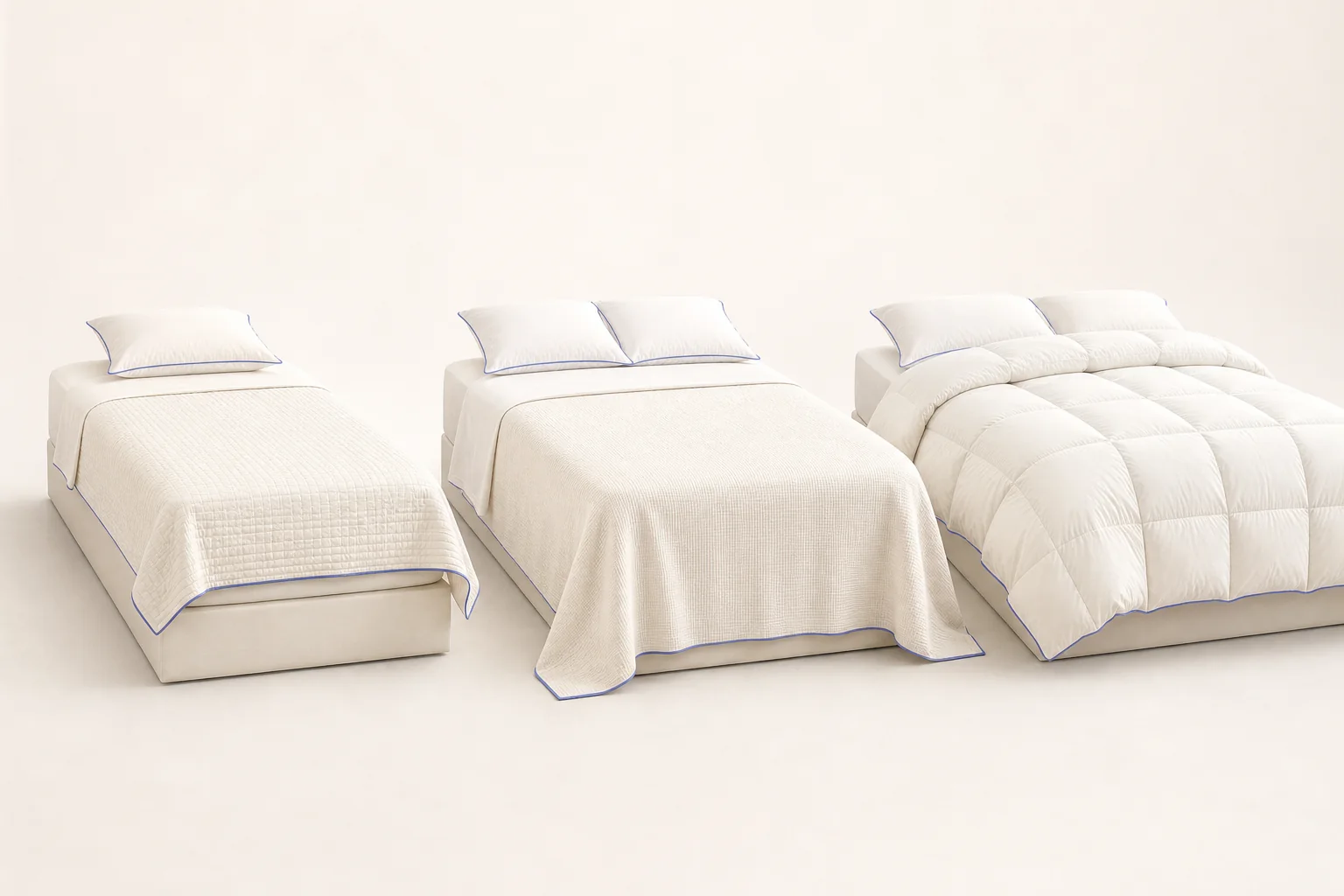
Cotton batting stacks fibers into a denser sheet that usually drapes close and feels physically substantial. Down clusters create air pockets and rebound, giving more visual puff and insulation for less fill mass.
Quilting and fill amount can reverse simplistic assumptions. A thin summer down insert can weigh less and sleep cooler than a thick cotton quilt; compare the full product rather than material alone.
Hot sleepers should compare tier, not reject a fiber
The Company Store explains that higher down fill power can provide warmth with less material weight, but fill power does not state total warmth by itself. Fill weight and chamber design remain necessary.
CottonWorks describes cotton bedding's heat and moisture transfer, yet dense batting can still insulate. For either fiber, start with a light tier, room conditions and the sleeper's heat tendency.
Both fills can exceed home-machine capacity
Wet cotton batting becomes heavy and can strain a small machine or dry slowly. Down requires room, gentle handling and repeated redistribution so no damp clusters remain. Machine washable does not mean every size fits every appliance.
Follow the sewn-in label and plan the dryer before washing. Use a removable cover to reduce full-item cleaning, especially when professional capacity is inconvenient.
Down adds an animal-origin decision
Down comes from ducks or geese. Buyers who accept animal-derived fill can look for a valid chain-of-custody standard such as RDS and verify the product, scope and current certificate rather than relying on a logo-shaped claim.
Cotton avoids animal fill but is not impact-free. Organic, chemical, labor and processing claims each need their own evidence; natural alone is not a lifecycle assessment.
Frequently asked questions
What is the healthiest material for a comforter?
No fiber is healthiest for everyone. Verify full composition and finishes, choose a warmth and cleaning routine that controls moisture and soil, and seek clinical guidance for diagnosed sensitivities.
Source: The Company Store fill and weight guide, CottonWorks home textile performance, Textile Exchange Responsible Down Standard
Is down comforter bad for hot sleepers?
Not necessarily. A low-fill lightweight down comforter can be airy, while a high-fill winter model can overheat. Compare fill weight, construction and room temperature.
Source: The Company Store fill and weight guide, CottonWorks home textile performance, Textile Exchange Responsible Down Standard
Do most hotels use down comforters?
Hotels use varied down and alternative systems based on climate, laundering and brand standards. Hotel use does not prove a material is right for a home sleeper.
Source: The Company Store fill and weight guide, CottonWorks home textile performance, Textile Exchange Responsible Down Standard
Do bed bugs live in down comforters?
Bed bugs can hide in seams and nearby furniture regardless of fill. A suspected infestation needs evidence-based pest-control guidance, not a fiber change alone.
Source: The Company Store fill and weight guide, CottonWorks home textile performance, Textile Exchange Responsible Down Standard
Sources and editorial method
We checked definitions and practical distinctions against the sources below. Product recommendations live in separate buying guides with their own criteria and disclosures.
The bottom line
Cotton provides a flatter, denser natural layer; down provides more loft and warmth per unit of fill weight. Verify what is actually inside, then choose around room, feel, care and sourcing values.