
In one sentence
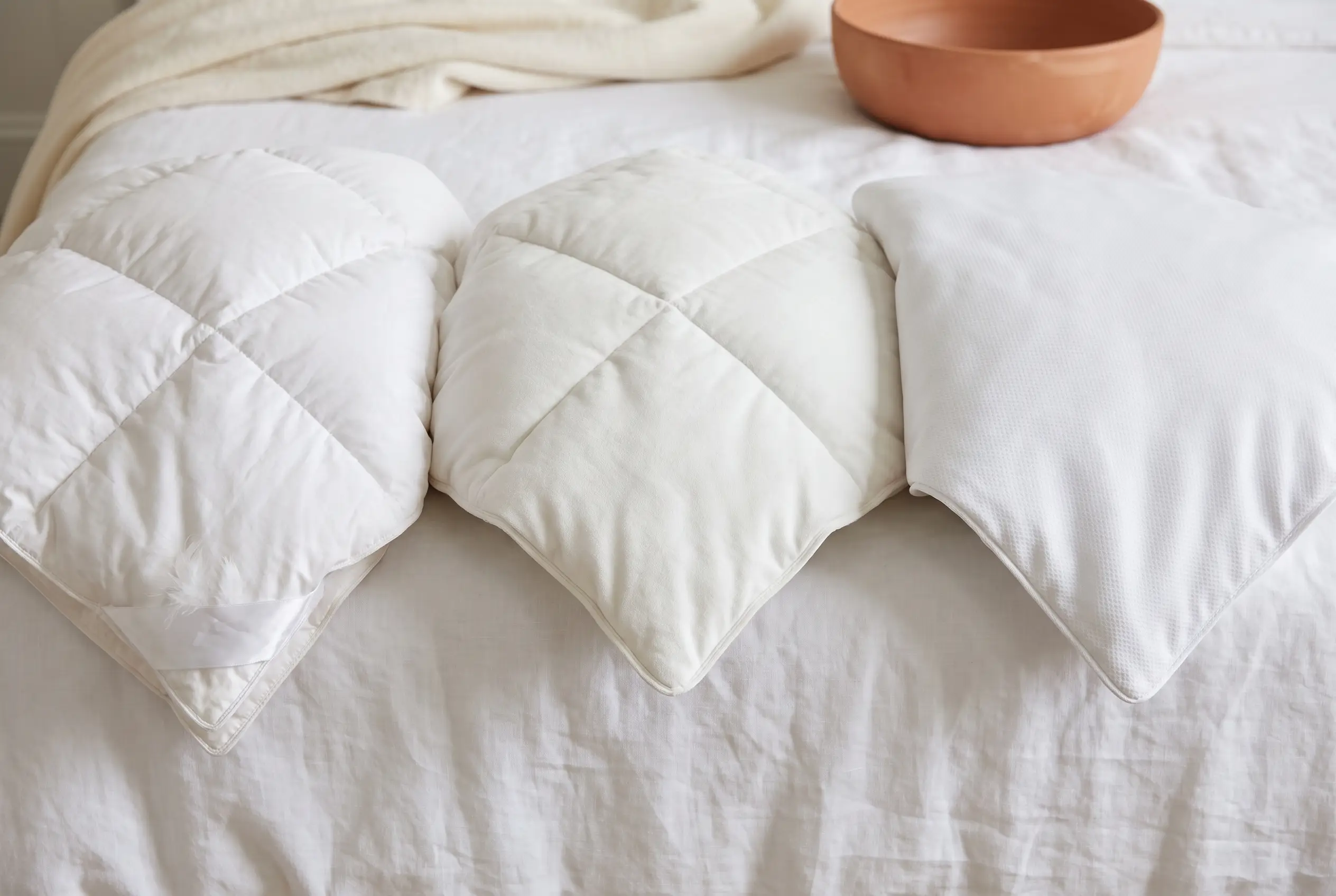
Choose a higher-down-content comforter for better warmth-to-weight and fewer noticeable quills. A down-and-feather blend can cost less and feel heavier, but inspect percentages, fill power, construction and sourcing rather than treating the terms as interchangeable.
Down and feather fill compared
| Factor | Down clusters | Feathers |
|---|---|---|
| Structure | Three-dimensional cluster, no hard quill | Flatter vane around a central quill |
| Primary role | Traps air for loft and warmth | Adds body, weight and support |
| Warmth-to-weight | Generally higher | Generally lower |
| Feel | Soft and compressible | Firmer; quills may be noticeable |
| Price | Usually higher | Usually lower |
| Label check | Percentage and fill power | Percentage, size and blend order |
Who should choose which
Higher down percentage
Best when low weight, packable loft and efficient insulation justify a higher price.
Down-and-feather blend
Useful when budget and a heavier, firmer hand matter more than maximum warmth-to-weight.
Down and feathers are different structures
Downmark defines down clusters as the insulating material used for warmth and feathers as flatter structures that provide stability. Down clusters trap air without a central quill.
A listing that says 'down and feather' describes a blend, not two synonyms. Read percentages and which material is named first.
Fill power measures down loft, not total warmth
Fill power describes how much volume a measured amount of down occupies under standardized conditions. Higher fill power can deliver a given warmth with less weight, but it does not state how much fill is inside the comforter.
Compare fill power together with fill weight, dimensions and baffle design. Our fill-power guide owns the full specification method.
Feather content changes weight and tactile feel
Feathers add density and can make a blend feel firmer. Their quills may become noticeable through a thin or loosely woven shell, especially as the product ages.
A tightly woven down-proof shell and intact baffles help contain both materials. Escaping fill may indicate a seam or shell problem rather than normal shedding.
Construction still controls cold spots
High-quality down cannot compensate for chambers that let fill migrate away from the edges. Baffle-box construction supports loft; sewn-through seams reduce bulk but create thinner lines.
Use the baffle-box versus sewn-through guide to separate fill choice from construction choice.
Sourcing claims need named standards
Down and feathers are animal-derived. If welfare traceability matters, look for a named current certification such as the Responsible Down Standard and verify the exact product scope.
Do not infer ethical sourcing from 'premium,' 'European' or a bird species alone. Those terms do not replace chain-of-custody evidence.
Care the blend as the label directs
Natural clusters can clump when detergent remains or the interior stays damp. Use a sufficiently large washer only when permitted, rinse thoroughly and dry completely on label-approved low heat while redistributing fill.
Never assume feather content makes a product dry-clean-only or machine-washable. The sewn-in label and construction decide.
Frequently asked questions
Do most hotels use down comforters?
Hotel specifications vary by climate, laundering system, budget and allergy policy. Some use down; many use down alternative. A hotel-style claim does not prove fill content.
Source: Downmark: down cluster or feather, Downmark: what is down and feather, Responsible Down Standard, FTC textile labeling guidance
When should you throw away a down comforter?
Replace or responsibly repurpose it when the shell or baffles fail, fill no longer redistributes after correct cleaning, persistent odor remains, or warmth is no longer adequate.
Source: Downmark: down cluster or feather, Downmark: what is down and feather, Responsible Down Standard, FTC textile labeling guidance
Do bed bugs live in feather duvets?
Bed bugs hide near sleeping areas and are not nourished by feathers or down. Suspected infestation requires evidence-based pest-control guidance, not simply replacing fill.
Source: Downmark: down cluster or feather, Downmark: what is down and feather, Responsible Down Standard, FTC textile labeling guidance
Is a down comforter bad for hot sleepers?
Down can provide high warmth at low weight, but a warm fill weight may overheat a hot sleeper. Choose a lighter warmth tier and breathable shell for the room.
Source: Downmark: down cluster or feather, Downmark: what is down and feather, Responsible Down Standard, FTC textile labeling guidance
Sources and editorial method
We checked definitions and practical distinctions against the sources below. Product recommendations live in separate buying guides with their own criteria and disclosures.
The bottom line
Down clusters deliver more loft and warmth per unit weight; feathers add firmness, weight and affordability. Treat every blend as a specification problem: percentages, fill power, fill weight, shell, baffles and verified sourcing.