
In one sentence
Use a duvet cover when you want to protect an insert, change style without replacing the fill and wash the contact layer more often; skip it if you prefer one finished piece and dislike refitting ties, corners and closures.
Duvet cover benefits and their trade-offs
| Potential benefit | What it changes | Trade-off |
|---|---|---|
| Insert protection | Interposes washable fabric against dust, oils and small spills | Cover still needs regular laundering |
| Style flexibility | Changes color, weave and pattern without replacing fill | Extra purchase and storage |
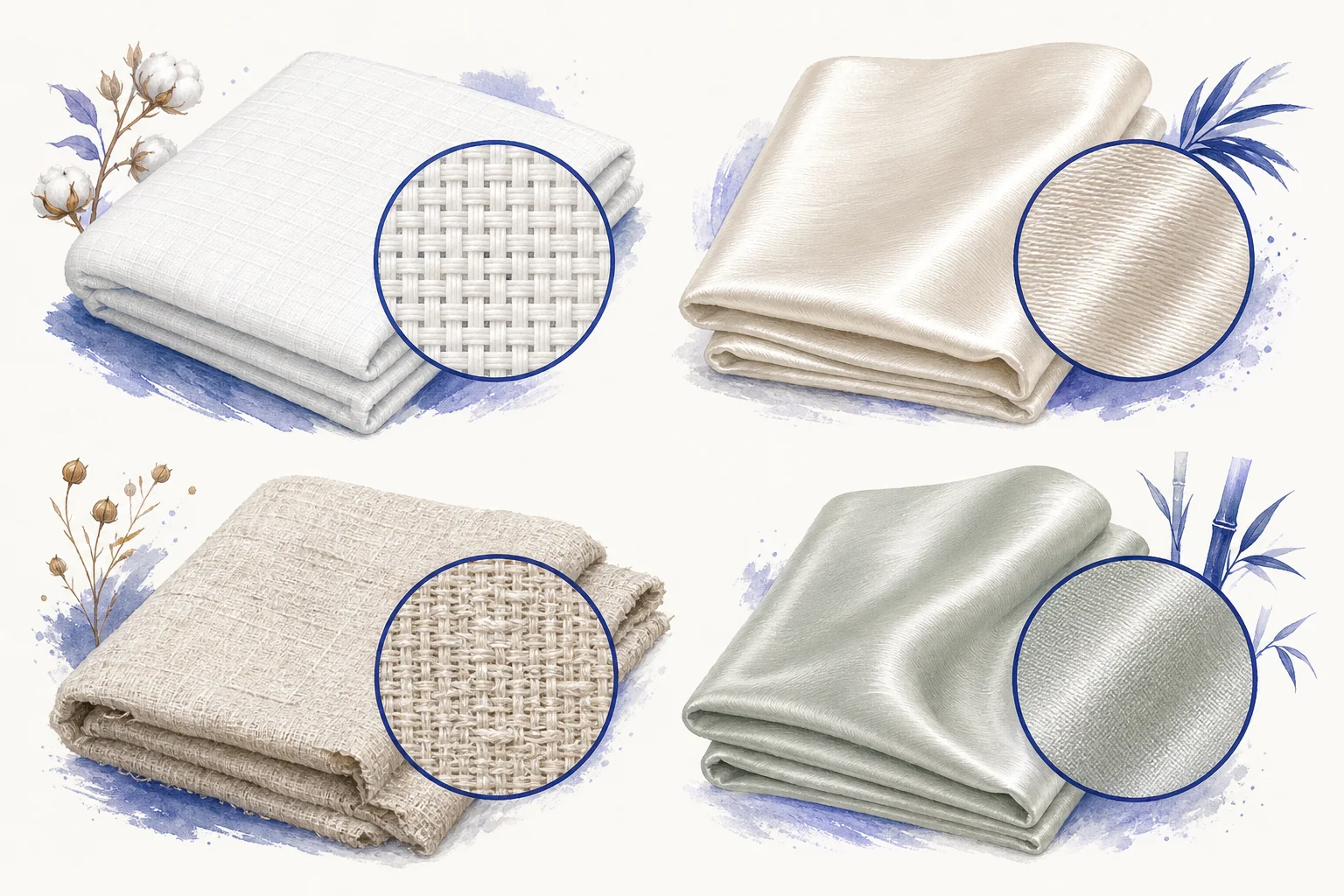
| Seasonal feel | Linen, percale, sateen or flannel changes surface feel | Cover fabric can alter warmth and drape |
| Laundry practicality | Empty cover is less bulky than a filled insert | Removing and refitting takes effort |
| Longer interval between insert washes | May reduce direct soil on fill layer | Does not make the insert maintenance-free |
| Modular warmth | Same cover can pair with different inserts | Dimensions and ties must match |
Who should use one
A cover may suit you if…
You own an expensive or difficult-to-wash insert, change bedroom style often or sleep directly under the top layer.
A finished comforter may suit you if…
You want the fastest bed-making routine, prefer one coordinated piece and can wash or professionally clean it as required.
A cover protects, but does not seal, the insert
The Company Store describes the cover as a pillowcase-like layer that helps shield an insert from dust, spills and wear. That can reduce direct soil and make small accidents easier to handle.
It is not waterproof unless explicitly designed and certified as such. Liquids can pass through closures, seams or fabric, and dust can enter over time. Inspect and air the insert even when covered.
The washable layer is easier to handle than the filled layer
An empty cover has the bulk of a sheet or light blanket, so it usually fits a home washer more easily than a Queen or King insert. Removing it also lets you wash the skin-contact surface more often without repeatedly wetting down, wool or synthetic fill.
The care label still controls water temperature, detergent, drying and ironing. The duvet-cover wash-frequency guide gives an exposure-based schedule rather than a universal calendar.
Style and insulation become separate decisions
A modular system lets you keep one insert while changing color and weave. You can pair a cool-feeling percale or linen cover with a light insert, or use a warmer-feeling flannel cover in cold conditions.
Surface fabric influences the system's feel but cannot transform an overly warm insert into cooling bedding. Choose fill weight for room temperature first, then the cover for touch, durability and care.
Can you put a comforter inside a duvet cover?
Often yes, provided the finished dimensions are close and the comforter has attachment loops or stays aligned without them. The Company Store lists both inserts and comforters as possible contents.
A thick decorative comforter may bunch, and a smaller Queen cover around a King comforter can compress fill. Compare width and length and do not force closures under tension.
You sleep under the complete covered duvet
The cover stays around the insert during use; it is not a separate top sheet. Some people use a top sheet between the body and cover, while others wash the cover on the same rhythm as sheets.
Either system can work. A top sheet may reduce direct contact soil, but pets, sweating, illness and spills can still justify more frequent cover cleaning.
The real downside is routine friction
Removing, washing, drying and refitting a large cover takes time. Poorly matched dimensions or missing corner ties can let the insert shift, leaving empty corners and uneven warmth.
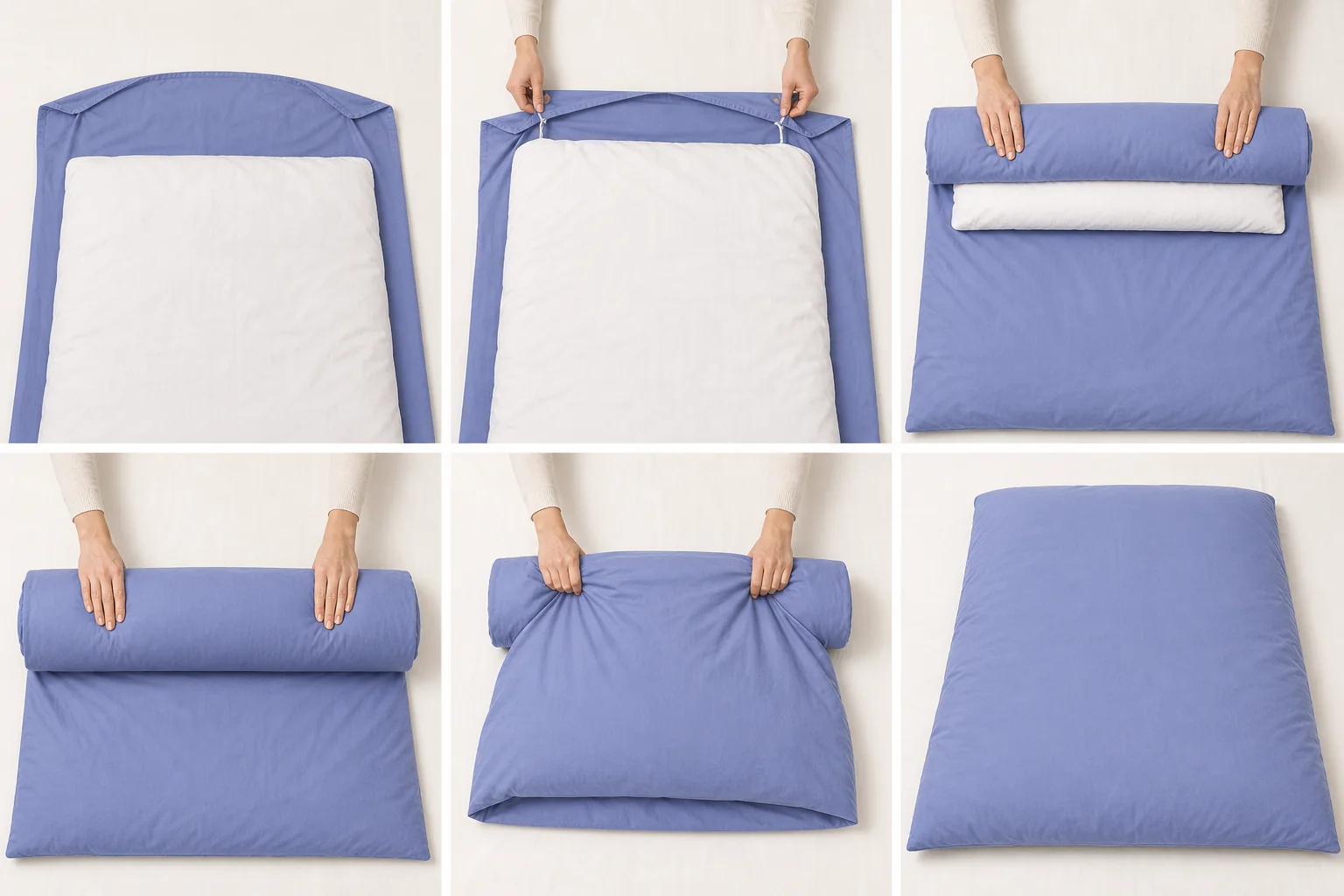
The burrito-method guide shows a reliable fitting process. If you know you will avoid that maintenance, a washable finished comforter may be the more honest choice.
Frequently asked questions
Why don't Americans use duvet covers?
Many Americans do use them, while finished comforters and top sheets are also common. Regional retail traditions and preference for one-piece bedding affect the mix; there is no requirement to choose one system.
Source: The Company Store duvet cover benefits, The Company Store what goes inside guide, Naturepedic duvet cover guide
Is it necessary to use a duvet cover?
No. It is useful protection for an insert and a flexible style layer, but a finished comforter can be used alone when its care and appearance suit you.
Source: The Company Store duvet cover benefits, The Company Store what goes inside guide, Naturepedic duvet cover guide
Do you just put a comforter in a duvet cover?
You can if dimensions are compatible and the comforter stays secured. A purpose-made duvet insert is the usual contents, but compatible comforters also work.
Source: The Company Store duvet cover benefits, The Company Store what goes inside guide, Naturepedic duvet cover guide
Are you supposed to sleep under a duvet cover?
Yes, the cover remains on the insert while you sleep under the complete duvet. A top sheet is optional and affects how often the cover contacts your skin.
Source: The Company Store duvet cover benefits, The Company Store what goes inside guide, Naturepedic duvet cover guide
Sources and editorial method
We checked definitions and practical distinctions against the sources below. Product recommendations live in separate buying guides with their own criteria and disclosures.
The bottom line
A duvet cover earns its place when protection, washable contact fabric and style flexibility outweigh the effort of refitting it. It reduces insert exposure; it does not eliminate insert care.