
In one sentence
Measure cover and insert in both directions after laundering as directed, align orientations, secure every compatible tie and loop, then return or replace the mismatched piece if the remaining difference still creates empty fabric or bunching.
Diagnose the fit before trying a hack
| Symptom | Likely cause | Best next check |
|---|---|---|
| Empty fabric on all edges | Cover footprint larger than insert | Measure both finished dimensions |
| Insert falls to one side | Missing or untied anchors | Inspect every corner and side attachment |
| One end seems empty | Insert rotated 90 degrees | Compare width and length orientation |
| Insert bunches inside | Insert too large or cover shrank | Measure after label-approved laundering |
| Fit changes after each wash | Unequal shrinkage or incomplete alignment | Track dimensions and follow both labels |
Who can fix versus who should exchange
Fix alignment and anchoring
Dimensions are close, the insert was rotated or the compatible corner loops and ties were not connected.
Exchange a true mismatch
Finished measurements differ materially, seams distort, fill bunches or the insert cannot lie flat without compression.
Compare finished inches, not Full/Queen or King labels
The Company Store recommends matching cover and insert size, while also showing that actual dimensions vary by product tier. Write down width and length for both pieces; do not compare a cover width with an insert length by accident.
A slightly smaller cover can create a fuller appearance, but there is no universal safe percentage. Excess compression may distort chambers, stress closures or concentrate warmth.
Rule out a 90-degree rotation
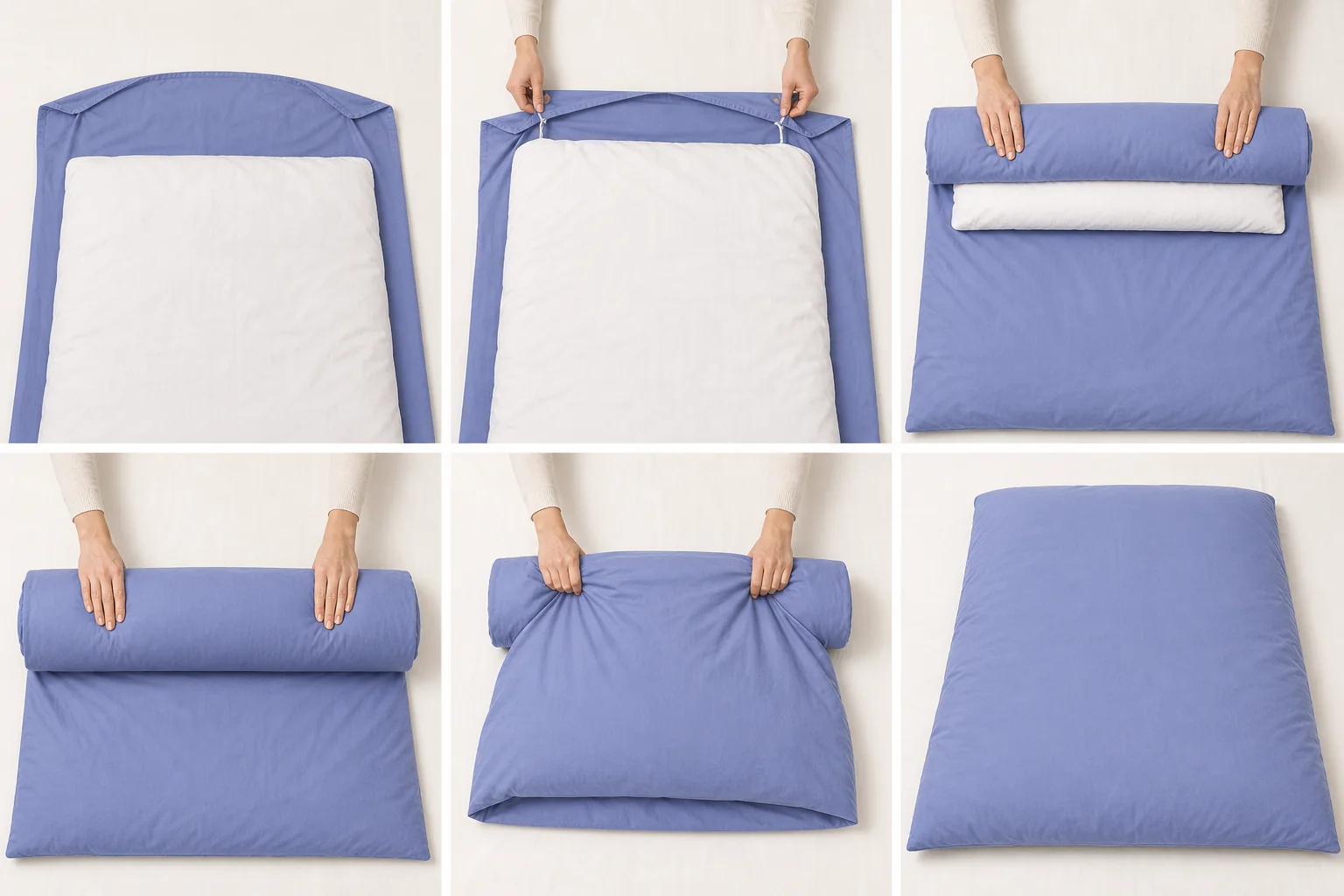
Many inserts look nearly square when spread on a bed. Mark the head edge temporarily, align seams and confirm the closure is at the intended foot. A rotated insert can mimic an oversized cover by leaving one long empty strip.
Use the burrito or traditional fitting method only after corners match. Technique cannot correct a genuine dimension mismatch.
Ties and loops control shifting, not size
Corner ties attached to insert loops reduce migration and help the cover stay filled, according to The Company Store. Side anchors can add control when both products provide them.
Do not tie around fill chambers, pierce the shell with unsafe clips or cinch fabric so tightly that seams pucker. Anchors cannot supply missing width or length.
Account for laundering and shrinkage cautiously
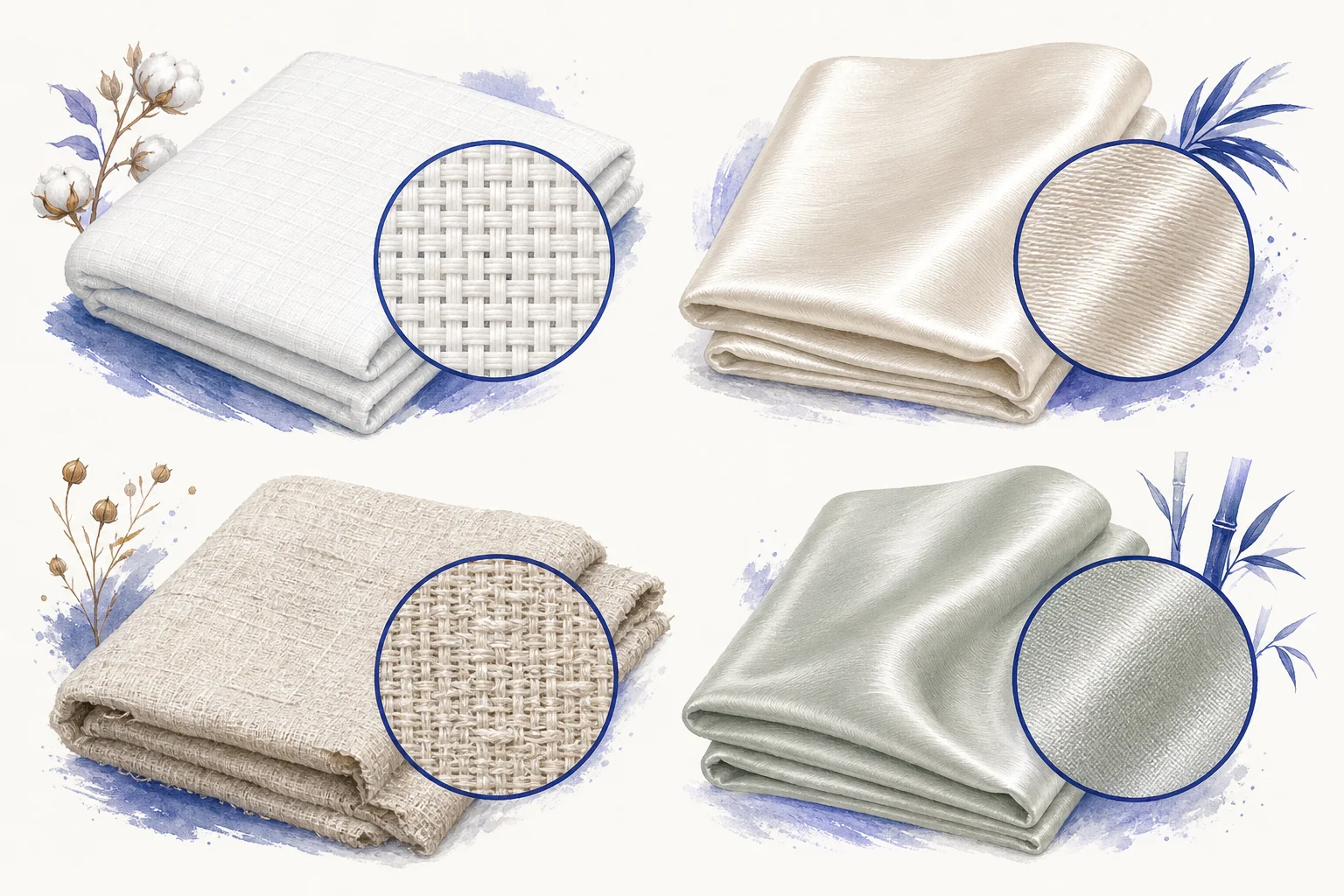
Cotton and linen covers may change dimensions according to construction and care. Follow the delivered label before assuming a first-wash correction; intentionally using excessive heat can damage fabric, color or closures and may make the cover too small.
Measure again after normal label-approved care. If a retailer's published measurements differ substantially from the delivered piece, document the item before altering it and use the return process.
Replace the piece that least fits the rest of the system
If the insert fits the mattress and warmth need, replace the cover by actual dimensions. If the cover is valuable or coordinates with the room, source an insert whose footprint and attachment points match it.
The shifting guide addresses a correctly sized insert that still moves. The size chart addresses bed coverage; this page owns the insert-to-cover mismatch itself.
Seven fit checks
- 01Lay the empty cover flat without stretching and measure seam to seam in both directions.
- 02Measure the insert at its widest relaxed points and note which side is width versus length.
- 03Check whether either label lists expected shrinkage or laundering before first use.
- 04Turn the cover inside out, place the insert on top and align all four corners.
- 05Attach compatible ties to loops without cinching the fabric into knots.
- 06Close the cover, shake and smooth it, then assess the empty border and bunching.
- 07If the mismatch remains, use the return window or replace one piece using actual inches—not the size name.
Frequently asked questions
Is it better to get a duvet cover that is too big or too small?
Neither is ideal. A modestly smaller cover may look fuller, but too small can compress and bunch the insert; too large leaves empty fabric and more shifting. Match actual dimensions.
Source: The Company Store duvet cover size guide, The Company Store duvet insert guide, The Company Store cover fitting method
Can you put a bigger duvet in a smaller cover?
Only when the dimensional difference is modest and the insert lies flat without compressed chambers or strained closures. Follow maker guidance; do not force a large mismatch.
Source: The Company Store duvet cover size guide, The Company Store duvet insert guide, The Company Store cover fitting method
Why is my duvet cover so much bigger than my duvet?
Brands vary within the same named size, one piece may have shrunk, or the insert may be rotated or incorrectly anchored. Measure both finished pieces to identify which.
Source: The Company Store duvet cover size guide, The Company Store duvet insert guide, The Company Store cover fitting method
Sources and editorial method
We checked definitions and practical distinctions against the sources below. Product recommendations live in separate buying guides with their own criteria and disclosures.
The bottom line
First correct orientation and anchors; then trust the tape measure. If a cover still has a large empty border or the insert bunches, exchange one piece using finished dimensions rather than improvising permanent hacks.