
In one sentence
Measure cover and insert, turn the cover inside out, connect every corner tie to its matching insert loop, align edges, close the foot and shake from the top corners. If loops are absent, sew fabric loops into structurally sound seams rather than using sharp pins.
Why a duvet shifts and the safest correction
| Cause | Clue | Correction |
|---|---|---|
| Cover too large | Empty fabric border | Match actual dimensions |
| Insert too large | Compressed, folded fill | Use a compatible cover |
| Ties not connected | Corners migrate overnight | Attach every matching loop |
| Missing loops | No anchor point | Sew loops into sound corner seams |
| Uneven fill | Thin and heavy chambers | Dry and redistribute fill first |
| Slippery fabric pairing | Whole insert rotates | Improve fit; secure all points |
Who this fix suits
Good candidate
The cover and insert are intact, similar in measured size and have—or can safely receive—soft attachment points.
Replace or repair first
Do not tie around torn shells, leaking fill, failed baffles or closures under tension.
Measure the cover and insert separately
Queen and King are category names, not fixed dimensions. Lay both layers flat and compare width and length. A small difference can create a fuller look; a large difference leaves empty edges or compresses loft.
The duvet-cover size guide from The Company Store recommends matching the cover and insert size. Our comforter size chart helps interpret the measured bed drop separately.
Use ties and loops as matching pairs
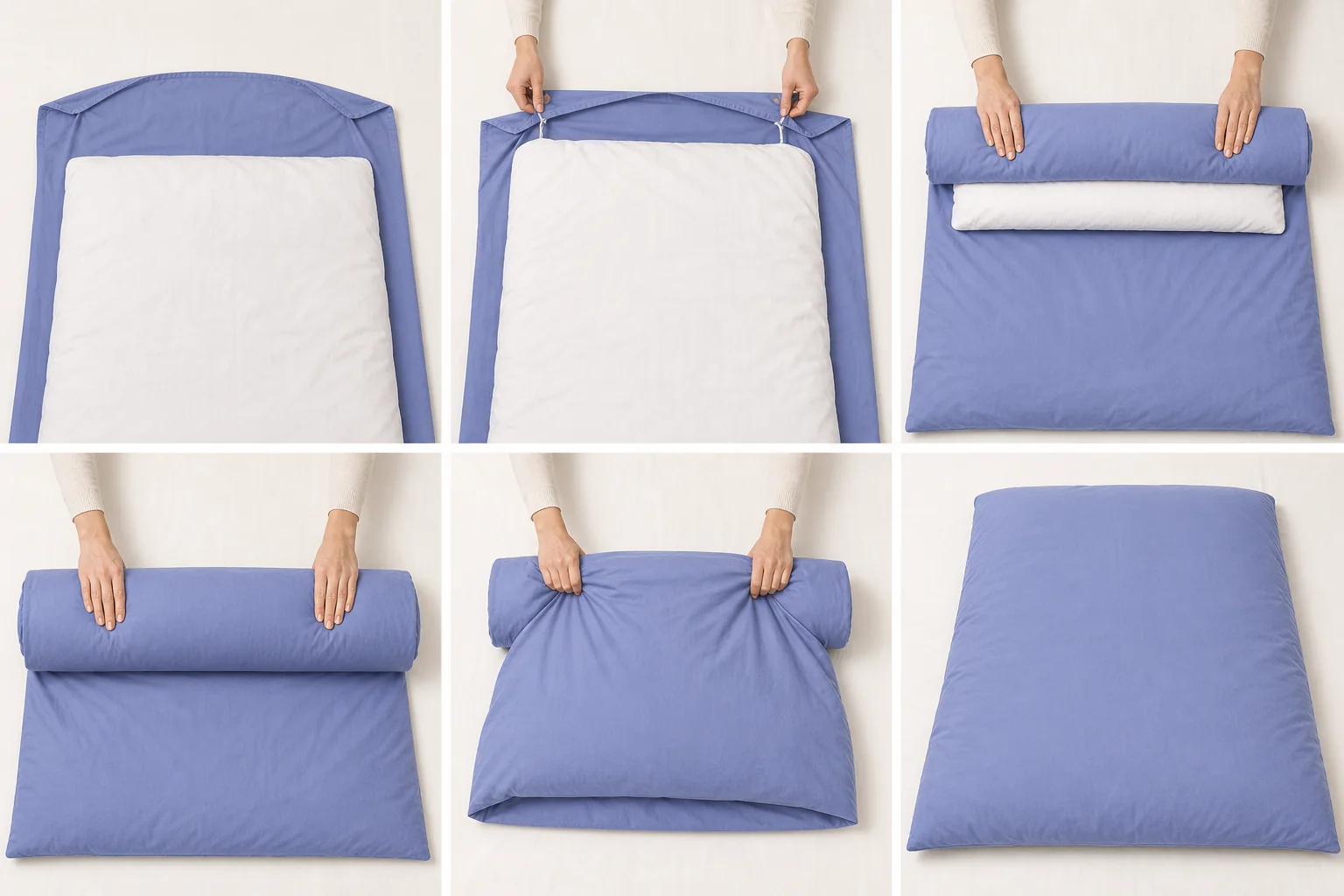
Turn the empty cover inside out so every attachment point is visible. Connect top-left to top-left and continue around all corners; use side or center points when both products provide them.
Tie a secure bow or maker-recommended knot without cinching the shell into a hard bundle. Excess tension can tear a loop or corner seam.
Refit with the roll method
Align the secured layers before rolling. The burrito-method guide keeps all edges visible, reducing the rotation that can happen when an insert is shaken blindly into a right-side-out cover.
After unrolling, close the opening at the foot and shake downward from both top corners in short controlled movements.
What to do when there are no corner loops
A repair professional—or a careful sewer—can add short fabric loops to structurally sound corner seams. Use compatible washable tape or fabric and avoid catching the fill.
Do not use safety pins, exposed clips or fasteners with hard edges inside bedding. They can open, snag fabric, create pressure points or damage the washer.
Separate insert movement from shifting fill
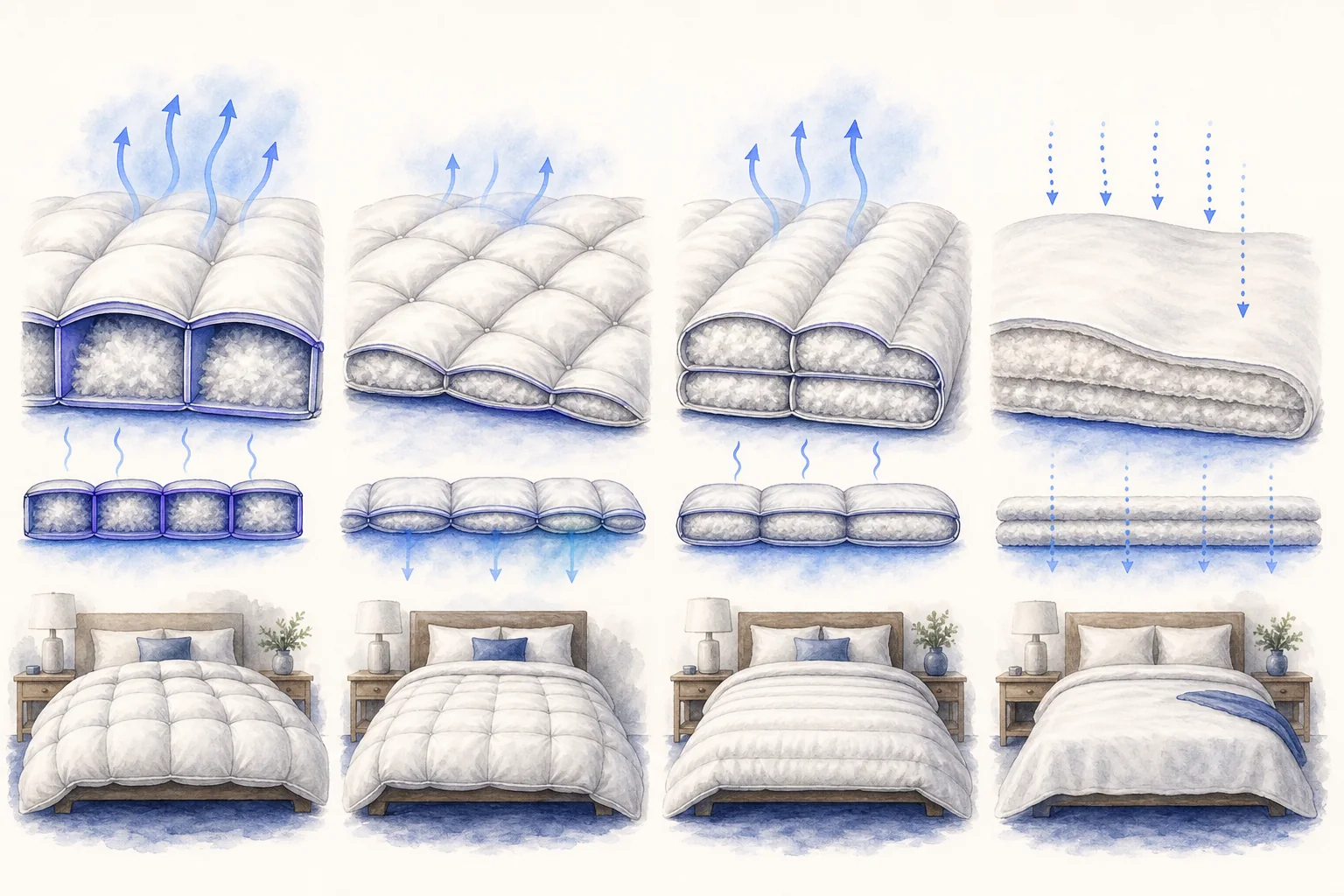
If the outer insert remains aligned but insulation pools inside its own chambers, the cover is not the cause. Complete drying, gentle redistribution and intact baffles matter.
Our fluffing guide covers clumps and uneven loft. Failed chamber seams may need repair or replacement rather than stronger cover ties.
Reset the system after every wash
Reconnect every point after laundering, verify the opening is fully closed and redistribute before making the bed. Inspect ties because repeated pulling can loosen stitching.
When buying a replacement, compare listed dimensions and attachment layout together—not only fabric color and nominal size.
Frequently asked questions
Why does my duvet move inside the cover?
Common causes are mismatched dimensions, unused or missing ties, slippery fabric and uneven fill. Measure both layers and inspect attachment points before adding accessories.
Source: The Company Store duvet-cover fitting guide, The Company Store duvet-cover size guide, FTC textile labeling guidance
Why are people no longer using top sheets?
Some sleepers wash the removable duvet cover as the contact layer instead. A top sheet may affect cleaning frequency but does not secure the insert inside its cover.
Source: The Company Store duvet-cover fitting guide, The Company Store duvet-cover size guide, FTC textile labeling guidance
How do I stop a duvet moving inside the cover?
Connect matching ties and loops, align measured dimensions, close the foot and redistribute from the top corners. Add sewn fabric loops only to sound seams if needed.
Source: The Company Store duvet-cover fitting guide, The Company Store duvet-cover size guide, FTC textile labeling guidance
How do I stop my comforter from shifting?
If a comforter is used inside a cover, the same fit and attachment checks apply. If its internal fill shifts, inspect chamber construction and dryness instead.
Source: The Company Store duvet-cover fitting guide, The Company Store duvet-cover size guide, FTC textile labeling guidance
Sources and editorial method
We checked definitions and practical distinctions against the sources below. Product recommendations live in separate buying guides with their own criteria and disclosures.
The bottom line
A well-matched cover plus correctly used soft attachment points prevents most shifting. Avoid sharp improvised clips; repair missing loops or failed seams at the source.