
In one sentence
Put a duvet insert—or a compatible comforter—inside the cover. Match measured width and length, connect corner loops to ties, distribute the fill evenly and close the opening. Quilts and blankets are possible but tend to shift because they lack loops and loft.
Which inner layer belongs in a duvet cover?
| Inner layer | Works? | Main tradeoff |
|---|---|---|
| Duvet insert | Best fit | Designed for covers and usually has corner loops |
| Finished comforter | Often | Pattern is hidden and loops may be absent |
| Quilt | Sometimes | Low loft and more movement inside the cover |
| Blanket | Sometimes | Can bunch unless carefully secured |
| Nothing | Warm-weather styling only | No insulation or loft |
Who should use which option
Choose an insert
Best for a modular bed, reliable corner attachment and separate control over warmth and cover fabric.
Reuse a comforter
Reasonable when dimensions align and you accept extra bulk, hidden styling and possible shifting.
A duvet insert is the purpose-built filling
A duvet insert is a filled, usually plain layer designed to sit inside a removable cover. Corner loops align with ties or snaps so the two layers move together.
Choose fill and warmth independently from the cover fabric. That separation is the central modular benefit of a duvet system.
Can a regular comforter go inside?
Yes, when the comforter fits without forced compression and the cover can close normally. A decorative comforter becomes invisible, however, and a loop-free model may migrate inside the shell.
Do not knot ties tightly around delicate corners or pierce the shell with improvised fasteners. A torn shell can release fill.
Match measurements, not only the size name
Full/Queen and King labels are ranges rather than universal dimensions. Compare actual width and length. A slightly fuller insert may create a plump look, but a large mismatch produces empty corners or compressed loft.
Our comforter size chart explains measured mattress drop; the same principle applies here: use listed product dimensions before buying either layer.
Quilts, blankets and empty covers
A quilt or blanket can provide a lighter layer, but neither is normally shaped or looped for a cover. Expect more bunching and less even loft.
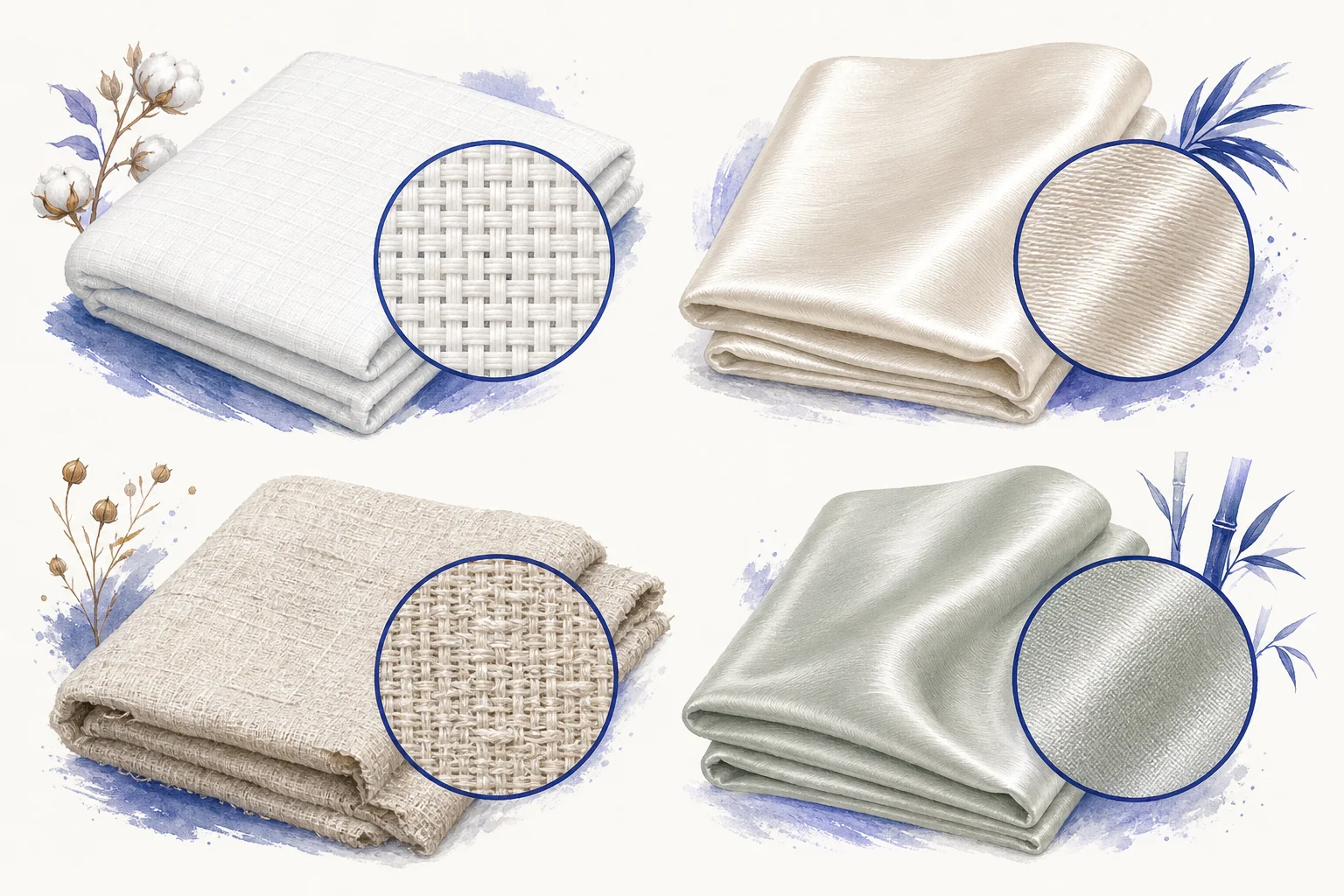
An empty linen or cotton cover can act as a light summer layer, although it will feel more like a double sheet than a filled duvet.
Keep the inner layer from shifting
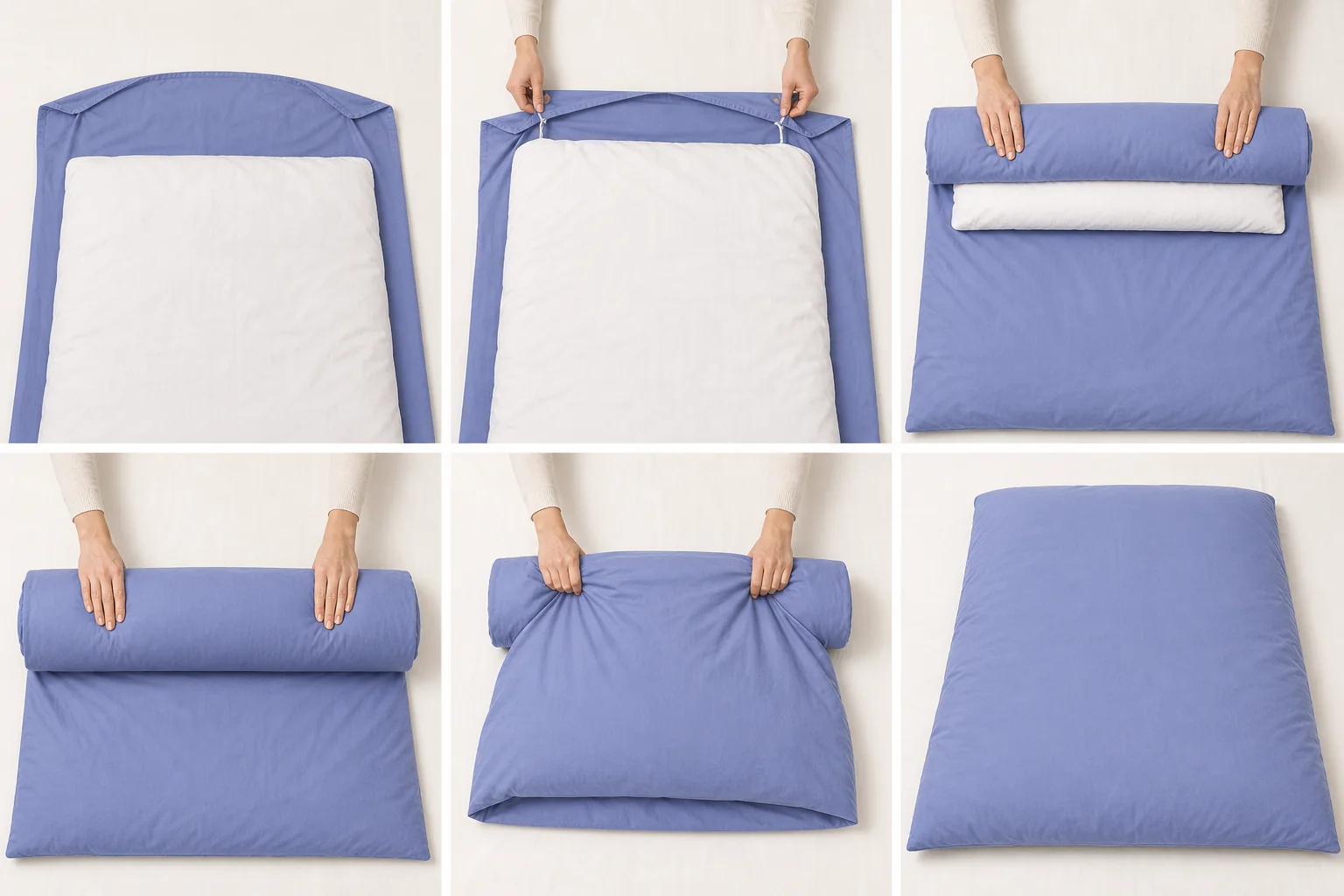
Connect every corresponding attachment point, align all four corners and close the opening. The burrito-method guide keeps both layers visible while fitting.
If movement persists, recheck actual dimensions and redistribute from the top corners. Do not add sharp pins, clips or unapproved adhesives inside bedding.
Separate the layers before routine washing
Remove the insert before washing the cover. The cover can usually follow a more frequent schedule because it receives skin contact and surface soil; the filled layer follows its own label.
Our duvet-cover wash-frequency guide uses exposure and top-sheet use instead of one rigid calendar.
Frequently asked questions
What is the thing that goes inside a duvet cover called?
It is usually called a duvet insert. A compatible comforter may also be used, but inserts are purpose-built with plain shells and often include corner loops.
Source: The Company Store: what goes inside a duvet cover, The Company Store: how to use a duvet cover, FTC textile labeling guidance
Do you just put a comforter in a duvet cover?
You can, provided its measured dimensions fit and the cover closes without compressing it. Missing corner loops may allow more shifting.
Source: The Company Store: what goes inside a duvet cover, The Company Store: how to use a duvet cover, FTC textile labeling guidance
What is the best filling for a duvet cover?
There is no universal best fill. Choose down, down alternative, wool or another insert based on warmth, weight, care and sourcing preferences.
Source: The Company Store: what goes inside a duvet cover, The Company Store: how to use a duvet cover, FTC textile labeling guidance
Can you put anything inside a duvet cover?
Not safely or effectively. Use clean bedding with compatible dimensions; avoid loose materials, sharp fasteners and items that cannot be secured or laundered appropriately.
Source: The Company Store: what goes inside a duvet cover, The Company Store: how to use a duvet cover, FTC textile labeling guidance
Sources and editorial method
We checked definitions and practical distinctions against the sources below. Product recommendations live in separate buying guides with their own criteria and disclosures.
The bottom line
A matching duvet insert is the most reliable inner layer. A comforter can work when dimensions and care are compatible; quilts and blankets are lighter compromises with more shifting.