
In one sentence
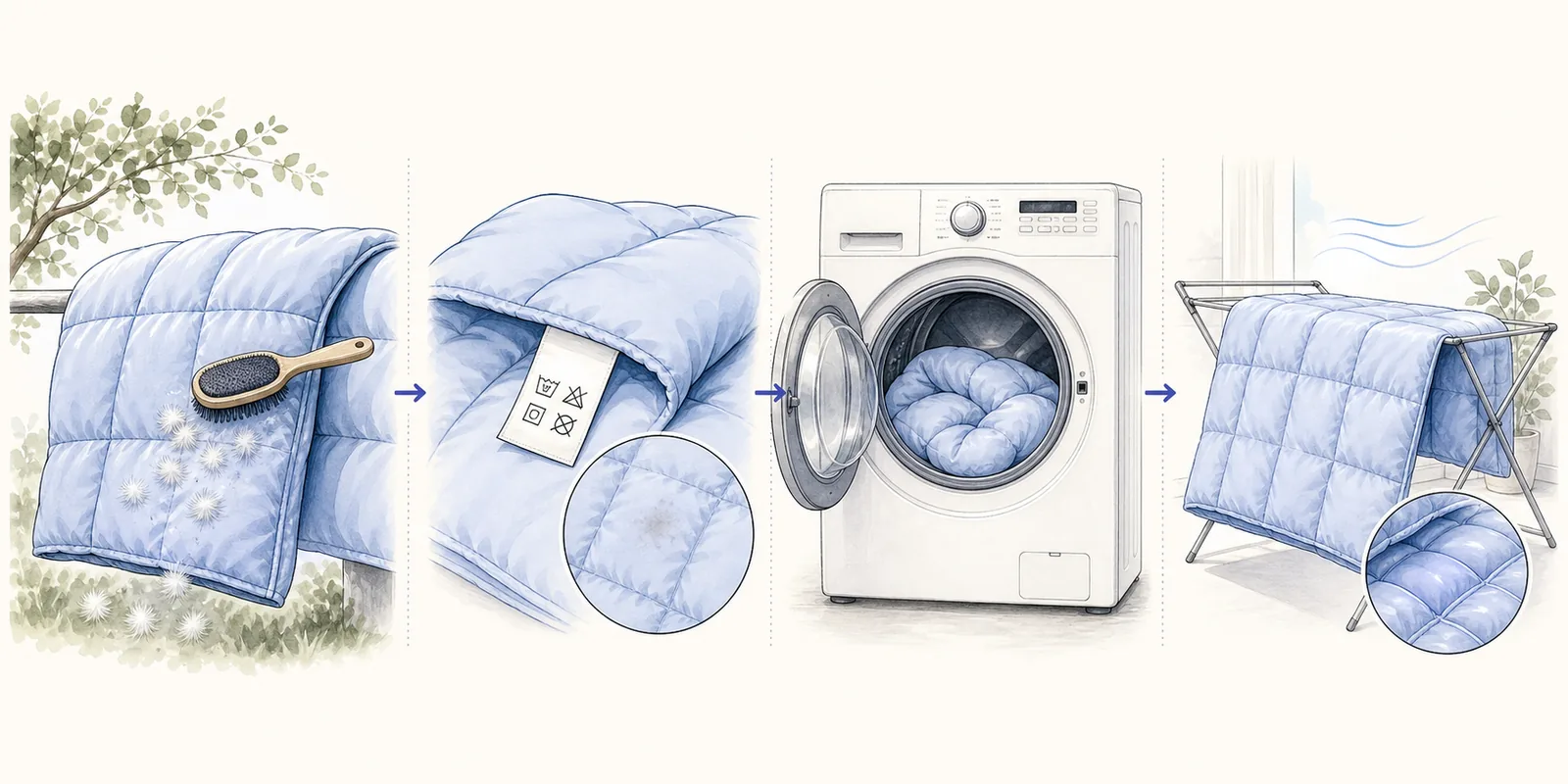
Shake or vacuum the comforter gently, use a lint roller or soft fabric-safe brush, optionally tumble a label-compatible dry item briefly on no heat, clean the lint screen, then wash only if the care label and machine capacity allow.
Choose the least aggressive useful method
| Method | Best for | Main caution |
|---|---|---|
| Outdoor shake | Loose surface hair | Support seams; avoid contaminating indoor air |
| Lint roller or tape | Small areas and woven shells | Test adhesive on delicate finishes |
| Soft brush or upholstery tool | Broader dry surface | Low suction; stop if threads pull |
| No-heat tumble before washing | Label-compatible sturdy item | Clean lint screen; not for prohibited fabrics |
| Washer | Remaining soil after dry removal | Hair can clump; capacity and label still control |
Who should use which route
Routine fur on an intact washable shell
Dry removal followed by label-approved laundering is usually practical when the item moves freely.
Delicate, torn or heavily contaminated bedding
Avoid friction and appliance loading; repair first or seek maker, cleaner or hygiene-specific advice.
Remove as much fur as possible while it is dry
Maytag recommends manual removal before standard washing and warns that excess pet hair can collect in filters or drain paths. Work section by section with the comforter flat so the tool contacts the shell without crushing or pulling its fill-control stitching.
A lint roller suits small areas. For a full comforter, a clean upholstery attachment at low suction or a fabric-safe rubber tool can be faster, but stop if the weave lifts, pills or snags.
A no-heat tumble can loosen hair—but only when permitted
Maytag describes a dry-wash-dry sequence for compatible laundry: a brief no-heat tumble loosens hair into the lint screen before water turns it into clumps. Check periodically and clean the screen before continuing.
This is not universal advice for silk, wool, damaged shells or dry-clean-only bedding. The delivered care label overrides the general technique, and no-heat still creates mechanical action.
Water cleans soil; it is not the best first fur collector
Once loose hair is removed, decide whether the comforter actually needs washing. Use the exact labeled cycle and a drum large enough for movement. Do not add unverified dissolvers or assume vinegar chemically dissolves hair.
The best comforters for pet owners guide compares care strategies, while a removable duvet cover provides a smaller contact layer for routine fur and dander.
Clean the appliance after a hairy load
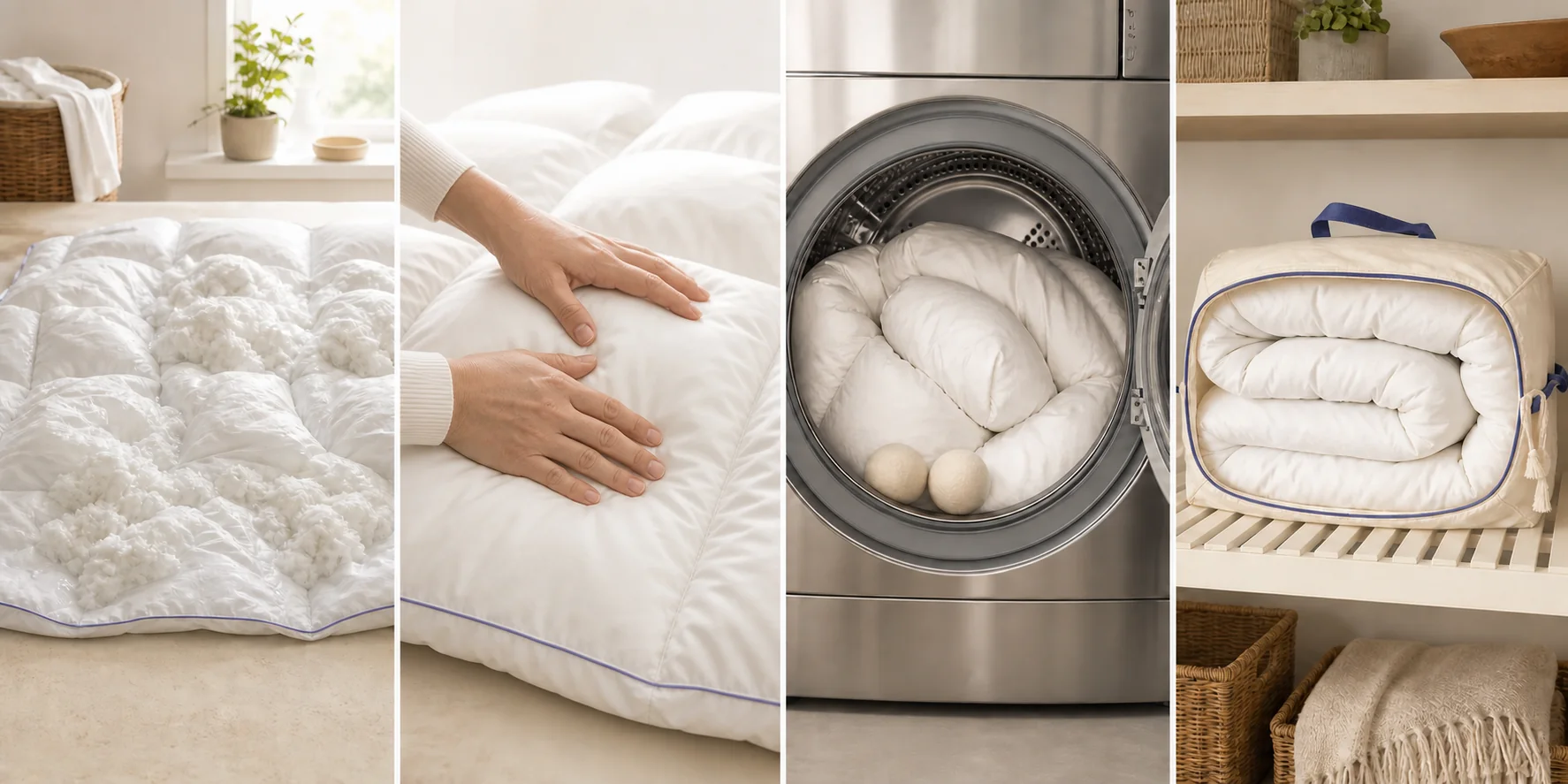
Empty the dryer lint screen, inspect the washer's accessible filter according to its manual and wipe visible hair from the drum. Never dismantle a machine or probe a drain without its instructions.
If drainage slows, the machine reports an error or hair remains beyond accessible areas, stop and consult the appliance manual or service provider rather than running repeated bulky cycles.
Reduce the next load at the source
Brush the pet appropriately, vacuum the sleeping area, add a washable top layer and remove fur before it becomes embedded. Match the cover color only for appearance; hidden fur and dander still need removal.
Repair claw snags promptly and keep the comforter away from an animal with active skin infection, parasites or biological contamination until veterinary and cleaning guidance is clear.
Dry first, then decide whether to wash
- 01Take the comforter to a ventilated area and support it while gently shaking loose hair.
- 02Vacuum at low suction through a clean upholstery tool or use a lint roller/soft brush in short sections.
- 03Inspect seams, quilting and shell for snags or leaking fill before adding friction.
- 04If its label permits tumble drying, use a short no-heat tumble to loosen remaining hair.
- 05Clean the lint screen immediately and wipe visible debris from the drum.
- 06Wash only when needed, on the sewn-in label setting, without packing the drum.
- 07Dry completely as permitted, clean appliance filters and add a washable cover for future exposure.
Frequently asked questions
What pulls pet hair out of the air?
A correctly sized air cleaner may capture airborne particles, but it does not remove hair already embedded in a comforter. Use dry surface removal and appropriate cleaning for the textile.
Source: Maytag — removing pet hair from laundry, Maytag — pet hair in washers and dryers, Whirlpool — washing a comforter
Is there a pet hair dissolver for bedding?
Products exist, but compatibility and claims vary. Do not add one unless both the comforter label and appliance instructions allow it; dry removal is the safer first step.
Source: Maytag — removing pet hair from laundry, Maytag — pet hair in washers and dryers, Whirlpool — washing a comforter
Does vinegar dissolve pet hair?
No reliable basis supports treating vinegar as a hair dissolver. Maytag describes it as potentially helping loosen hair in a machine, not dissolving the fiber; label and appliance rules still apply.
Source: Maytag — removing pet hair from laundry, Maytag — pet hair in washers and dryers, Whirlpool — washing a comforter
How to remove dog hair embedded in fabric?
Work gently with a lint roller, soft brush, rubber fabric tool or low-suction upholstery attachment. A permitted no-heat tumble may loosen more before washing; stop if the shell snags.
Source: Maytag — removing pet hair from laundry, Maytag — pet hair in washers and dryers, Whirlpool — washing a comforter
Sources and editorial method
We checked definitions and practical distinctions against the sources below. Product recommendations live in separate buying guides with their own criteria and disclosures.
The bottom line
Pet hair removal works best as a dry-first process. Capture loose fur before water, respect shell and fill construction, keep filters clean and use washing for actual soil—not as the first lint roller.