
In one sentence
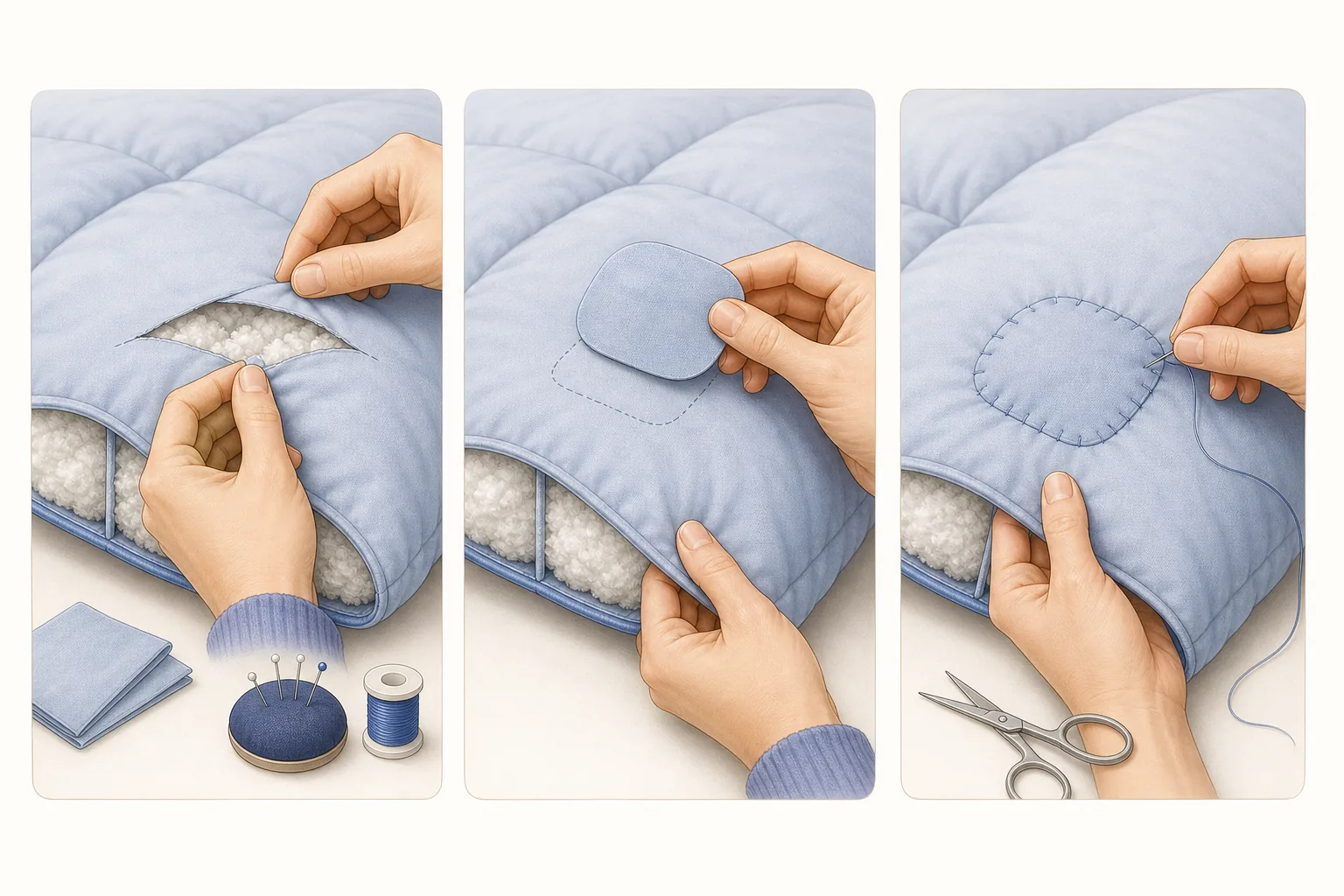
Contain loose fill, inspect the tear and surrounding fabric, then close a short clean split with a fine ladder stitch or cover weak fabric with a rounded washable patch. Repair before laundering and follow the product's care label afterward.
Choose the repair by damage, not appearance
| Damage | Practical repair | When to stop |
|---|---|---|
| Short straight split; sound fabric | Fine ladder stitch | Seam keeps opening under light tension |
| Small hole or abraded shell | Rounded patch beyond weak fabric | Fabric tears beside patch |
| Open chamber seam | Rebuild divider accurately | Fill cannot be redistributed safely |
| Long rip or several weak areas | Professional repair or shell replacement | Repair no longer preserves function |
| Wet, moldy or contaminated fill | Do not seal contamination inside | Seek product-specific advice |
Who can repair it—and who should pause
Reasonable home repair
A small dry tear in strong shell fabric, with clean fill and intact chamber structure.
Professional assessment
Long down leaks, failed baffles, fragile silk, damaged weighted components or any suspected mold.
Contain the fill before assessing the tear
Turn off fans, place the comforter on a clean flat surface and guide protruding fill inward with clean dry fingers. Pulling feathers or clusters outward enlarges the opening and wastes insulation.
Temporary low-tack fabric tape may contain fill while you prepare, but adhesive is not a durable wash-ready repair. Avoid pins left in bedding and never seal damp fill inside.
Use a ladder stitch for a clean, short split
A ladder or slip stitch alternates tiny bites along each folded edge so the thread draws the opening together. Keep stitches close enough to contain fill but far enough from the raw edge to avoid fraying.
Do not pull until the shell puckers. A comforter must flex; concentrated tension can create a dotted line of new needle holes.
Patch abrasion instead of sewing weak edges together
If fabric around the hole is thin, direct closure transfers stress to material already failing. Use a compatible prewashed patch beyond every weak edge and round its corners so they are less likely to lift.
A visible repair is often safer than a tiny hidden patch. Iron-on products are unsuitable when shell or fill cannot tolerate their application heat.
Do not accidentally close or merge chambers
Chamber and baffle seams control fill distribution. A surface patch should not trap an unintended fold or bridge dividers in a way that prevents movement inside the original chamber.
If an internal baffle has failed, a surface patch hides rather than restores construction. That is a stronger case for professional repair.

Repair first, then clean only as labeled
Wet washing turns a small opening into a high-stress leak and makes loose fill harder to control. Complete the repair before laundering unless contamination makes home handling inappropriate.
Afterward, use a drum large enough for free movement and inspect before drying. The washing pillar owns full cleaning; this guide owns structural containment.
Know when repair no longer preserves useful function
Multiple tears, brittle fabric, widespread clumping, persistent contamination or repeated seam failure indicate a system problem. A new patch can move the next failure to its edge.
Compare professional re-shelling with replacement and responsible textile recovery. Do not donate bedding that is unhygienic or structurally unsafe.
A six-step small-tear repair
- 01Move the comforter away from fans and contain loose fill; do not pull clusters through the opening.
- 02Read the care label, identify shell and fill, and inspect beyond the visible tear.
- 03For a clean split, align edges; for worn fabric, use a colorfast washable patch with rounded corners.
- 04Use a fine needle and matching strong thread. Make short ladder stitches or secure the patch beyond weak fabric.
- 05Knot discreetly without cinching the shell; flex the area gently and check for new holes.
- 06Keep the repair dry until secure, then clean only by the label and recheck after the first cycle.
Frequently asked questions
What kind of needle do you use to fix a rip in a comforter?
Use a fine sharp hand-sewing needle that passes through the shell without forcing a large hole. Delicate silk or complex damage may need a professional.
Source: WeAllSew mending guidance, Coats & Clark hand-sewing stitches, FTC textile care-label guidance
Can ripped comforter fabric be repaired?
A small clean tear in sound, dry fabric often can. Patch abrasion and seek help for long tears, failed baffles, fragile shells or contaminated fill.
Source: WeAllSew mending guidance, Coats & Clark hand-sewing stitches, FTC textile care-label guidance
How do you patch a torn quilt or comforter?
Contain the fill, use a prewashed compatible patch with rounded corners and secure it beyond weakened fabric without compressing the chamber.
Source: WeAllSew mending guidance, Coats & Clark hand-sewing stitches, FTC textile care-label guidance
Can I use fabric glue on a comforter?
Only if maker and adhesive instructions support the shell, fill, washing and drying conditions. Glue can stiffen fabric or fail in heat, so stitching is usually more inspectable.
Source: WeAllSew mending guidance, Coats & Clark hand-sewing stitches, FTC textile care-label guidance
Sources and editorial method
We checked definitions and practical distinctions against the sources below. Product recommendations live in separate buying guides with their own criteria and disclosures.
The bottom line
Repair the structure, not just the visible opening: contain clean fill, anchor into sound fabric, preserve the original chamber and test gently before the next label-approved wash.