In one sentence
Repair or reuse a clean comforter first; donate only an intact, freshly cleaned item that the specific organization accepts; otherwise search your local solid-waste directory for household-textile recovery and confirm that filled bedding is allowed before drop-off.
Condition-first destination guide
| Condition | Best first route | Do not |
|---|---|---|
| Clean, intact, still warm | Keep, repair or give directly | Replace only for age |
| Clean and usable but unwanted | Ask a named charity before delivery | Leave bags outside |
| Worn but clean | Textile recovery if filled bedding is accepted | Use curbside recycling unconfirmed |
| Torn with reusable fabric | Repurpose only if safe and practical | Expose loose fill |
| Wet, moldy, pest-affected or contaminated | Follow local disposal rules | Donate it |
The two checks that prevent wish-cycling
Check the item
It must be clean, dry and honestly usable for donation; textile recovery may accept worn material but can exclude bulky fill.
Check the destination
Acceptance varies by municipality and organization. A clothing bin or recycling symbol does not prove comforters are allowed.
Why a comforter usually does not belong in curbside recycling
Comforters combine shell, thread, labels, finishes and loose or bonded fill. Standard paper, glass, metal and container streams are not designed to separate that soft mixed assembly.
A recycling logo on packaging or one component does not authorize the finished comforter for the local bin. Confirm a named textile program instead.
Donation is reuse, not disposal
A charity or shelter incurs sorting and disposal costs when unusable bedding arrives. Donate only when it is clean, completely dry, odor-free, intact and within current policy.
Goodwill notes that acceptance varies by location. Call the destination or use its current list; animal shelters also set their own rules.
Repair and direct reuse preserve the most product value
EPA places reducing and reusing before recycling because continued use avoids replacing the whole product. A sound comforter with one repairable tear can often remain in service.
Direct gifting works only with honest condition disclosure. Launder by the label and do not transfer allergens, pests or contamination.
Find a real household-textile program
Search the municipality or county solid-waste site for textiles, household fabrics, bedding and bulky items. NYC provides a specific route, but another jurisdiction may use contractors or exclude filled goods.
Verify comforters, not merely clothing, are accepted; ask about bagging, wet-material exclusions, fees and actual processing.
Repurpose only when the material is safe and useful
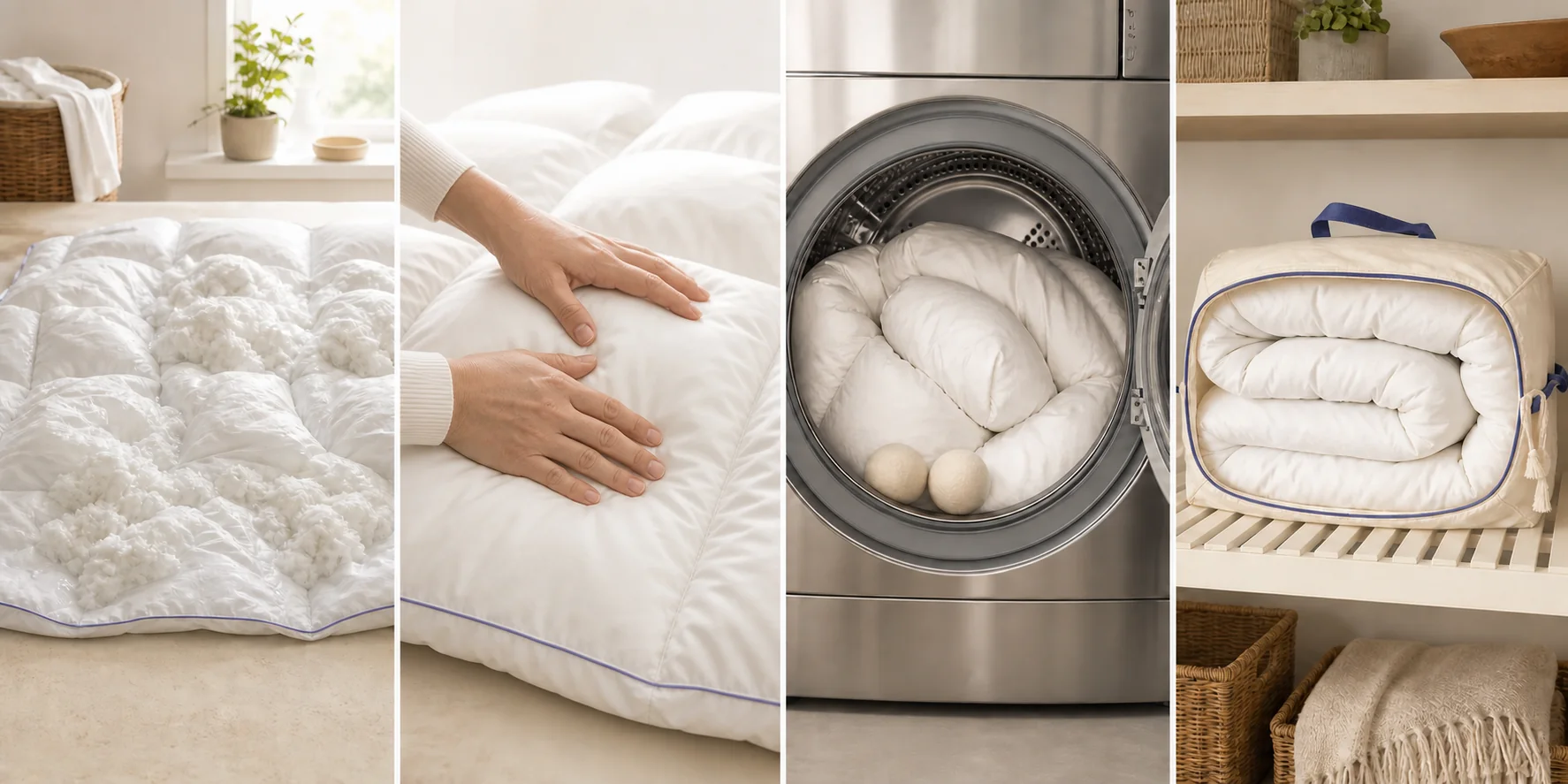
Possible uses include a protected moving blanket or recovered fabric for sewing. Cutting open down or fine synthetic fill creates containment concerns and may spread contamination.
Do not create a project merely to postpone disposal. If it will sit unused, verified recovery or local disposal is more honest.
Disposal can be the correct final route
Mold, bodily-fluid contamination, pests, persistent smoke damage and crumbling shells can make reuse inappropriate. Follow local bagging and bulky-pickup instructions.
Record the failure mode before replacement. A cover, repairable shell, clearer material disclosure or take-back program may improve the next purchase.
A responsible five-step decision
- 01Inspect cleanliness, odor, pests, shell integrity and whether the fill still performs.
- 02Repair a localized tear or reuse the comforter if it remains hygienic and functional.
- 03For donation, contact the exact recipient and confirm bedding, size and condition requirements.
- 04For worn textiles, search the city or county solid-waste directory and ask whether filled comforters are accepted.
- 05If no verified route accepts it, contain loose material and use the local residual-waste or bulky-item procedure.
Frequently asked questions
How do you properly dispose of a comforter?
First check repair, reuse, donation and a verified local textile program. If none fits, contain loose fill and follow municipal residual-waste or bulky-item instructions.
Source: EPA recycling and reuse guidance, New York City textile collection guidance, Goodwill donation guidelines
What can I do with an old comforter?
Keep or repair it, give it directly, donate it if accepted, repurpose sound material or use verified household-textile recovery.
Source: EPA recycling and reuse guidance, New York City textile collection guidance, Goodwill donation guidelines
Should you throw away old bedding?
Age alone is not the test. Reuse clean functional bedding; dispose of contaminated or unrecoverable material when no legitimate program accepts it.
Source: EPA recycling and reuse guidance, New York City textile collection guidance, Goodwill donation guidelines
Can I donate old comforters to Goodwill?
Policies vary by location and capacity. Contact the specific store first and donate only a clean, dry, usable item that meets its requirements.
Source: EPA recycling and reuse guidance, New York City textile collection guidance, Goodwill donation guidelines
Sources and editorial method
We checked definitions and practical distinctions against the sources below. Product recommendations live in separate buying guides with their own criteria and disclosures.
The bottom line
Do not confuse a convenient bin with a verified destination. Preserve use first, donate only usable bedding, confirm filled-textile acceptance and use local disposal when hygiene or infrastructure leaves no recovery route.