
In one sentence
Keep a comforter while its shell and baffles are sound, fill redistributes, it dries cleanly and it still provides even warmth. Replace or professionally assess it when tears spread, fill leaks, permanent cold zones remain, contamination cannot be cleaned or persistent odor indicates unresolved moisture.
Repair, clean or replace?
| Finding | Next step | Why |
|---|---|---|
| Loose corner loop | Repair | Loop alone does not end useful life |
| Small stable seam opening | Repair before washing | Prevents fill loss |
| Temporary clumps after wash | Dry and fluff | Moisture may be the cause |
| Permanent empty chambers | Assess repair or replace | Warmth is no longer even |
| Mold-like staining or persistent mustiness | Professional assessment or replace | Possible unresolved contamination |
| Widespread brittle shell and leaks | Replace | Multiple failures are unlikely to hold |
Who should keep or replace
Keep and maintain
The comforter is cleanable, structurally sound, evenly warm and still matches your room and body.
Replace based on evidence
Material failure, unresolvable contamination or lost function matters more than age alone.
Calendar ranges are only context
The Company Store notes that some comforters need replacement within about five years while well-made examples can last 20 years or more. That is a broad commercial estimate, not a warranty for every fill.
Use age to trigger inspection—not automatic disposal. A lightly used guest comforter and a pet-shared daily layer do not age equally.
Inspect shell, seams and chambers in bright light
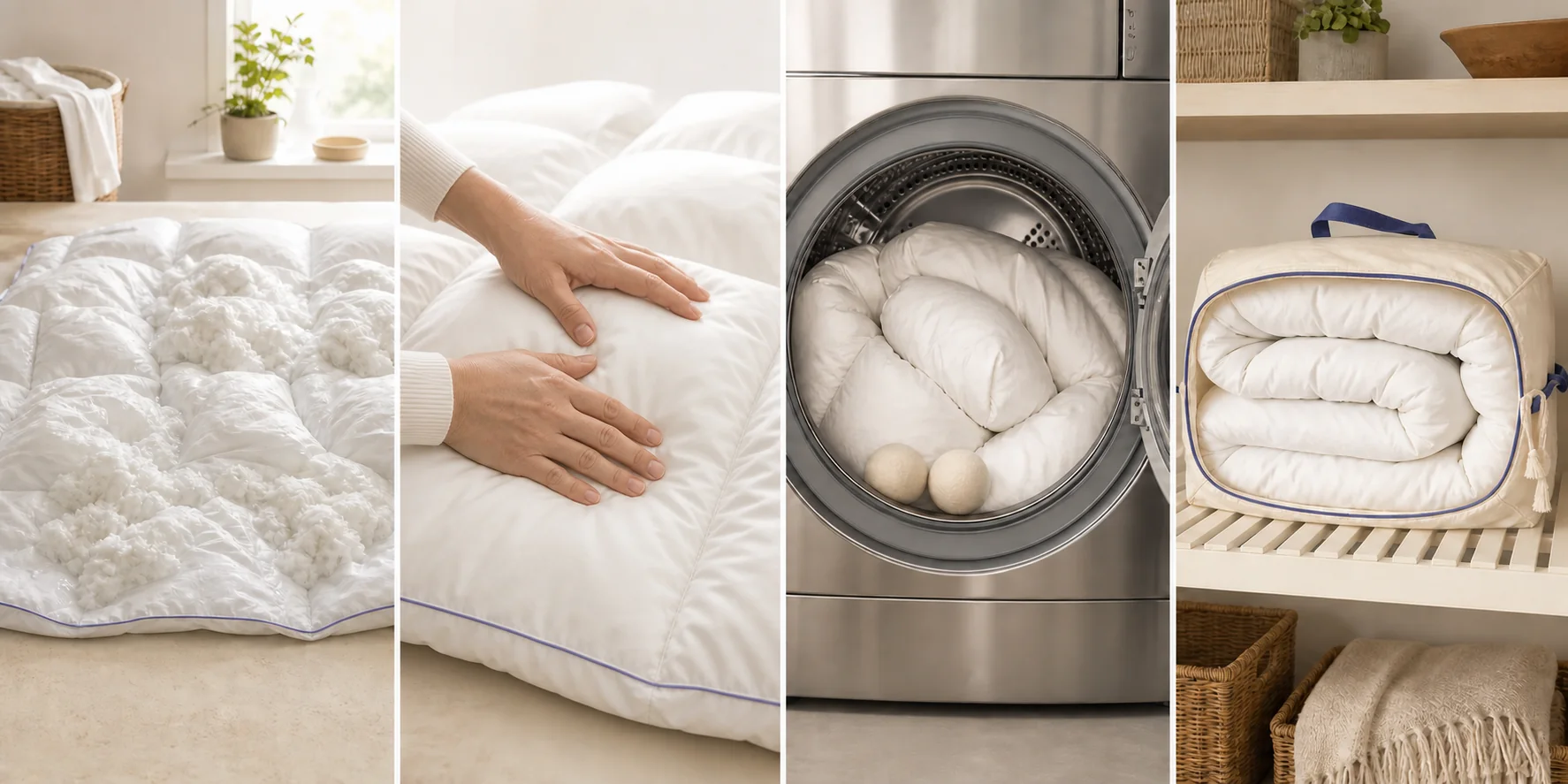
Look for thinning fabric, pinholes, split seams, leaking fill and failed baffles. Hold the comforter toward a lamp to find persistently empty zones.
A single repairable seam or loop is different from brittle fabric failing across many locations. Repair damage before another wash enlarges it.
Test whether the fill recovers
First ensure the item is completely dry, then redistribute and let it rest. Down clusters and resilient synthetic fill should regain some loft; cotton or wool batting is naturally flatter.
The fluffing guide helps distinguish temporary compression from fill that has permanently migrated, felted or broken down.
Odor and stains require cause—not perfume
A removable surface stain is not automatically end-of-life. Persistent mustiness, broad discoloration or odor returning after correct cleaning can signal moisture or contamination inside the chambers.
Do not keep adding fragrance or heat. Follow the care label and seek professional assessment for valuable or delicate fill.
Extend useful life without overwashing
Use a washable duvet cover when compatible, address spills promptly, air the layer and wash only as label and exposure require. Every wet-cleaning cycle adds mechanical stress.
Complete low/no-heat drying where permitted is essential. The comforter washing guide explains drum capacity and interior dryness.
Retire it responsibly when function is gone
Clean usable bedding may be accepted by some local charities or animal shelters, but policies vary and contaminated items are commonly refused. Check locally before transporting it.
Textile-recycling options depend on mixed materials and local facilities. Never donate bedding with pests, mold or biological contamination.
Frequently asked questions
How often should you replace your comforter?
Replace by condition rather than a fixed schedule. Inspect shell, seams, fill recovery, cleanliness and warmth each season or after laundering.
Source: The Company Store comforter lifespan guide, Whirlpool comforter washing and drying guide, Responsible Down Standard
When should you throw out a comforter?
Retire it when widespread structural failure, permanent cold zones or contamination cannot be safely repaired or cleaned. Check local disposal or textile-recovery rules.
Source: The Company Store comforter lifespan guide, Whirlpool comforter washing and drying guide, Responsible Down Standard
How many years should you keep a down comforter?
A well-made, correctly cared-for down comforter may last many years, but fill percentage, shell, baffles and use vary. No age alone proves it is functional.
Source: The Company Store comforter lifespan guide, Whirlpool comforter washing and drying guide, Responsible Down Standard
How can you tell if a comforter is good quality?
Look for transparent shell and fill specifications, sound chamber stitching, even distribution, appropriate care instructions and verified certification claims—not loft or price alone.
Source: The Company Store comforter lifespan guide, Whirlpool comforter washing and drying guide, Responsible Down Standard
Sources and editorial method
We checked definitions and practical distinctions against the sources below. Product recommendations live in separate buying guides with their own criteria and disclosures.
The bottom line
The comforter's condition is the decision: intact containment, recoverable fill, even warmth and hygienic cleanliness. Age is a prompt to inspect, not a standalone reason to discard.