
In one sentence
Choose silk for close drape, low loft and a gently weighted feel; choose down for maximum puff, compressibility and warmth-to-weight. Compare fill amount, shell, construction, cleaning and verified sourcing because neither material name establishes total warmth.
Silk and down comforters compared
| Factor | Silk fill | Down fill |
|---|---|---|
| Profile | Flatter, close drape | Lofty and puffy |
| Warmth-to-weight | Moderate; depends on fill mass | High with quality clusters |
| Feel | Smooth, gently weighted | Light, airy and compressible |
| Construction | Often long floss layers or stitched boxes | Baffles or sewn-through chambers |
| Cleaning | Frequently restrictive; label-specific | Washable only when label permits |
| Animal origin | Silkworm-derived | Waterfowl-derived |
Best match
Choose silk
You dislike puffiness and prefer a flatter layer that drapes closely without synthetic fill.
Choose down
You prioritize recoverable loft, packability and high warmth with relatively low weight.
Fill structure creates the main difference
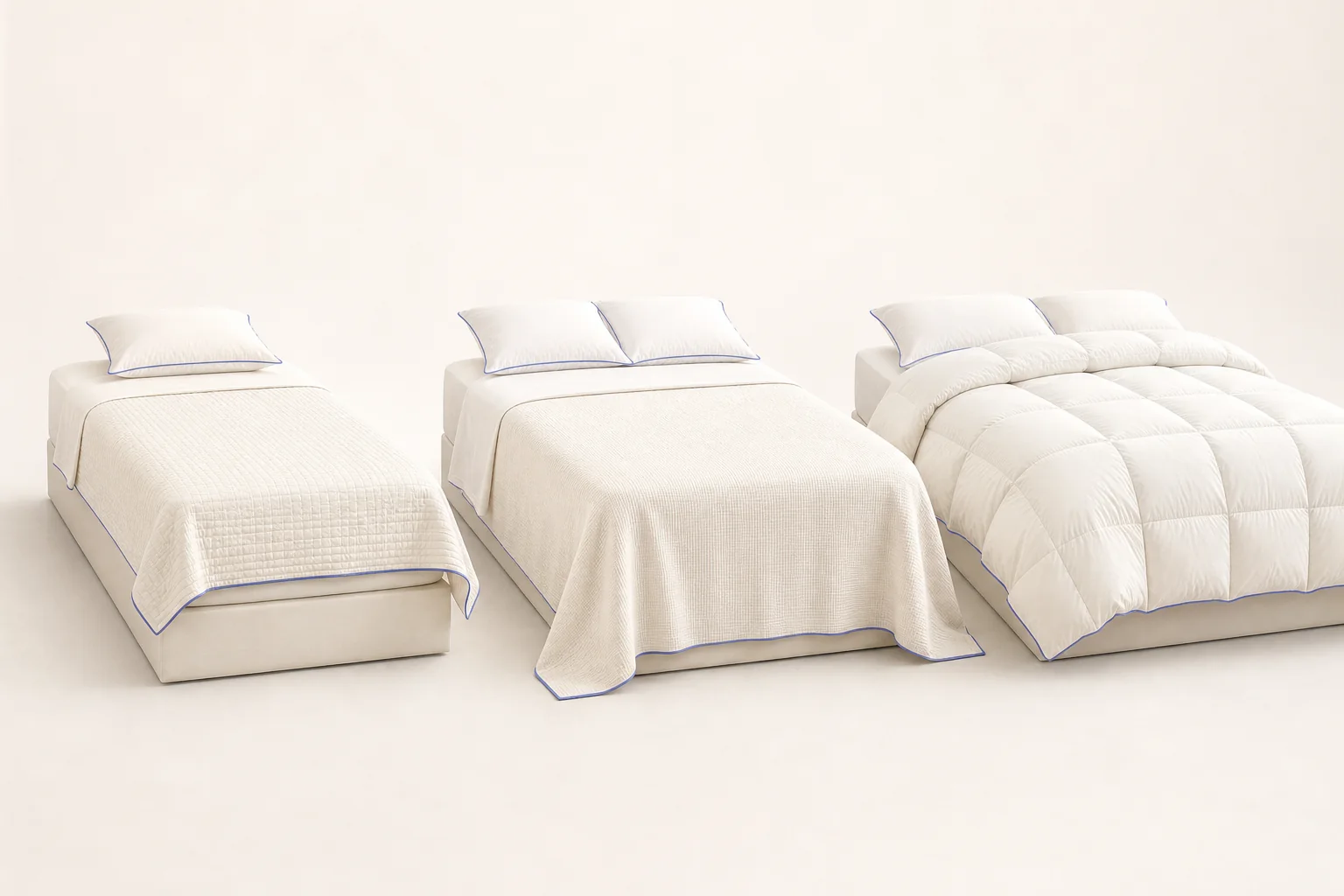
Silk comforters use filament or floss spread in layers; down comforters use branching clusters that expand and trap air. The resulting silhouettes and pressure feel are noticeably different.
Do not confuse a silk shell with silk fill, or feather blends with high-down content. Read both shell and fill lines.
Warmth depends on amount and construction
Down's loft provides strong warmth-to-weight, but a lightweight down product may still sleep cooler than a heavily filled silk comforter. Silk weight and room rating matter.
For down, fill power describes cluster loft rather than total warmth. The down comforter guide explains both variables.
Hot sleepers should compare warmth tier, not myths
A low-fill silk comforter can feel less enveloping, while a heavy one can still overheat. Down is breathable as a fill but high-loft winter weights retain substantial heat.
Choose the lightest suitable tier and a breathable shell for the actual room.
Silk often has the narrower care window
Many silk-filled products prohibit ordinary machine washing or require specialist cleaning. Down may be washable when the label permits and equipment has enough capacity, but incomplete drying damages loft and hygiene.
Check the care plan before purchase. The best silk comforter guide separates product-shortlist intent from this material comparison.
Both are animal-derived materials
Silk production and down sourcing raise different animal-welfare questions. For down, a named chain-of-custody standard such as RDS can provide defined evidence when valid for the product.
Do not translate 'natural,' 'mulberry,' 'European' or 'premium' into an ethical certification without a verifiable standard.
Frequently asked questions
What is the healthiest material for a comforter?
There is no universally healthiest fill. Choose verified composition and care that fit personal sensitivities; seek medical advice for diagnosed conditions.
Source: Downmark: down cluster or feather, Responsible Down Standard, FTC textile labeling guidance
Is a silk comforter worth it?
It can be for sleepers who value close drape, low loft and silk fill enough to accept premium cost and restrictive care.
Source: Downmark: down cluster or feather, Responsible Down Standard, FTC textile labeling guidance
What kind of comforter do five-star hotels use?
Hotels use varied down and synthetic specifications. A hotel claim does not establish that silk or down is universally preferred.
Source: Downmark: down cluster or feather, Responsible Down Standard, FTC textile labeling guidance
Are silk comforters good for hot sleepers?
A lightweight silk comforter can suit warm sleepers, but fill mass, shell and room temperature determine the result. Silk is not automatically cooling.
Source: Downmark: down cluster or feather, Responsible Down Standard, FTC textile labeling guidance
Sources and editorial method
We checked definitions and practical distinctions against the sources below. Product recommendations live in separate buying guides with their own criteria and disclosures.
The bottom line
Silk provides flatter drape and gentle weight; down provides greater loft and warmth-to-weight. Choose the physical feel first, then verify fill amount, care and sourcing.