
In one sentence
Kapok is a natural plant seed fiber used as loose stuffing or in blends; expect a light, springy initial feel, gradual compression and product-specific care—then verify percentages, fire-safety construction and certification rather than assuming organic or hypoallergenic.
Kapok at a glance
| Question | Kapok answer |
|---|---|
| Source | Seed-pod hair from Ceiba pentandra |
| Common bedding use | Pillows, cushions, mattresses and some blends |
| Initial feel | Light, silky and buoyant |
| Long-term behavior | Can compress and shift |
| Washability | Product-specific; loose fill is difficult to wet-clean |
| Organic by default | No—certification must be verified |
| Same as cotton | No; both are seed fibers with different structure and behavior |
Who should consider it
Good for adjustable loose-fill users
A zippered pillow can allow kapok redistribution or top-ups when its maker permits.
Less suited to set-and-forget bulky bedding
A large filled item needs strong containment, clear care and realistic repair access as the fiber settles.
Kapok is a seed fiber, not down or foam
USDA reporting describes kapok fiber use in traditional pillows, mattresses and insulation. The silky hairs surround seeds inside pods and are separated for stuffing.
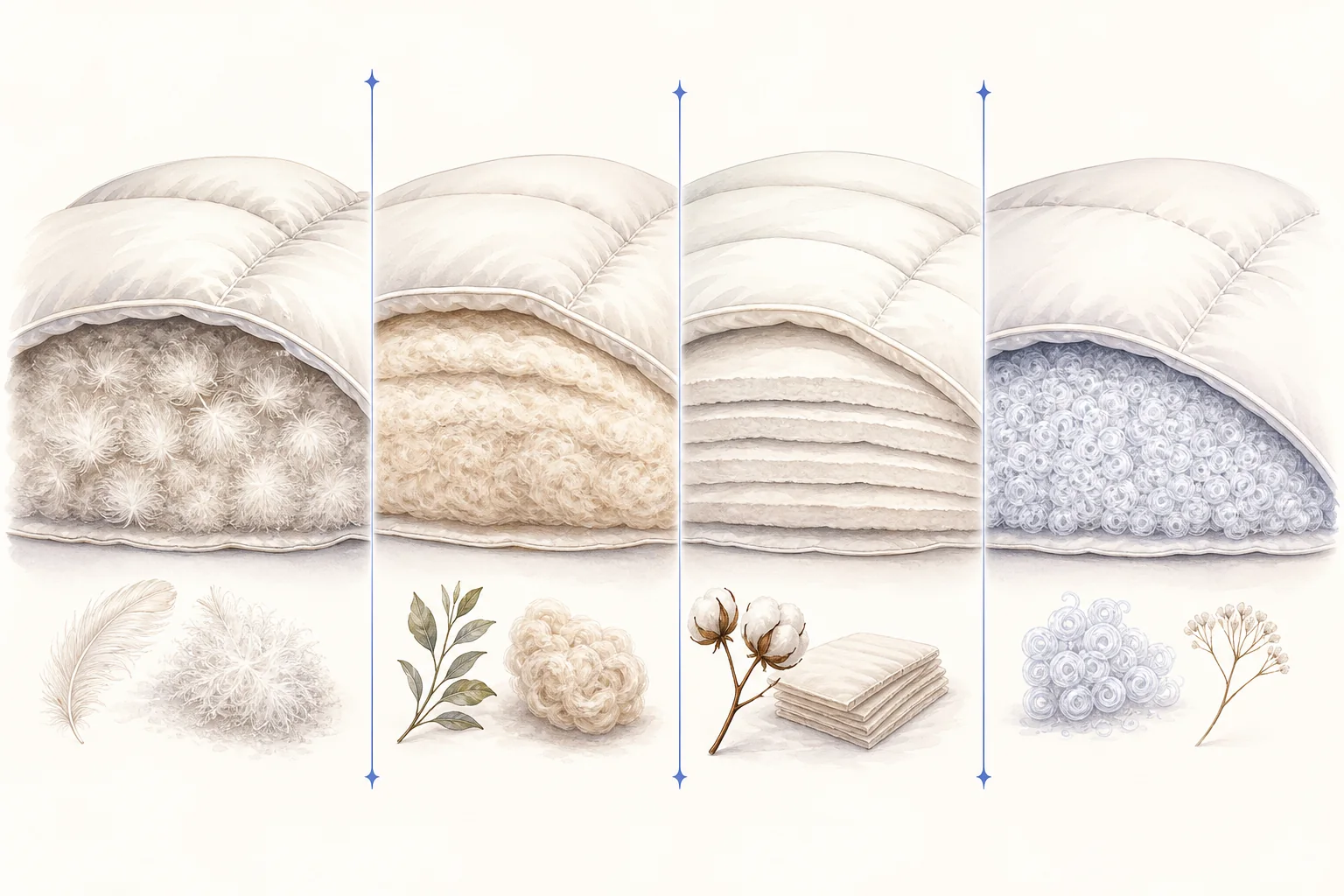
Plant origin does not make every finished product pure kapok. Read the percentage because makers may blend it with cotton, latex, polyester or other fills to change resilience and cost.
Lightness is its attraction; compression is the tradeoff
Kapok's hollow, waxy fibers feel light and initially buoyant. In loose-fill pillows they can be redistributed, but repeated pressure can compact the mass and change support.
A quilted comforter needs chambers close enough to control migration. Do not infer stable long-term loft from a product photograph or the word silky.
Care must protect both shell and loose fiber
Loose kapok is difficult to contain once a seam opens and may not tolerate routine saturated washing well. Follow the complete product label; use a washable cover to reduce direct soil.
Repair leaks before cleaning and keep loose fiber away from ignition sources. Do not open or handle airborne fill around someone with respiratory sensitivity without appropriate guidance.
Natural does not prove organic or hypoallergenic
Organic scope requires a valid standard and certificate; a tree growing without a stated input is not a finished-product certification. Likewise, allergy-safe and antimicrobial claims need finished-product evidence.
Inspect dyes, shell, blends, treatments and zipper—not only the headline fill. A cotton shell may be the main contact surface even when the interior is kapok.
Kapok versus cotton is not a simple winner
Cotton batting is denser and commonly quilted into flatter layers; kapok is lighter and more often loose. Kapok may suit an adjustable pillow, while cotton can suit a stable quilted comforter.
Durability depends on containment and construction. Compare replaceability, refill access and actual care rather than assuming the rarer fiber is automatically more sustainable.
Frequently asked questions
Is kapok better than cotton?
Kapok is lighter and more buoyant; cotton is denser and more established in quilted batting. The better choice depends on product construction, support and care.
Source: USDA FAS report on kapok fiber use, FTC textile labeling resources, GOTS standard and certification
How long does kapok last?
There is no universal lifespan. Loose fill compresses with use; a refillable design can extend usefulness, while failed seams or contamination can end it sooner.
Source: USDA FAS report on kapok fiber use, FTC textile labeling resources, GOTS standard and certification
Is kapok filling good?
It can be useful for light adjustable stuffing when the shell contains it well and care is clear. It is not automatically ideal for every comforter or sleeper.
Source: USDA FAS report on kapok fiber use, FTC textile labeling resources, GOTS standard and certification
Is kapok natural or synthetic?
Kapok itself is a natural seed fiber. Finished bedding may blend it with other natural or synthetic materials, so verify the label.
Source: USDA FAS report on kapok fiber use, FTC textile labeling resources, GOTS standard and certification
Sources and editorial method
We checked definitions and practical distinctions against the sources below. Product recommendations live in separate buying guides with their own criteria and disclosures.
The bottom line
Kapok is a genuinely plant-derived, very light seed fiber—not a magic substitute for every fill. Buy it when the construction manages compression, leakage and care transparently.