
In one sentence
Most down alternative comforters use polyester microfiber, recycled polyester or branded synthetic fibers; read the legally relevant fiber-content label because the phrase itself does not reveal the exact material, warmth or safety profile.
Down and down alternative compared
| Decision | Down alternative | Natural down |
|---|---|---|
| Typical material | Polyester microfiber or another manufactured fiber | Waterfowl down clusters |
| Loft per physical weight | Varies; often needs more mass | Often high, especially at higher fill power |
| Animal-free | Usually, but verify shell and other components | No |
| Washability | Many products are washable, label controls | Some washable; drying demands care |
| Specification to seek | Exact fiber, fill weight/GSM and construction | Down percentage, fill power, fill weight and construction |
| Price tendency | Often lower | Often higher |
Who it suits—and who should compare further
Down alternative may suit you if…
You want an animal-free fill, lower entry price or a product with straightforward machine-care instructions.
Compare other fills if…
You want maximum warmth-to-weight, dislike polyester, need a named certification or prefer wool, cotton or silk behavior.
What down alternative is usually made of
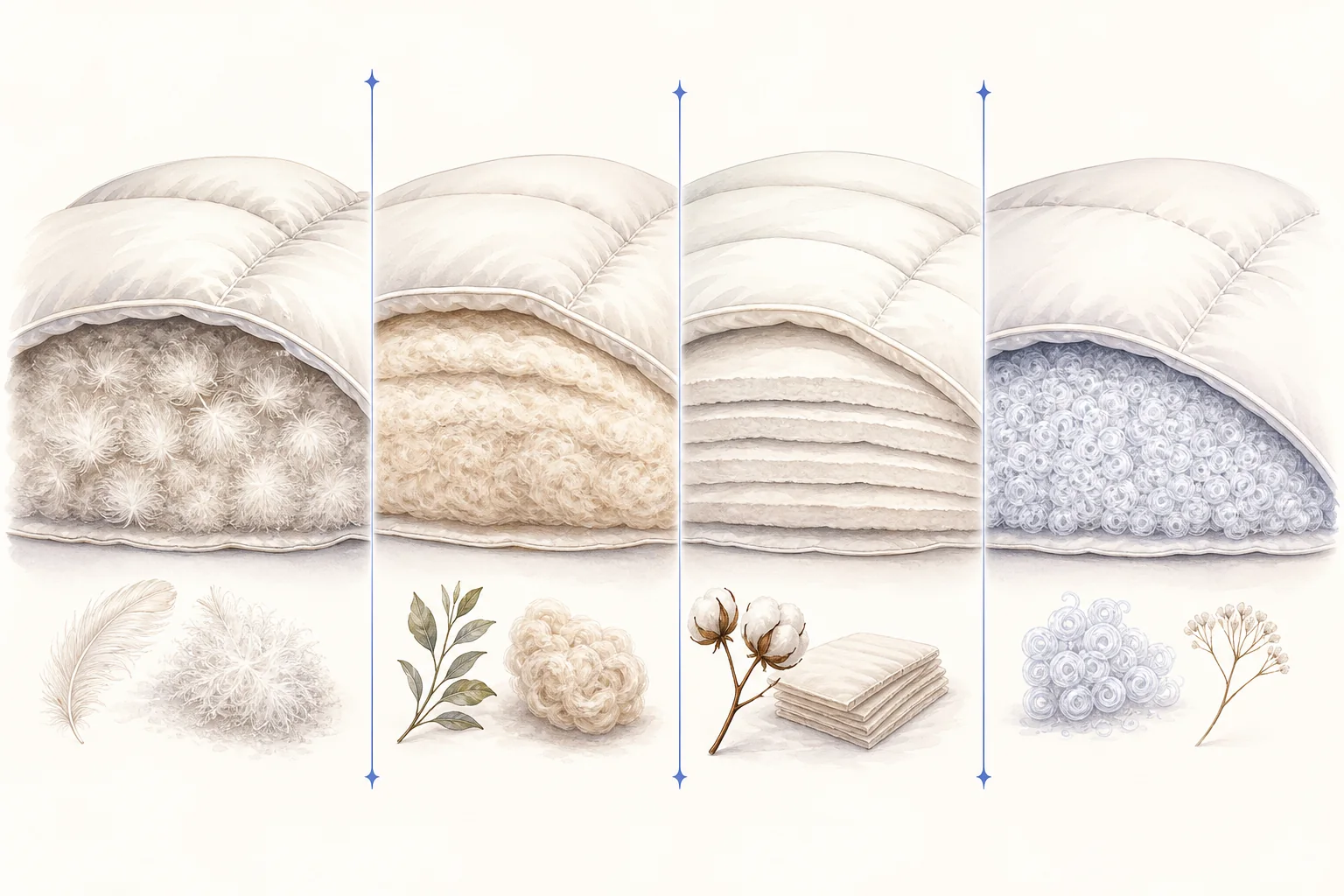
The most common fill is polyester formed into fine fibers, clusters or batting. Some products use recycled polyester, while others blend manufactured fibers such as lyocell with polyester. Marketing names can describe shape or treatment rather than the generic fiber.
FTC guidance requires household textile products to disclose fiber content and treats filling used for warmth as relevant. Read the sewn-in tag and product specification instead of assuming down alternative always means the same polyester construction.
How synthetic fibers imitate down
Down clusters branch in three dimensions and trap air. Synthetic alternatives try to create similar air pockets through crimped, hollow, spiral or very fine fibers, sometimes assembled into loose clusters and sometimes stabilized as batting.
The result can feel fluffy, but loft efficiency and recovery vary. A heavy low-cost polyester comforter can be warmer yet denser than a lighter premium synthetic model. The name down alternative is not a measurable performance grade.
The five specifications that make the label useful
Record the exact fill fiber, fill weight or GSM, finished product weight, chamber construction and care instructions. Recycled content or textile-safety claims need a named standard and scope; do not infer them from words such as eco or clean.
The comforter GSM guide explains why mass per square meter helps only within similar materials. Construction also matters because sewn-through lines and baffled chambers distribute loft differently.
Down alternative is not automatically hypoallergenic or non-toxic
Avoidance of animal down may help someone who specifically wants an animal-free product, but it does not diagnose allergies. Reactions can involve dust mites, shell fabric, detergent, finishes or other environmental factors.
Likewise, polyester is a broad material category rather than a health verdict. Look for complete fiber labels and independently defined certification claims, and consult a qualified clinician for significant respiratory or skin symptoms.
Washability varies by shell, fill and size
Many down alternative comforters permit machine washing, but large products still need room to move and dry. A compacted wet load can rinse poorly and leave clumps even when the fiber itself tolerates water.
Follow the care label, use a sufficiently large drum and dry completely. The comforter washing guide covers drum fit and redistribution; the fluffing guide explains recovery when clean fill gathers inside intact chambers.
Choose the product, not the category promise
The best down-alternative comforter guide compares current products using published materials, warmth, construction and care. Use it only after deciding that synthetic loft matches your priorities.
If you prefer natural but animal-free fill, compare cotton, wool or silk with their own care and feel trade-offs. None is a direct one-for-one substitute for down, and no generic fill name guarantees cooling.
Frequently asked questions
What is the difference between down fill and down alternative?
Down is the soft undercoating of waterfowl. Down alternative is usually manufactured polyester or another fiber engineered to imitate some of down's loft and softness.
Source: The Company Store down vs alternative guide, FTC textile labeling guidance, Sleep Foundation comforter guide
What is the difference between a down comforter and down alternative?
The key difference is fill. Down often provides more loft for its weight; alternatives are usually less expensive and may be easier to wash, but performance varies by fiber and construction.
Source: The Company Store down vs alternative guide, FTC textile labeling guidance, Sleep Foundation comforter guide
What is the difference between down feather and down alternative?
Down clusters and feathers are animal-derived plumage; feathers have quills, while down clusters do not. Down alternative is a manufactured or other non-plumage fill, commonly polyester.
Source: The Company Store down vs alternative guide, FTC textile labeling guidance, Sleep Foundation comforter guide
Is down alternative filling safe?
The category alone cannot establish safety. Read the exact fiber-content label and any independently defined certification scope. People with medical concerns should seek qualified advice rather than rely on a marketing term.
Source: The Company Store down vs alternative guide, FTC textile labeling guidance, Sleep Foundation comforter guide
Sources and editorial method
We checked definitions and practical distinctions against the sources below. Product recommendations live in separate buying guides with their own criteria and disclosures.
The bottom line
Down alternative usually means polyester engineered for loft, but the phrase is only a category label. Exact fiber, fill amount, construction, finished weight, certification scope and care determine the real product.