
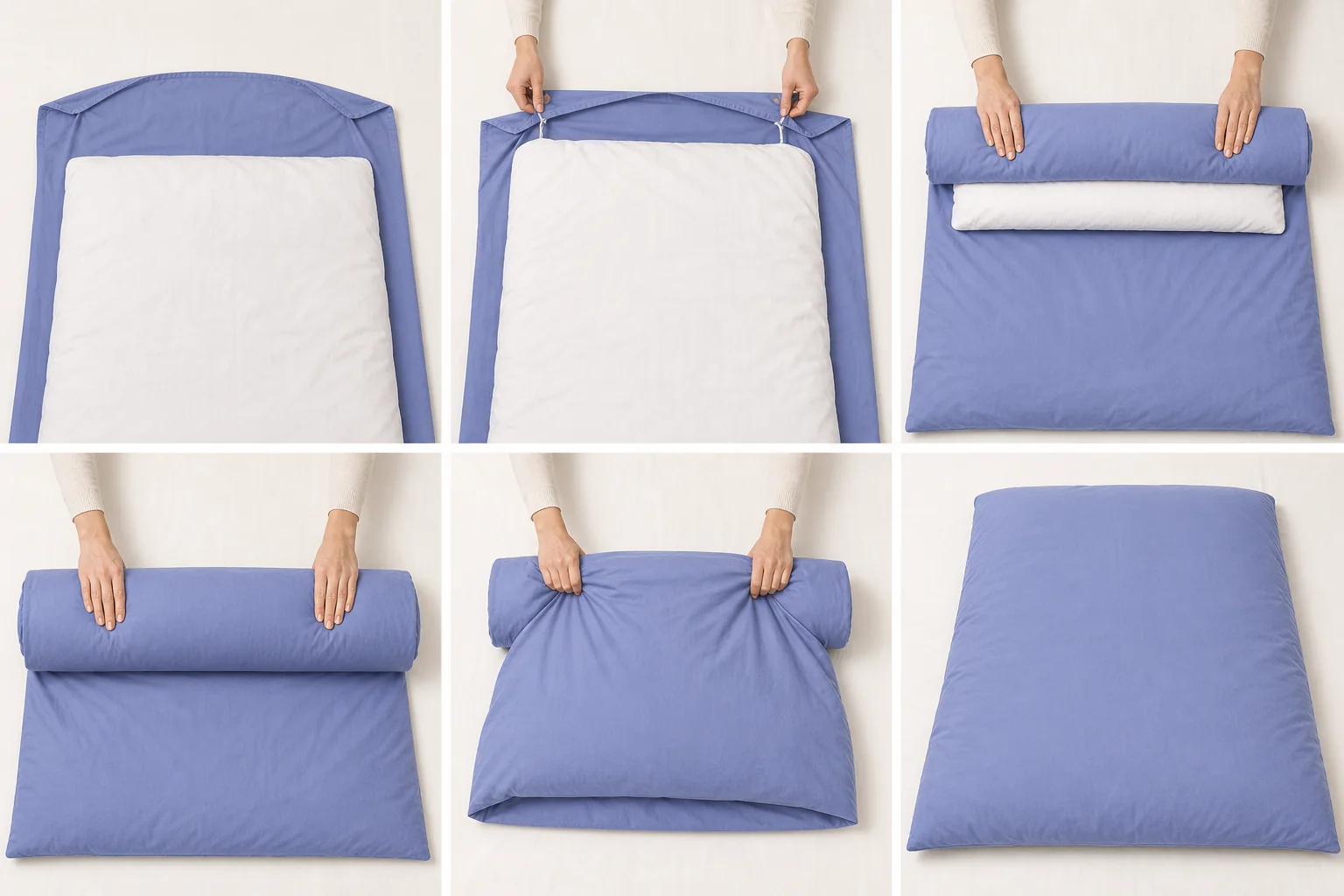
In one sentence
Choose protected buttons for easy individual repair and a softer hardware feel; choose a concealed zipper for faster full-width closing and fewer gaps. In either case, inspect seam reinforcement, laundering instructions and internal ties separately.
Buttons and zippers at a glance
| Decision | Buttons | Zipper |
|---|---|---|
| Closing speed | Slower, one point at a time | Fast continuous closure |
| Gap control | Spaces between buttons | Continuous when fully engaged |
| Repairability | Replace one button or reinforce one hole | Track failure can disable closure |
| Hardware feel | Low profile when small and covered | Best when coil and pull are concealed |
| Laundry risk | Fasten to reduce pulling | Close and protect pull as directed |
| Insert shifting | Does not solve it alone | Does not solve it alone |
Who each closure suits
Buttons may suit you if…
You value simple hand repair, dislike a long hardware track or want to replace one failed component.
A zipper may suit you if…
You change covers frequently and prioritize a fast, nearly gap-free foot opening with a protected slider.
Closure and internal anchors perform different jobs
Buttons or a zipper keep the open edge shut. Corner ties or snaps connect the cover to loops on the insert. A perfect zipper cannot stop an undersized insert migrating inside an oversized cover.
Evaluate fit and anchors first when bunching is the complaint; compare closures when access, feel and maintenance are the decision.
Zippers are fast but depend on alignment
A concealed coil zipper can close the opening continuously and keep insert corners inside. It works best when a placket protects skin and the pull cannot snag adjacent bedding.
Do not force a misaligned slider or overfill against the track. Bent teeth, trapped fabric and seam separation can turn a small problem into full-closure repair.
Prepare either closure before laundering
Follow the cover label. Fastening can reduce loose hardware movement, but product guidance controls whether the zipper should be fully closed and how delicate buttons are protected.
Check fabric around the closure for trapped detergent and confirm the opening is dry before refitting the insert.
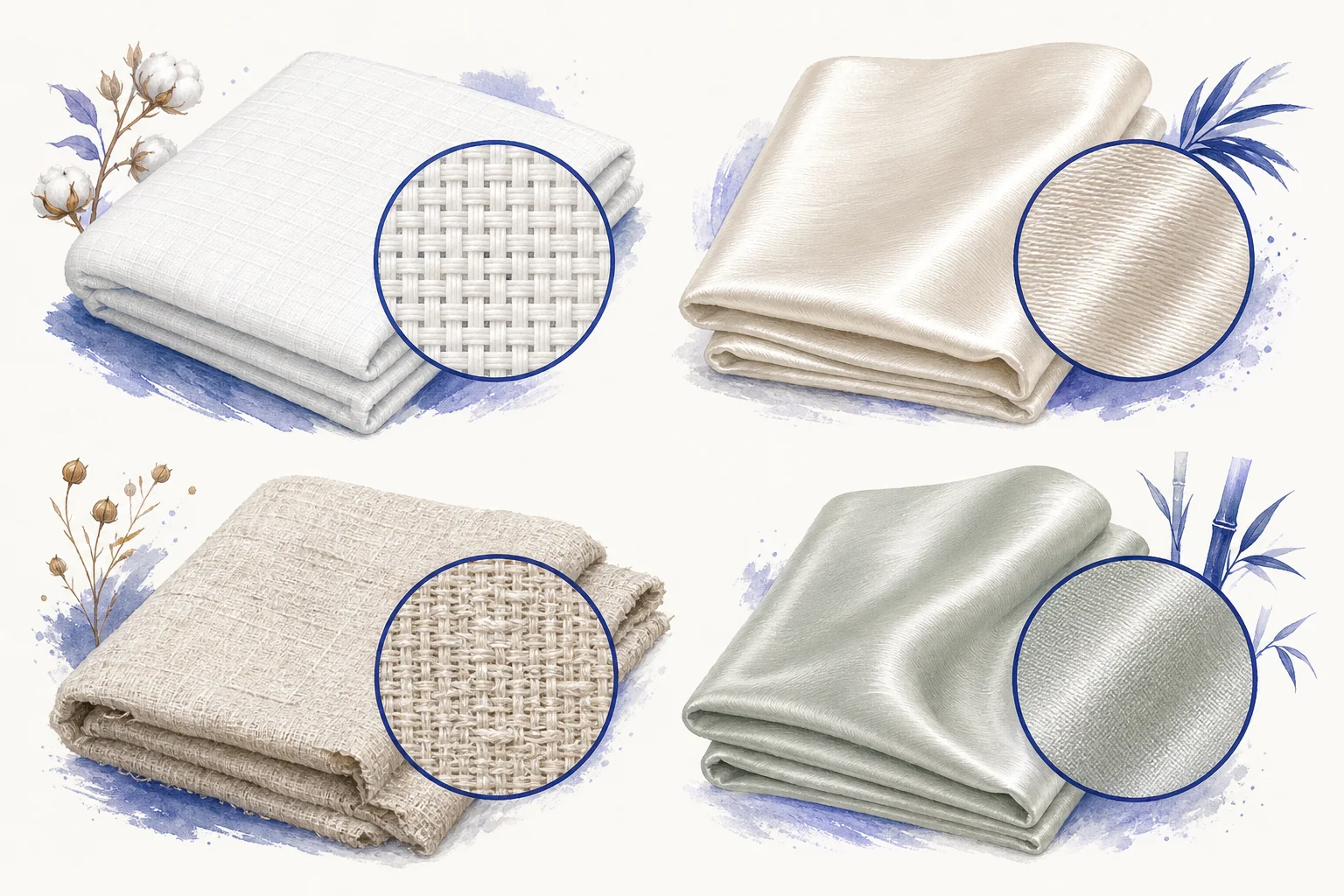
The opening normally belongs at the foot
Placing the closure at the foot keeps hardware away from the face and frames pillows with the closed edge. Covered hardware reduces direct contact.
Some designs specify another orientation or side opening. Follow actual construction rather than assuming buttons always face up or down.
Inspect the whole opening before buying
Look for opening width, spare hardware, reinforcement, a zipper garage or placket, repair support and exact care. Product photos should show the closure.
Then check internal ties and measured dimensions. Those details affect stability more than choosing between two competent closures.
Frequently asked questions
Are buttons better than zippers on a duvet cover?
Neither is universally better. Buttons are locally repairable; zippers are faster and close continuously. Construction quality and protection matter more than category alone.
Source: Sleep Foundation duvet-cover method, The Company Store cover fitting guide, FTC care-label guidance
Should duvet-cover buttons be at the top or bottom?
The opening normally sits at the foot, often with hardware inward or under a placket. Follow the maker's orientation when specified.
Source: Sleep Foundation duvet-cover method, The Company Store cover fitting guide, FTC care-label guidance
Why does my duvet cover have buttons?
They close the access opening after the insert is fitted. They do not replace internal ties or fix a dimensional mismatch.
Source: Sleep Foundation duvet-cover method, The Company Store cover fitting guide, FTC care-label guidance
Why do some duvet covers not have zips?
Buttons, snaps and envelope closures are easier to repair in parts, create a different feel and avoid a long zipper track.
Source: Sleep Foundation duvet-cover method, The Company Store cover fitting guide, FTC care-label guidance
Sources and editorial method
We checked definitions and practical distinctions against the sources below. Product recommendations live in separate buying guides with their own criteria and disclosures.
The bottom line
A protected, reinforced closure beats a poorly built version of either type. Pick buttons for modular repair or a zipper for speed, then verify anchors, measured fit and care.