
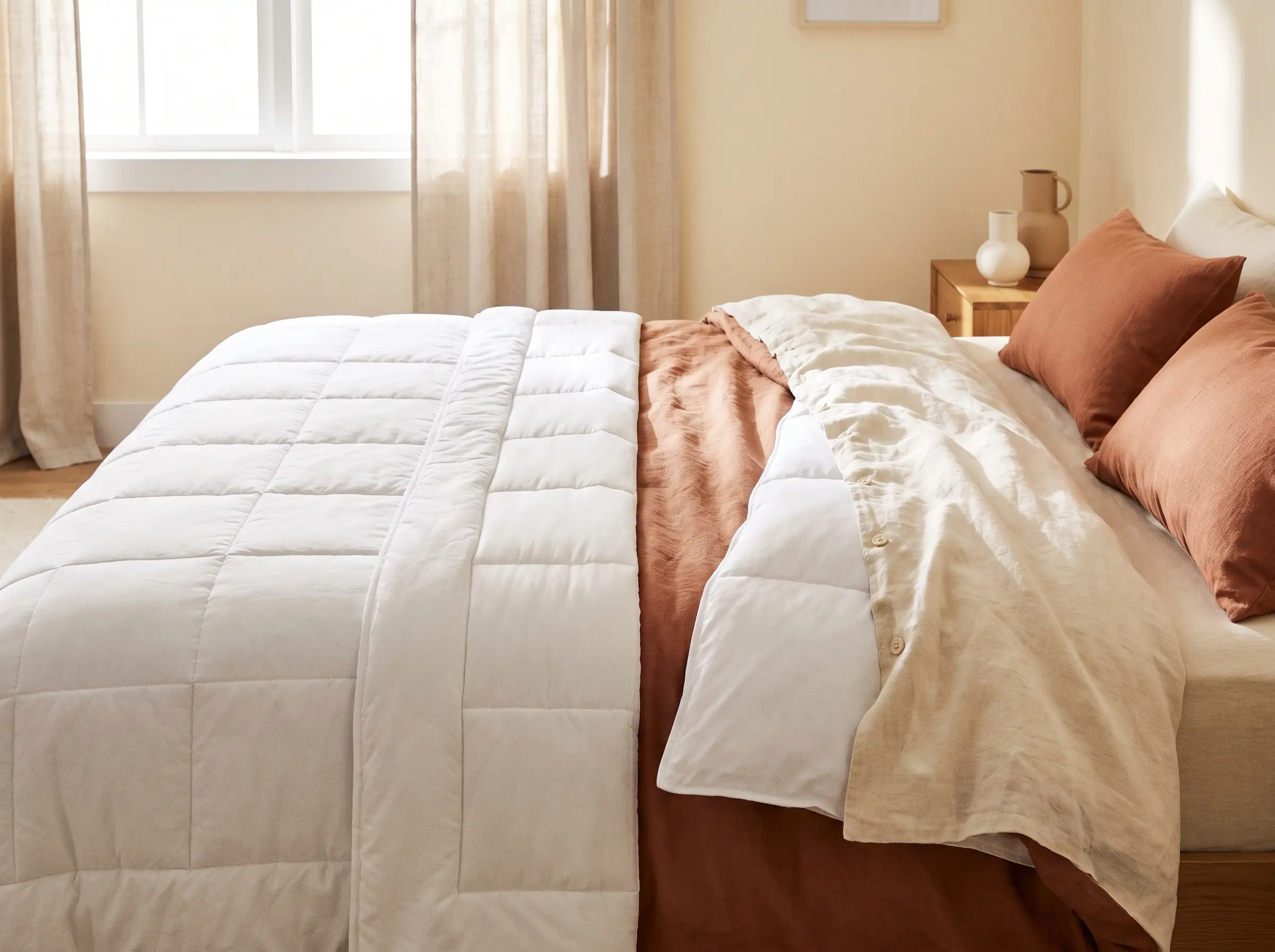
In one sentence
Choose a duvet cover plus insert for replaceable style and a smaller routine wash layer; choose a comforter set for one-step setup and coordinated pieces, after verifying exactly what is included and whether the whole filled layer fits your machines.
Duvet cover system versus comforter set
| Decision | Cover + insert | Comforter set |
|---|---|---|
| Filled layer included | Only if bundle explicitly includes insert | Usually comforter included |
| Routine contact-layer wash | Remove and wash cover | Wash whole comforter or use top sheet |
| Style change | Replace cover | Replace or layer over comforter |
| Fit checks | Cover-to-insert and bed fit | Comforter-to-bed plus each fitted piece |
| Up-front simplicity | Two compatible pieces | Usually one purchase |
| Bundle trap | Cover-only title mistaken for complete duvet | Set may omit sheets or use vague sizing |
Who each system suits
Duvet cover and insert
People who change color often, want a smaller washable contact layer or already own a compatible insert.
Comforter set
People prioritizing quick coordinated setup who can realistically clean the filled layer and will use the included pieces.
Inventory every piece before comparing price
A duvet cover set often means cover plus pillow shams—not the insert. A comforter set may mean comforter plus shams, while a bed-in-a-bag may add sheets and a bed skirt. Product titles are not standardized inventories.
List each usable component and its dimensions. A cheaper seven-piece set is not better value when its fitted sheet pocket misses the topper or the decorative pieces remain unused.
The cover system separates routine care from deep care
A removable cover handles skin contact, light soil and style changes with less washer bulk. The insert still needs periodic label-approved care, but usually less often when protected.
A standalone comforter is washed as a whole unless another layer protects it. Check the selected size against washer and dryer capacity before buying machine-wash marketing.
Two-piece systems add a second fit relationship
Cover and insert should have compatible finished dimensions and attachment points. The Company Store recommends matching size and using corner ties and loops to reduce bunching.
If the cover is too big, empty fabric and shifting remain even when both labels say Queen. A comforter set avoids that inner mismatch but still needs enough bed drop and correctly sized fitted components.
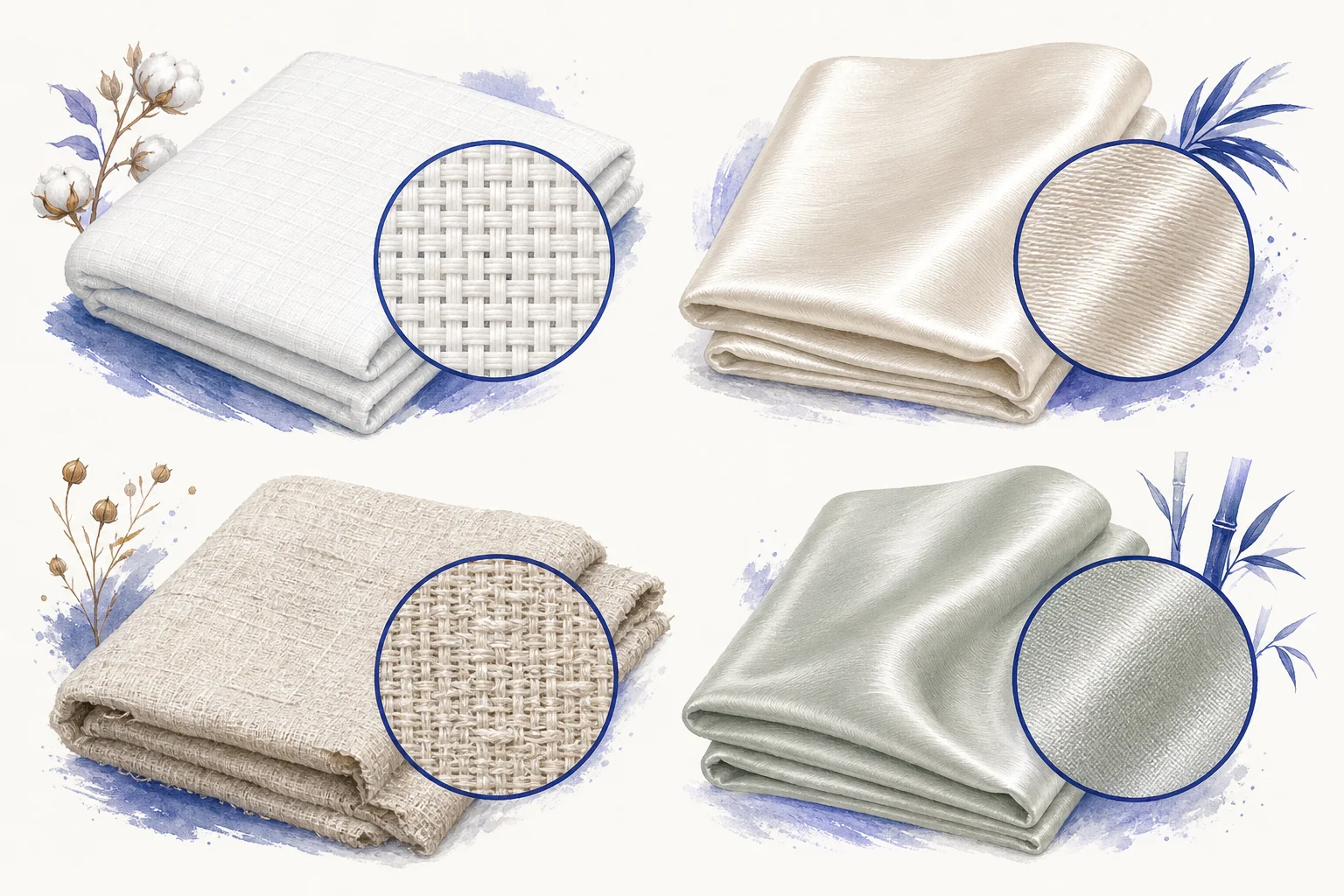
Replaceable style is the duvet system's clearest advantage
Changing a cover keeps the same warmth layer while changing color, weave or seasonal feel. It also lets a damaged outer layer be replaced without discarding an intact insert.
A comforter set creates a coordinated look immediately. Its design is tied to the filled piece, so a later color change may mean storing or replacing more material.
Calculate a complete usable system
Price the cover, insert, shams and any required sheets separately. Include professional cleaning or commercial laundry when the label or size demands it.
Do not treat a high piece count as savings by itself. Compare materials, dimensions, closures, return terms and the number of pieces the household will actually use.
Frequently asked questions
Is it better to have a duvet cover or a comforter?
A cover system is easier to restyle and gives a smaller routine wash layer; a comforter is simpler to set up. Fit, care and desired layers decide.
Source: The Company Store duvet buying guide, The Company Store duvet cover guide, The Company Store cover fitting method
Why do Americans use comforters instead of duvets?
Terminology and habits vary by market. Comforters offer one-piece convenience, while duvet systems separate insert and cover; neither is universally preferred.
Source: The Company Store duvet buying guide, The Company Store duvet cover guide, The Company Store cover fitting method
Can I just use a duvet cover as a comforter?
An empty cover can serve as a very light layer, but it provides little insulation and may not drape like a filled comforter. Check its intended use and closures.
Source: The Company Store duvet buying guide, The Company Store duvet cover guide, The Company Store cover fitting method
Do you just put a comforter in a duvet cover?
You can when dimensions, care and attachment points are compatible. Many comforters lack loops, and mismatched sizes can shift or bunch.
Source: The Company Store duvet buying guide, The Company Store duvet cover guide, The Company Store cover fitting method
Sources and editorial method
We checked definitions and practical distinctions against the sources below. Product recommendations live in separate buying guides with their own criteria and disclosures.
The bottom line
Choose by system, not package count: duvet cover plus insert for modular care and style; comforter set for quick coordination. Verify every included piece and its real dimensions.