
In one sentence
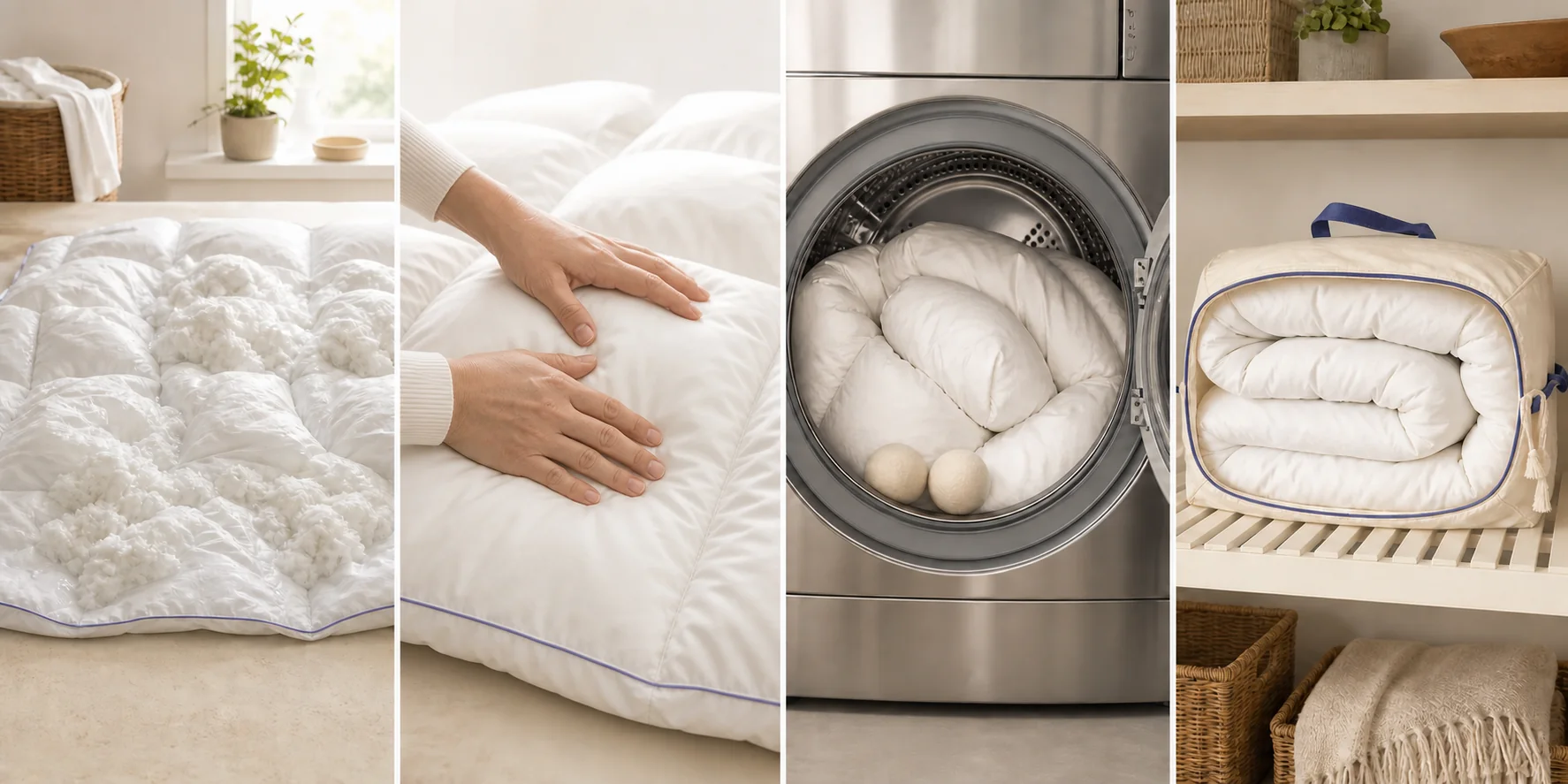
Lay the clean, fully dry comforter flat, smooth without compressing, fold one long side to about two-thirds, fold the opposite third over it, then bring both short ends toward the center and fold once more. Adjust the final bundle to the shelf without hard compression.
Choose the fold by purpose
| Purpose | Best form | Avoid |
|---|---|---|
| Daily bed display | Loose thirds at foot | Sharp compressed creases |
| Linen shelf | Stable rectangle sized to shelf | Heavy items stacked on top |
| Seasonal storage | Loose rectangle in breathable bag | Vacuum compression or sealed damp plastic |
| Temporary transport | Gentle roll with clean cover | Tight rope or straps |
| Washing | Loose loading with free drum room | Forcing a folded block into washer |
Before folding
Clean and completely dry
Folding traps interior moisture and soil; inspect every chamber first.
Preserve loft
Shape the bundle to the space instead of crushing the fill to meet an undersized container.
The fold does not make unsafe storage safe
Use a cool, dry location and a breathable fabric bag. Leave space around down and synthetic loft; do not stack heavy boxes on top.
The full comforter storage guide covers airflow, pests and why long vacuum compression can impair recoverable loft.
Should you fold a comforter into a pocket?
Self-pocket folds can create a tidy display, but repeatedly stretching one corner around a bulky bundle stresses shell and seam stitching. Use them only when the construction tolerates it and storage is brief.
A loose rectangle is simpler and places less tension on one area.
Rolling works for short transport, not hard compression
A gentle roll distributes bends and can fit a clean moving bag. Start from the foot and keep the roll broad.
Do not bind it tightly with rope or leave it rolled for a season. Restore loft after transport using the fluffing guide.
Do not fold an oversized comforter to force it into a washer
Folding changes shape, not volume. The dry item must fit loosely enough to move through wash and rinse water; a packed drum cleans and rinses unevenly.
Use a larger commercial machine or professional care when the household drum fails the capacity check in our comforter washing guide.
Down, wool and cotton need different expectations
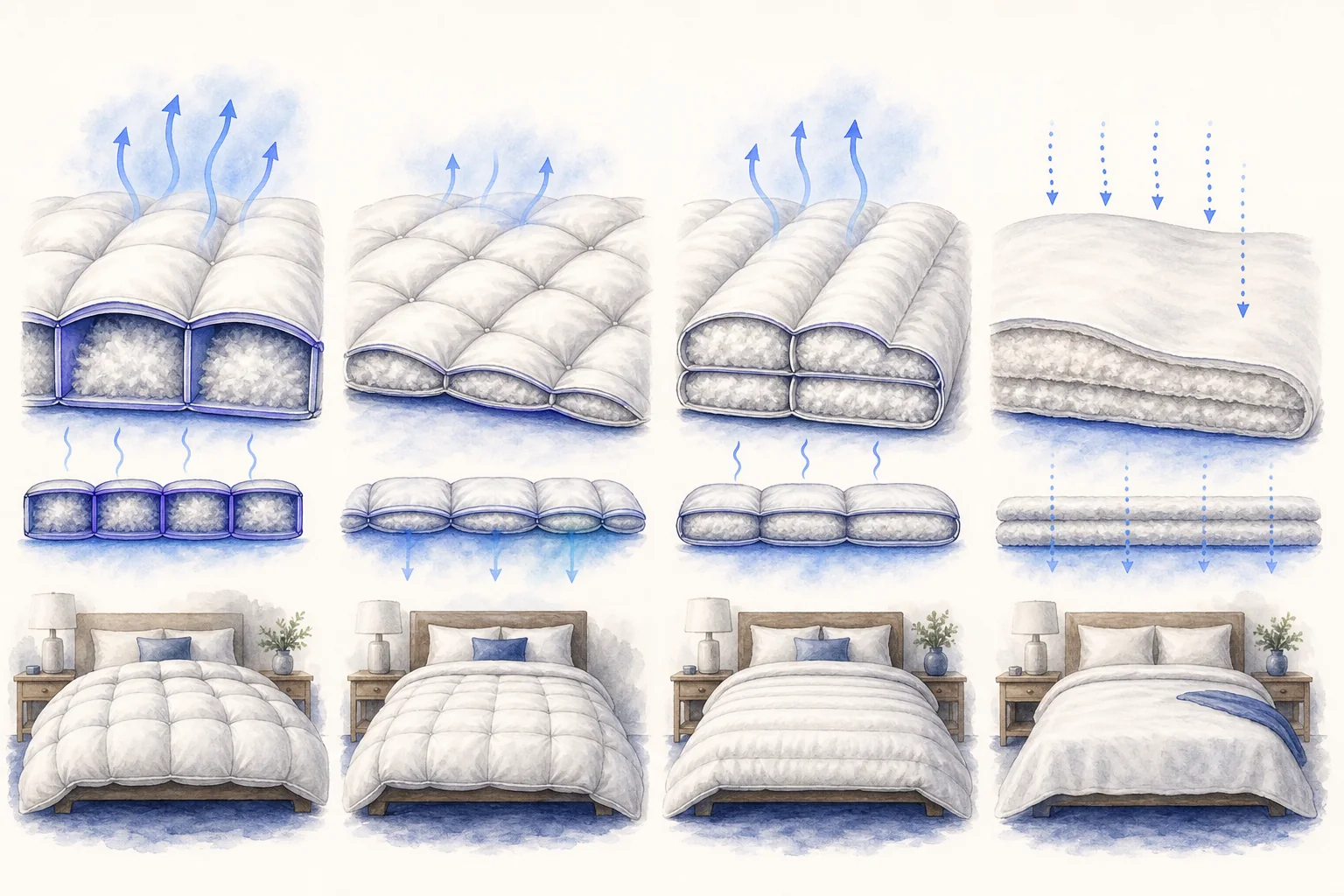
Down and lofty synthetics should remain loose. Wool and cotton batting naturally form flatter layers but still should not be stored damp or sharply bound.
Always follow product-specific care and avoid assuming every fill rebounds from long compression.
Unfold and inspect before reuse
Open the bundle in a ventilated room, inspect seams and smell for mustiness. Shake from several edges and allow compressed chambers time to recover.
If cool damp areas or persistent odor remain, do not make the bed; identify the moisture source and clean according to the label.
A four-part storage fold
- 01Spread the comforter flat on a clean, dry surface and align its corners.
- 02From one long edge, fold across to roughly two-thirds of the width; smooth lightly.
- 03Fold the opposite long third back over the first layers to make one long rectangle.
- 04Bring both short ends toward the center, then fold the bundle once at the center and place it without heavy compression.
Frequently asked questions
How do you fold a comforter into a pocket to save space?
A corner can sometimes be inverted around a folded bundle, but this concentrates tension. For long storage, use a loose rectangle in a breathable bag instead.
Source: The Company Store comforter storage and folding guide, Whirlpool comforter washing guide, FTC textile labeling guidance
How do you fold bedding for storage?
Start clean and fully dry, make broad even folds, use breathable protection and avoid heavy compression in a cool dry location.
Source: The Company Store comforter storage and folding guide, Whirlpool comforter washing guide, FTC textile labeling guidance
How do you fold a comforter to fit in a washing machine?
Do not use folding to defeat washer capacity. The comforter must fit loosely and move freely; otherwise use a larger machine or professional service.
Source: The Company Store comforter storage and folding guide, Whirlpool comforter washing guide, FTC textile labeling guidance
How do you fold a comforter into a roll?
Align it flat, fold to a manageable width, then roll loosely from one short edge. Use the roll only for short transport or display, not long compression.
Source: The Company Store comforter storage and folding guide, Whirlpool comforter washing guide, FTC textile labeling guidance
Sources and editorial method
We checked definitions and practical distinctions against the sources below. Product recommendations live in separate buying guides with their own criteria and disclosures.
The bottom line
Use broad, loose folds on a clean, completely dry comforter. Shape the bundle for its shelf while protecting loft—and never use folding to force it into an undersized washer.