
In one sentence
Store a completely dry comforter loosely folded in a clean breathable cotton bag on a ventilated shelf, away from damp, heat, direct sunlight, pests and heavy items; avoid long-term vacuum compression for lofty fills.
Storage options by risk and use
| Option | Best use | Main caution |
|---|---|---|
| Breathable cotton bag | Long-term storage of lofty or natural-fill bedding | Not waterproof; location must stay dry |
| Ventilated closet shelf | Frequent or seasonal rotation | Leave air space and keep heavy items off |
| Under-bed fabric case | Dry, clean under-bed space | Avoid damp floors and packed compression |
| Rigid plastic bin | Shorter storage where pests or dust are a concern | Only for completely dry items; limited airflow |
| Vacuum bag | Short-term space saving for resilient synthetics if maker permits | Long compression can damage loft; avoid for down and delicate fills |
Who should adapt the method
Lofty down and down alternative
Prioritize breathing room and keep these items at the top of a stack so weight does not crush their chambers.
Wool, silk and delicate shells
Follow fill-specific cleaning instructions and avoid plastic or compression unless the manufacturer explicitly permits it.
Clean is useful; completely dry is non-negotiable
Body oils, spills and food residue can attract pests or set into fabric during storage, but cleaning must follow the sewn-in label. A wool or silk comforter may require a different method from a washable synthetic one.
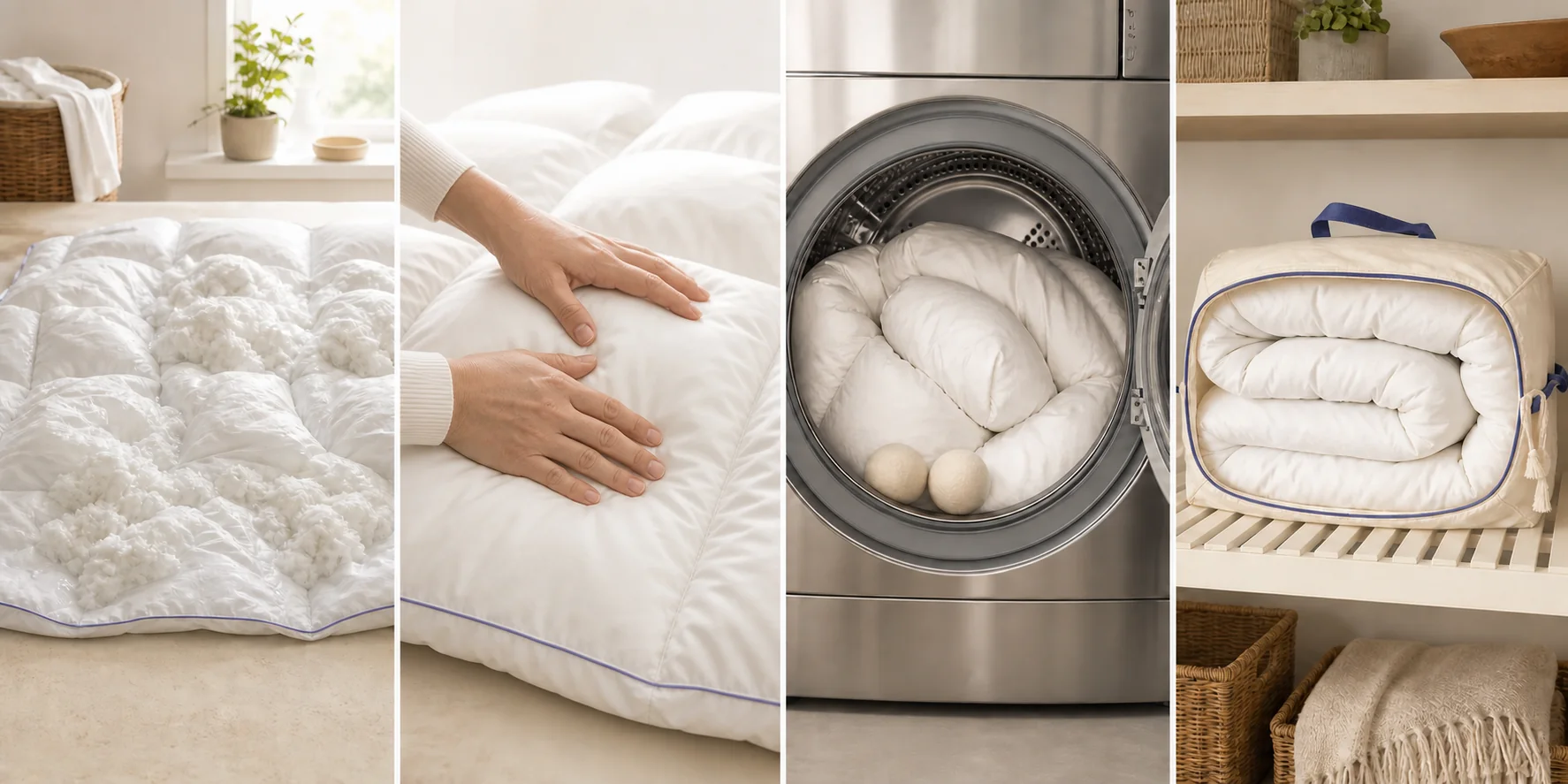
Moisture trapped in fill creates musty odor and can support mold or mildew. Feel multiple chambers and thick edges after drying. If any area feels cool or damp, continue label-approved drying or ventilated air drying before packing it.
Use protection that does not permanently crush the fill
The Company Store recommends breathable fabric bags for lofty bedding because they keep off dust while allowing moisture to escape. Choose a bag large enough for a loose fold rather than stuffing the comforter into a tight cube.
A clean cotton pillowcase can protect a small lightweight comforter, but do not assume it fits a King model. Avoid unlined cardboard for long storage because it offers limited moisture and pest protection.
Vacuum bags solve space but can create a loft problem
Long-term compression is a poor default for down, feather and other lofty or delicate fills. It flattens clusters and places sustained pressure on stitching. The seasonal bedding guide limits vacuum bags to suitable synthetic bedding rather than treating them as universal.
If a manufacturer explicitly allows compression, keep the period short and restore loft gradually after opening. Never vacuum-pack a comforter that is even slightly damp.
A cool, dry closet shelf usually beats a basement or attic
Temperature swings, humidity, roof leaks and pests make unfinished attics, garages and basements risky. Interior shelving with airflow offers more stable conditions. Leave space around the bag rather than wedging it tightly against an exterior wall.
Under-bed storage can work when the floor and room remain dry and the case is breathable. Keep the bag off dirty flooring and inspect it periodically if the home has humidity or pest issues.
Store an extra-large comforter by changing the space, not crushing the item
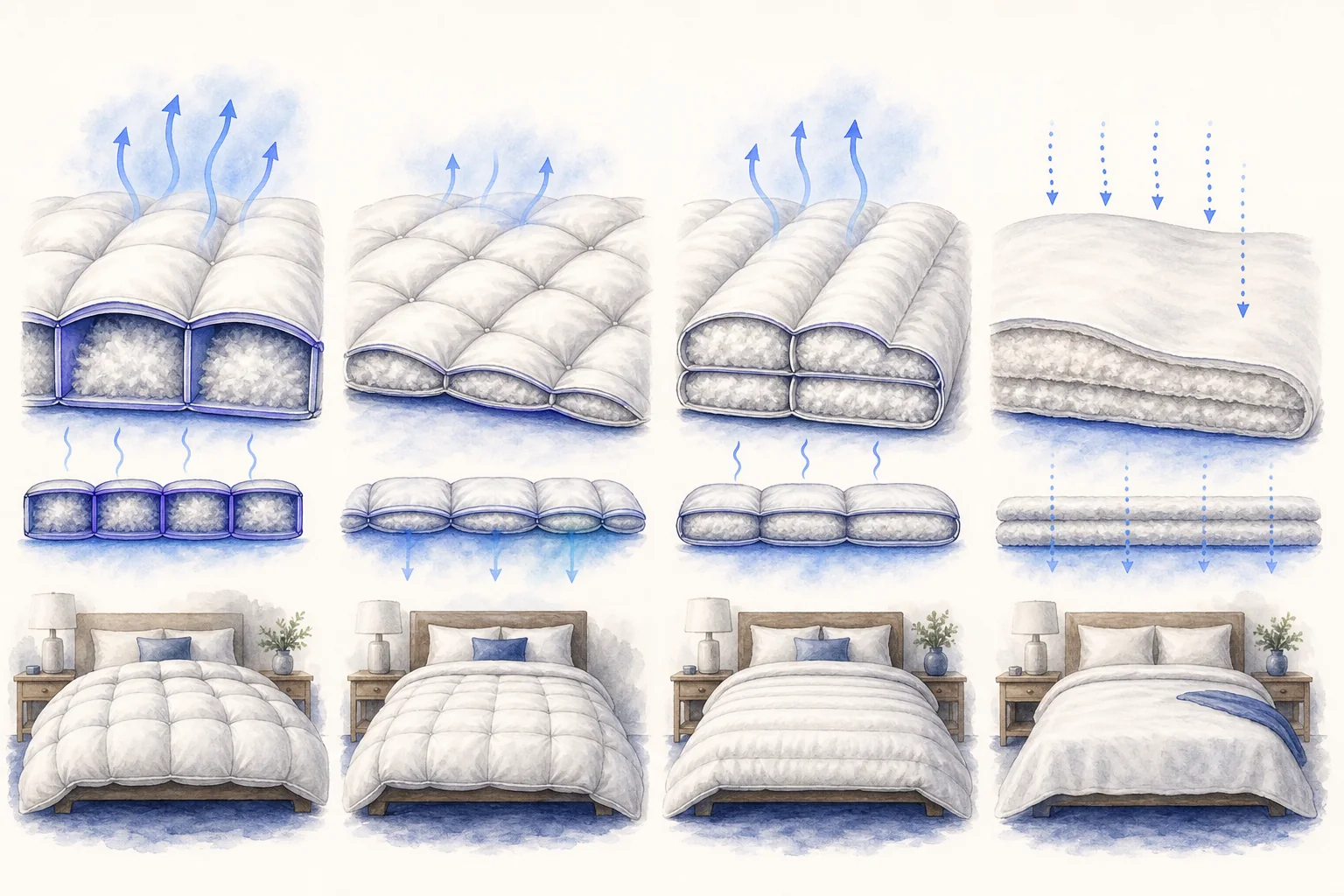
For oversized King bedding, use a deep dedicated shelf, large breathable case or clean trunk with adequate interior space. Fold in thirds along the length, then into a broad loose bundle that matches the container.
If no single shelf fits, rearrange the closet or use a purpose-sized under-bed fabric case. Do not hang a very heavy comforter from a narrow hanger; concentrated weight can distort the shell or seams.
Where to put a comforter at night
A blanket ladder, wide bench or clean breathable basket can hold a comforter temporarily when you do not sleep under it. The surface should be smooth, dry and away from pets, shoes and damp bathroom air.
Nightly placement is not seasonal storage. Shake the item before remaking the bed and launder it according to use and the care label. The wash-frequency guide helps separate routine airing from actual cleaning.
A storage routine that protects the fill
- 01Read the care label, clean only as directed and repair loose stitching before storage.
- 02Dry the comforter completely, checking thick seams, corners and internal chambers rather than judging the shell alone.
- 03Fold loosely along existing construction lines; do not force a lofty item into a container that is too small.
- 04Place it in a clean breathable fabric bag or other maker-approved protection.
- 05Choose a cool, dry, dark, ventilated shelf and keep heavy boxes, damp walls and direct floor contact away.
- 06Inspect it during long storage, then air and refluff it before returning it to the bed.
Frequently asked questions
How do you store bedding when not in use?
Clean and dry it according to its label, fold it without hard compression, protect it in a breathable bag and use a cool, dry, ventilated location away from heavy objects.
Source: The Company Store bulky bedding storage guide, The Company Store seasonal bedding guide, The Company Store care guide
How do you store a down comforter during summer?
Make sure it is completely dry, fold it loosely into a breathable cotton bag and place it on a ventilated shelf with nothing heavy on top. Avoid long-term vacuum compression.
Source: The Company Store bulky bedding storage guide, The Company Store seasonal bedding guide, The Company Store care guide
How do you store an extra large comforter?
Use a purpose-sized breathable case and a deep shelf or clean under-bed space. Change the storage space rather than forcing the comforter into a small container.
Source: The Company Store bulky bedding storage guide, The Company Store seasonal bedding guide, The Company Store care guide
Where do you store comforters at night?
Use a clean bench, blanket ladder or roomy basket in a dry room. Avoid the floor and do not leave it tightly compressed between uses.
Source: The Company Store bulky bedding storage guide, The Company Store seasonal bedding guide, The Company Store care guide
Sources and editorial method
We checked definitions and practical distinctions against the sources below. Product recommendations live in separate buying guides with their own criteria and disclosures.
The bottom line
The safest storage setup is boring but effective: clean, completely dry, loosely folded, breathable and uncrushed in a stable interior space. Space-saving is secondary to moisture and loft protection.