

In one sentence
Choose lightweight for warm rooms, warm sleepers or flexible layering; choose all-season for moderate rooms and sleepers who want one midweight layer—but compare actual specifications because the labels are not standardized.
Lightweight and all-season at a glance
| Decision | Lightweight | All-season |
|---|---|---|
| Typical position in a brand range | Lowest or summer warmth tier | Middle or year-round tier |
| Best starting point | Warm room or warm sleeper | Moderate room and neutral sleeper |
| Layering | Easy to add a blanket | May need removal in summer |
| Laundry bulk | Usually less fill, but size still matters | Usually more fill and drying time |
| Cold snap flexibility | Add a separate layer | Often enough alone in mild winter |
| Universal temperature promise | No | No |
Who each tier suits
Lightweight
Warm sleepers, insulated homes, humid summers, couples with different heat preferences and anyone who prefers removable layers.
All-season
Neutral sleepers in moderate rooms who value one simple layer and have enough washer/dryer capacity for its greater bulk.
Warmth labels are brand-specific
Lightweight, summer and all-season describe positions inside a maker's range. They do not guarantee the same fill weight, GSM, tog or temperature across brands. Compare only after checking size, fill type and published warmth information.
An all-season product is generally midweight, as Downlite explains, but a warm sleeper may still find it excessive in summer. Marketing language cannot replace room and body context.
Start with the room and sleeper—not the season name
A heated winter bedroom can need less insulation than an air-conditioned summer room. Record the overnight room range, whether you sleep hot or cold, pajamas, mattress heat retention and whether another person shares the bed.
The warmth selector offers a repeatable starting point. If two sleepers disagree, a lighter shared layer plus individual blankets is often easier to tune than one warmer comforter.
Fill power, fill weight and GSM answer different questions
Down fill power measures loft per ounce; it does not state the total amount of down. Fill weight is how much fill is present. GSM is mass per square meter and can aid within-category comparison, but does not make unlike materials thermally identical.
Construction also matters. Baffles, sewn-through seams, shell density and chamber depth change loft distribution. Compare the full assembly rather than treating one headline number as a warmth score.
A lighter system offers more adjustment
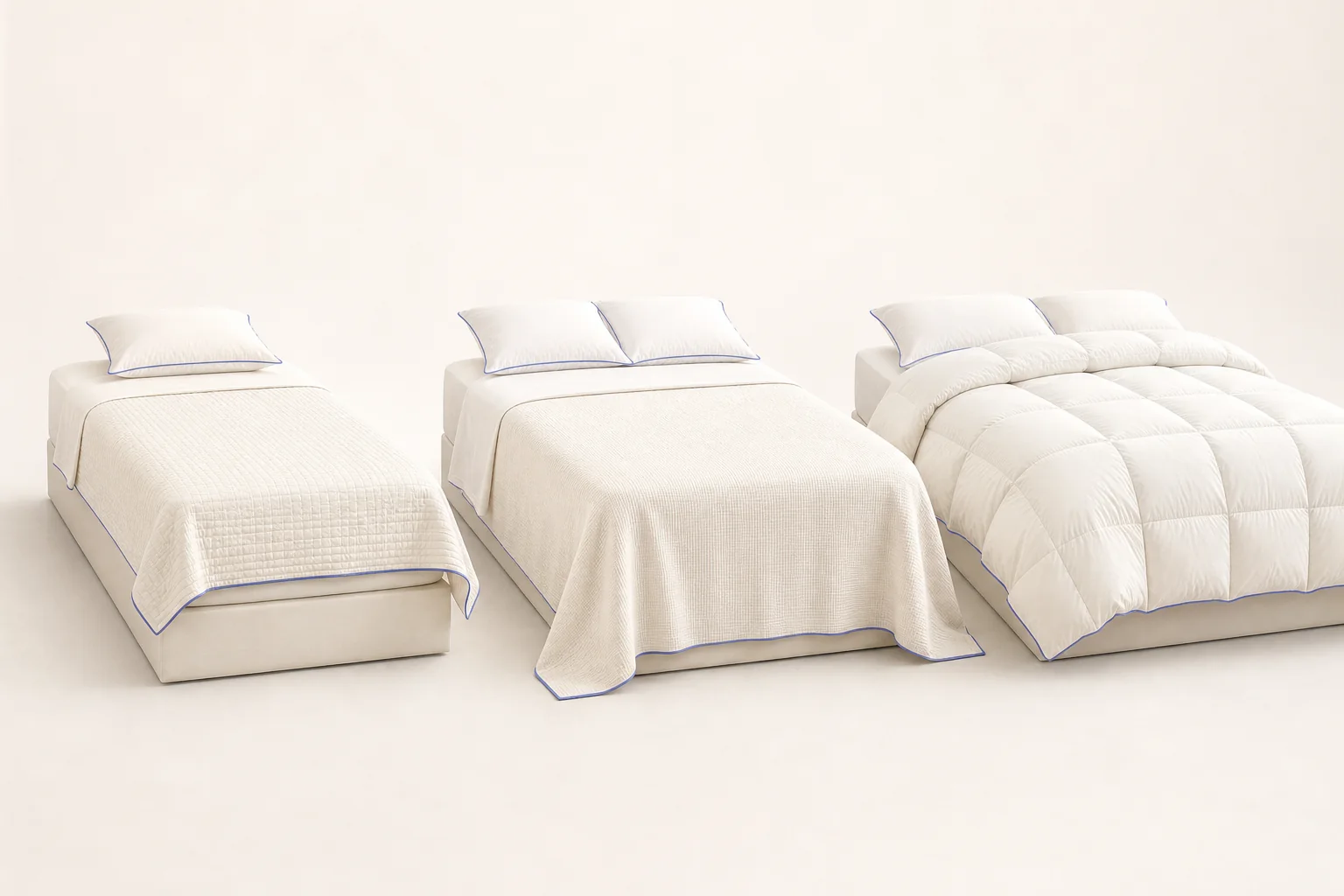
A lightweight comforter can stay on the bed longer when paired with a washable blanket for cold periods. That adds pieces to manage, but each layer can be removed independently as room conditions change.
All-season reduces the number of layers and storage decisions. Its tradeoff is less downward adjustment: once it feels too warm, turning down the room or removing the whole comforter may be the only option.
More fill also changes care logistics
Check finished dimensions, dry weight and the sewn-in label. An all-season King may be machine washable yet too bulky for a household drum. A lightweight tier is not automatically easy-care if its material requires specialist cleaning.
Plan drying capacity before purchase. Internal chambers must dry completely, and extra fill can extend the process even when the outer shell already feels warm.
Frequently asked questions
What kind of comforter do 5 star hotels use?
Hotels use varied specifications chosen for climate, laundering and brand standards. A hotel-style claim does not identify a universal fill or warmth; compare the exact product instead.
Source: Downlite comforter warmth guide, REI down fill power explanation, The Company Store duvet buying guide
Is all season comforter good for summer?
It can suit a cool room or cold sleeper, but all-season is commonly a midweight tier and may be too warm for hot sleepers. Room temperature and published specifications matter.
Source: Downlite comforter warmth guide, REI down fill power explanation, The Company Store duvet buying guide
Is it better to have a lighter or heavier comforter?
Lighter is more adjustable through layering; heavier or midweight is simpler for a consistently cool room. Physical weight and thermal warmth are related imperfectly across different fills.
Source: Downlite comforter warmth guide, REI down fill power explanation, The Company Store duvet buying guide
What is the best comforter for summer weather?
Start with a lightweight tier, breathable shell and realistic care plan, then verify actual fill and construction. The summer comforter guide owns product recommendations.
Source: Downlite comforter warmth guide, REI down fill power explanation, The Company Store duvet buying guide
Sources and editorial method
We checked definitions and practical distinctions against the sources below. Product recommendations live in separate buying guides with their own criteria and disclosures.
The bottom line
Lightweight is the safer flexible starting point for warm or changing conditions; all-season suits steady moderate conditions. Ignore the tier name until you have compared the actual fill, construction, room and care burden.