

In one sentence
Choose percale for a crisp matte shell and more open-feeling hand; choose sateen for smooth drape and subtle sheen, then let fill weight and construction—not shell weave alone—decide warmth.
Percale and sateen shell compared
| Attribute | Percale | Sateen |
|---|---|---|
| Basic weave tendency | One-over, one-under plain weave | Longer floats in satin-family weave |
| Hand | Crisp, cool and matte | Smooth, supple and lustrous |
| Drape | Structured | Closer and fluid |
| Snag tendency | Fewer exposed floats | Floats may snag more readily |
| Warmth effect | Shell-level difference only | Shell-level difference only |
| Main trap | Assuming crisp means poor quality | Assuming sheen proves high thread count |
Who each shell suits
Percale
People who like crisp hotel-style fabric, matte appearance and a less clingy surface.
Sateen
People who prefer smooth drape, a softer initial hand and visible luster and can manage its finish carefully.
Weave creates the surface difference
Percale is a balanced plain weave with frequent interlacing; sateen uses longer yarn floats that expose more surface. That structure creates the familiar matte-versus-lustrous distinction.
Fiber still matters. Cotton, blends and finishes can change either fabric, so verify content instead of assuming every percale or sateen shell is identical.
Crisp versus smooth is the practical choice
Percale often feels dry, airy and structured at first, then softens with compatible washing. Sateen feels smoother and drapes closer because of its surface floats.
A sleeper sensitive to texture may prefer sateen; someone who dislikes cling may prefer percale. Use a return policy because finish and yarn quality can outweigh the weave name.
The fill controls most comforter warmth
A percale shell around heavy down can be much warmer than a sateen shell around light alternative fill. Compare fill type, fill amount, chambers and room conditions before shell weave.
For warm sleepers, percale can improve surface preference but cannot turn a winter-weight insert into a summer layer. The lightweight comforter comparison owns the warmth-tier decision.
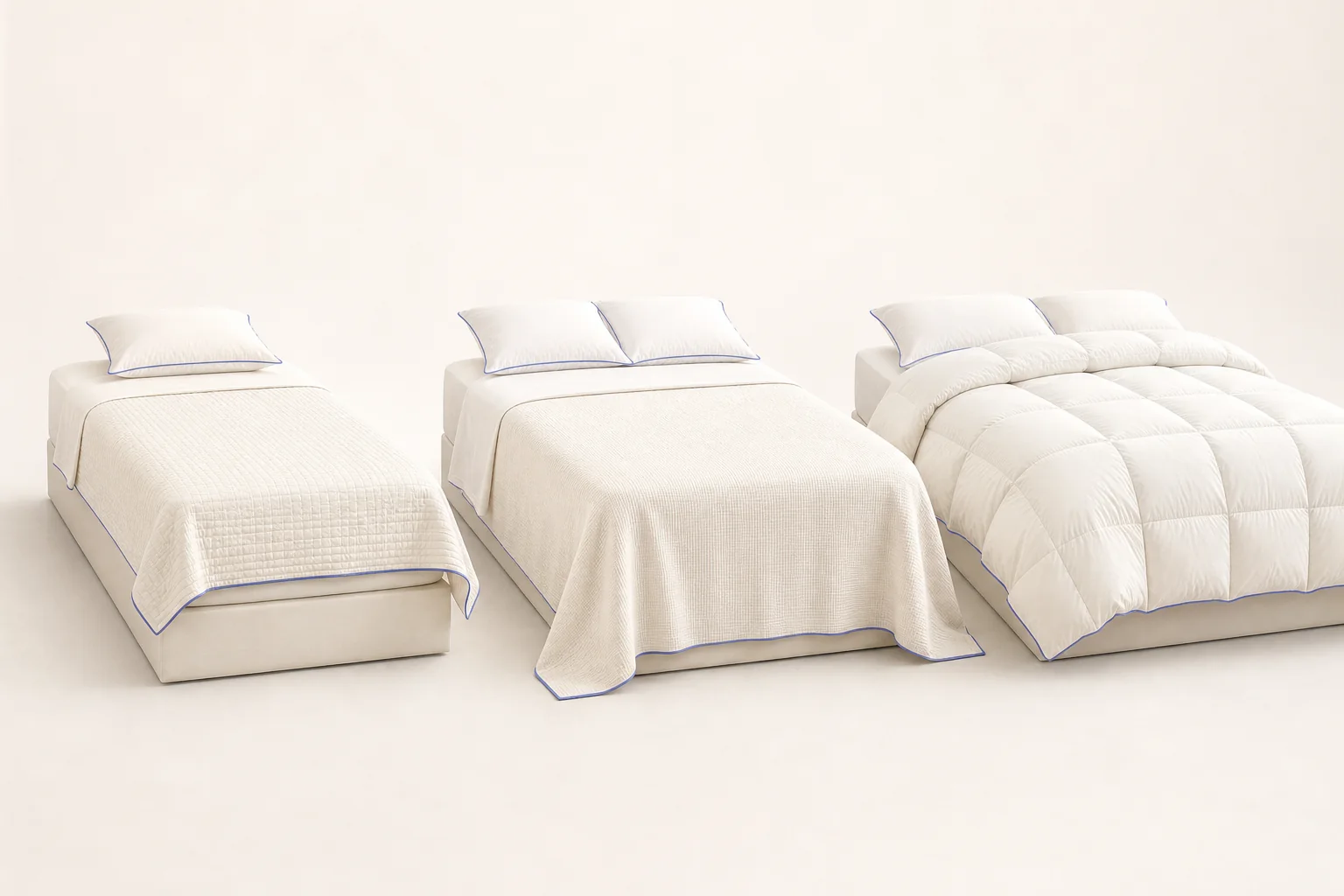
Construction changes wear and snagging
Percale's frequent interlacing can feel robust, while sateen's longer floats may be more exposed to claws or abrasive contact. Yarn quality, density and finishing still determine actual durability.
Do not chase extreme thread counts. Multi-ply counting and marketing can obscure fiber and construction; the comforter thread-count guide explains why more is not automatically better.
Follow the whole comforter label
Sheet-care advice cannot be copied onto a filled comforter. The shell, dyes, inner fill, stitching and trim share one care process, and a large item may exceed home capacity.
A duvet cover can preserve either shell and offer a replaceable contact texture. Confirm tie loops and dimensions before covering a finished comforter.
Frequently asked questions
Should I get sateen or percale?
Choose sateen for smooth drape and sheen; choose percale for crisp matte structure. For a comforter, compare the hidden fill separately.
Source: Sleep Foundation sateen versus percale, CottonWorks home textile performance, FTC textile labeling resources
Do luxury hotels use sateen or percale?
Hotels use both according to brand, climate and laundering standards. Hotel use is not a quality guarantee or universal comfort preference.
Source: Sleep Foundation sateen versus percale, CottonWorks home textile performance, FTC textile labeling resources
What are the downsides of percale?
It can feel crisp or rough initially, wrinkle and lack sateen's sheen. Low-quality yarn or finishing can exaggerate those traits.
Source: Sleep Foundation sateen versus percale, CottonWorks home textile performance, FTC textile labeling resources
Is sateen or percale better for skin?
Neither weave is medically best for everyone. Smoothness, finishes, cleanliness and individual sensitivity matter; seek clinical advice for diagnosed conditions.
Source: Sleep Foundation sateen versus percale, CottonWorks home textile performance, FTC textile labeling resources
Sources and editorial method
We checked definitions and practical distinctions against the sources below. Product recommendations live in separate buying guides with their own criteria and disclosures.
The bottom line
Percale versus sateen is a shell-feel choice: crisp matte structure versus smooth lustrous drape. Choose warmth from the fill and care from the complete-item label.