
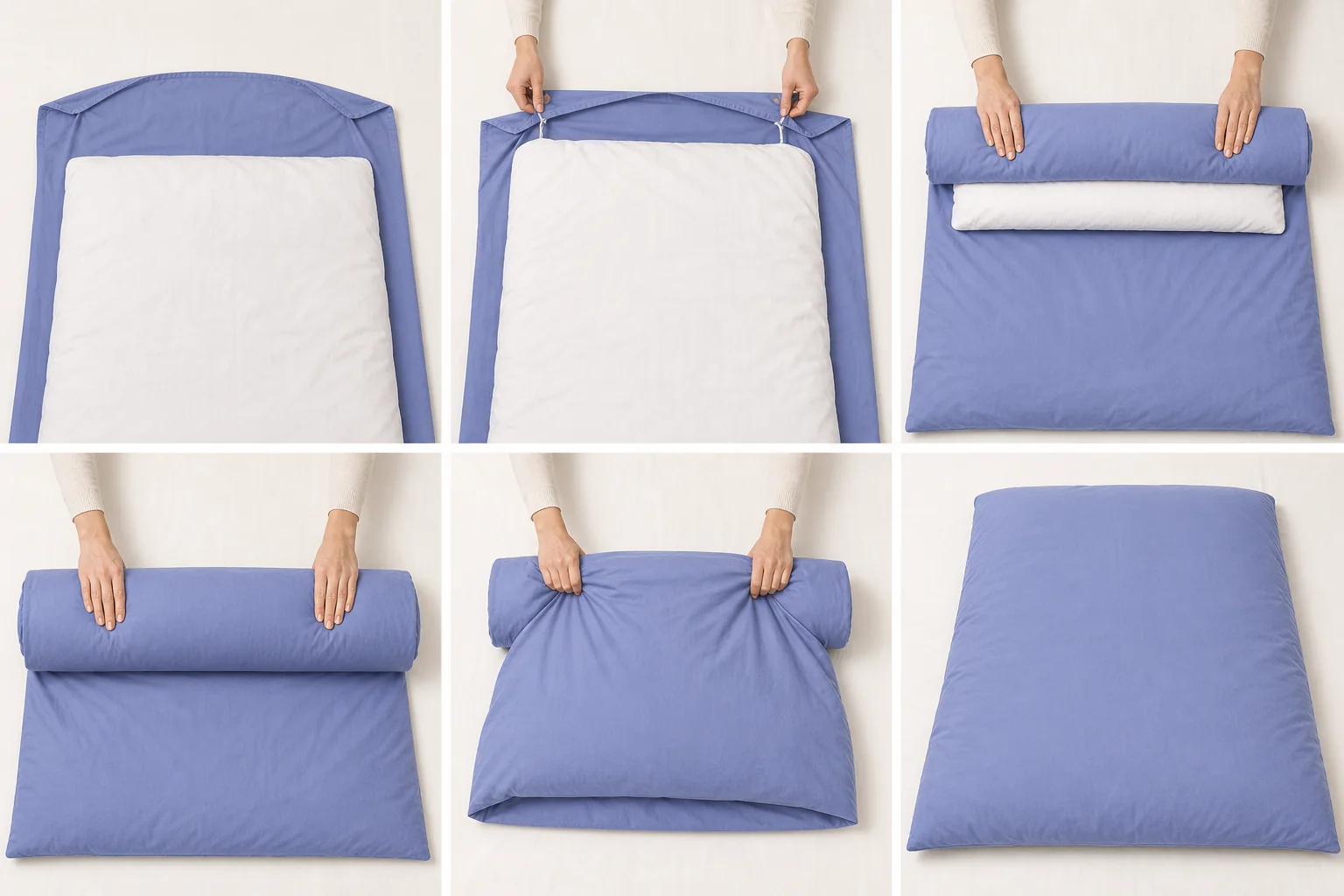
In one sentence
Choose cotton percale for a crisp, breathable all-round cover; linen for maximum airy texture; cotton sateen for smoother, slightly warmer drape; flannel for winter; or polyester microfiber when low cost, light weight and fast drying outweigh lower moisture absorption.
Duvet cover material comparison
| Material | Feel and climate | Main compromise |
|---|---|---|
| Cotton percale | Crisp, matte, airy | Wrinkles and feels less silky |
| Cotton sateen | Smooth, drapey, somewhat warmer | Can retain more warmth |
| Linen | Airy, textured, softens with washing | Wrinkles and often costs more |
| Cotton flannel | Brushed and warm | Too warm for many hot sleepers |
| Polyester microfiber | Smooth, inexpensive, quick-drying | Absorbs less moisture and may hold odor |
| Rayon from bamboo | Silky, fluid feel | Fiber claims and care require label scrutiny |
Fast recommendation
Best broad default: cotton percale
A practical balance for warm sleepers, frequent washing and people who like a clean, crisp bed.
Choose by contact and laundry
Prioritize the fabric touching skin, the room temperature and what your washer can repeatedly handle—not a luxury label alone.
How we compare materials
This is a source-led material decision guide, not a hands-on product ranking. We compare fiber label, weave, fabric weight, care instructions and use case; we do not invent cooling tests, durability scores or thread-count winners.
The cover changes surface feel and laundry burden, but the insert remains the main source of insulation.
Cotton percale versus cotton sateen
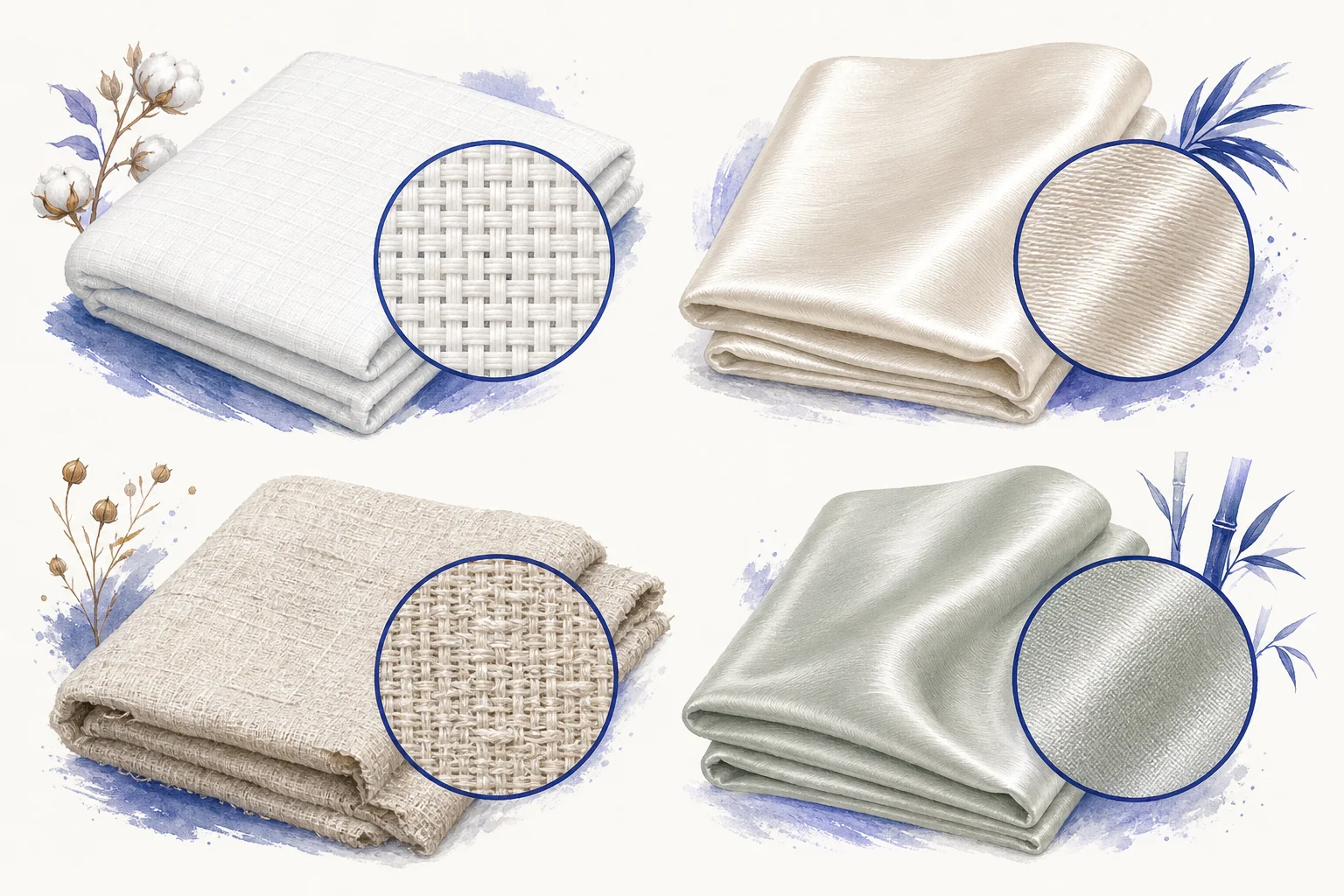
Percale and sateen are weaves, not different fibers. Percale's simple over-under structure typically feels crisp and matte; sateen exposes longer yarn floats for smoother drape and sheen.
Hot sleepers commonly prefer percale, while people seeking a silkier hand may prefer sateen. Our polyester-versus-cotton comforter guide separates shell fiber from the hidden fill.
When linen earns its premium
Linen offers an airy, textured surface and becomes more relaxed with washing. It suits warm rooms and people who like a casual, wrinkled appearance.
Check fabric weight and care rather than assuming every linen cover feels identical. Initial crispness, shedding and price vary by construction.
Flannel and jersey for a warmer or softer bed
Brushed cotton flannel adds a fuzzy surface and more warmth; jersey stretches and feels like a T-shirt. Both sacrifice the tailored crispness of percale.
A warm cover cannot correct an insert that is drastically under- or over-insulated. Use the warmth selector for the filled layer.
Microfiber is a budget and laundry tradeoff
Polyester microfiber can be light, smooth, inexpensive and quick to dry. CottonWorks notes that polyester absorbs little moisture and may retain odor molecules more readily than cotton.
That does not make every polyester cover unsafe. Read the actual fiber label, wash instructions and certifications; avoid unsupported health or hypoallergenic claims.
Five checks before buying
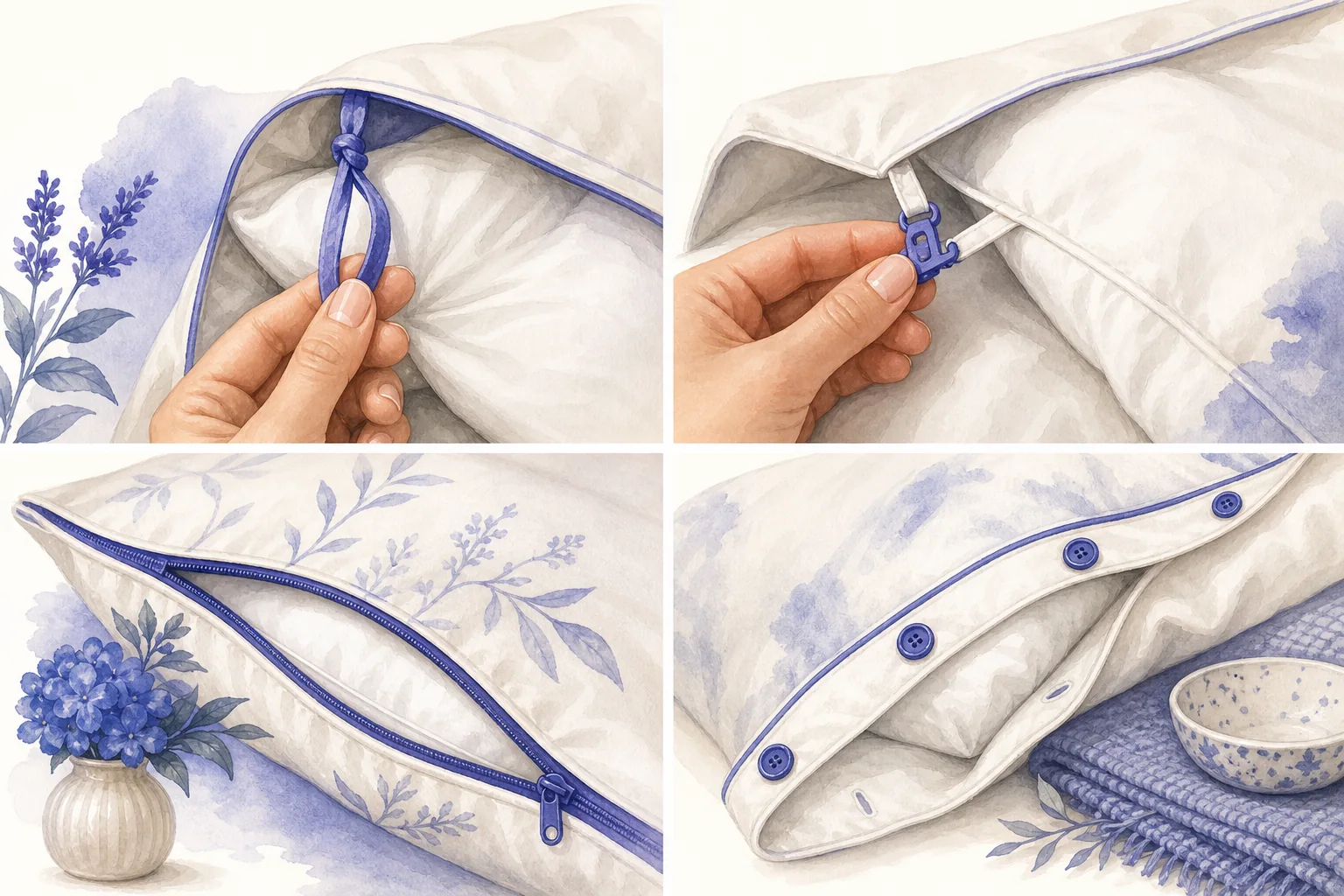
Confirm fiber percentages, weave, dimensions, closure and internal ties. Then check shrinkage guidance and whether the fabric fits your normal wash-and-dry routine.
Thread count alone does not prove quality across different fibers and weaves. A credible listing gives measurable dimensions and care, not only adjectives.
Frequently asked questions
What is the healthiest material for a duvet cover?
No fabric is universally healthiest. Choose a clearly labeled, washable material that suits your skin and climate; consult a clinician for diagnosed allergies or dermatitis rather than relying on marketing claims.
Source: The Company Store duvet cover material guide, CottonWorks cotton home textiles, FTC textile labeling guidance
Should duvet covers be 100% cotton?
They do not have to be. Cotton is a versatile, breathable choice, while linen, polyester and regenerated-cellulose fabrics offer different feel, price and care tradeoffs.
Source: The Company Store duvet cover material guide, CottonWorks cotton home textiles, FTC textile labeling guidance
What material do hotels use for duvet covers?
Hotel specifications vary. Durable washable cotton and cotton-rich fabrics are common, but a hotel-style claim does not identify exact fiber, weave or quality—check the label.
Source: The Company Store duvet cover material guide, CottonWorks cotton home textiles, FTC textile labeling guidance
Is cotton or polyester better for a duvet cover?
Cotton generally absorbs moisture and feels more breathable; polyester is often cheaper, lighter and faster drying. The better choice depends on heat, feel and laundry priorities.
Source: The Company Store duvet cover material guide, CottonWorks cotton home textiles, FTC textile labeling guidance
Sources and editorial method
We checked definitions and practical distinctions against the sources below. Product recommendations live in separate buying guides with their own criteria and disclosures.
The bottom line
Cotton percale is the strongest all-round starting point, not a universal winner. Select the cover by skin feel, room climate, laundering and verified fiber content; select warmth through the insert.