In one sentence
Choose cotton for broad weave choice, familiar care and transparent fiber labeling; consider rayon/viscose made from bamboo for a smooth fluid hand, but verify the legal fiber name, processing claim, certification scope and gentler care requirements.
Bamboo-derived and cotton covers compared
| Decision | Rayon/viscose made from bamboo | Cotton |
|---|---|---|
| Legal fiber identity | Regenerated manufactured fiber | Natural seed fiber |
| Common hand | Smooth, fluid and drapey | Ranges from crisp percale to smooth sateen |
| Moisture behavior | Often absorbent; weave and finish matter | Absorbent; weave and weight matter |
| Durability | Can weaken with harsh care depending on construction | Varies widely by yarn and weave |
| Label to seek | Rayon/viscose/lyocell plus bamboo source wording | Cotton percentage and weave |
| Organic claim | Bamboo source does not prove organic finished textile | Requires valid finished-product scope |
Who each cover suits
Bamboo-derived rayon may suit you if…
You value a smooth flowing surface and are willing to verify exact fiber wording and follow potentially gentler care.
Cotton may suit you if…
You want crisp or smooth weave choices, widespread availability and a more familiar wash-and-replace ecosystem.
Start with the legally meaningful fiber name
FTC guidance says textiles cannot simply be labeled bamboo when the fiber is rayon made from bamboo. Regenerating cellulose dissolves and reforms plant material into a manufactured fiber.
Lyocell is another regenerated process category. Bamboo source and eucalyptus source are not themselves performance grades; the generic fiber, weave and finish matter.
Weave can outweigh the plant name
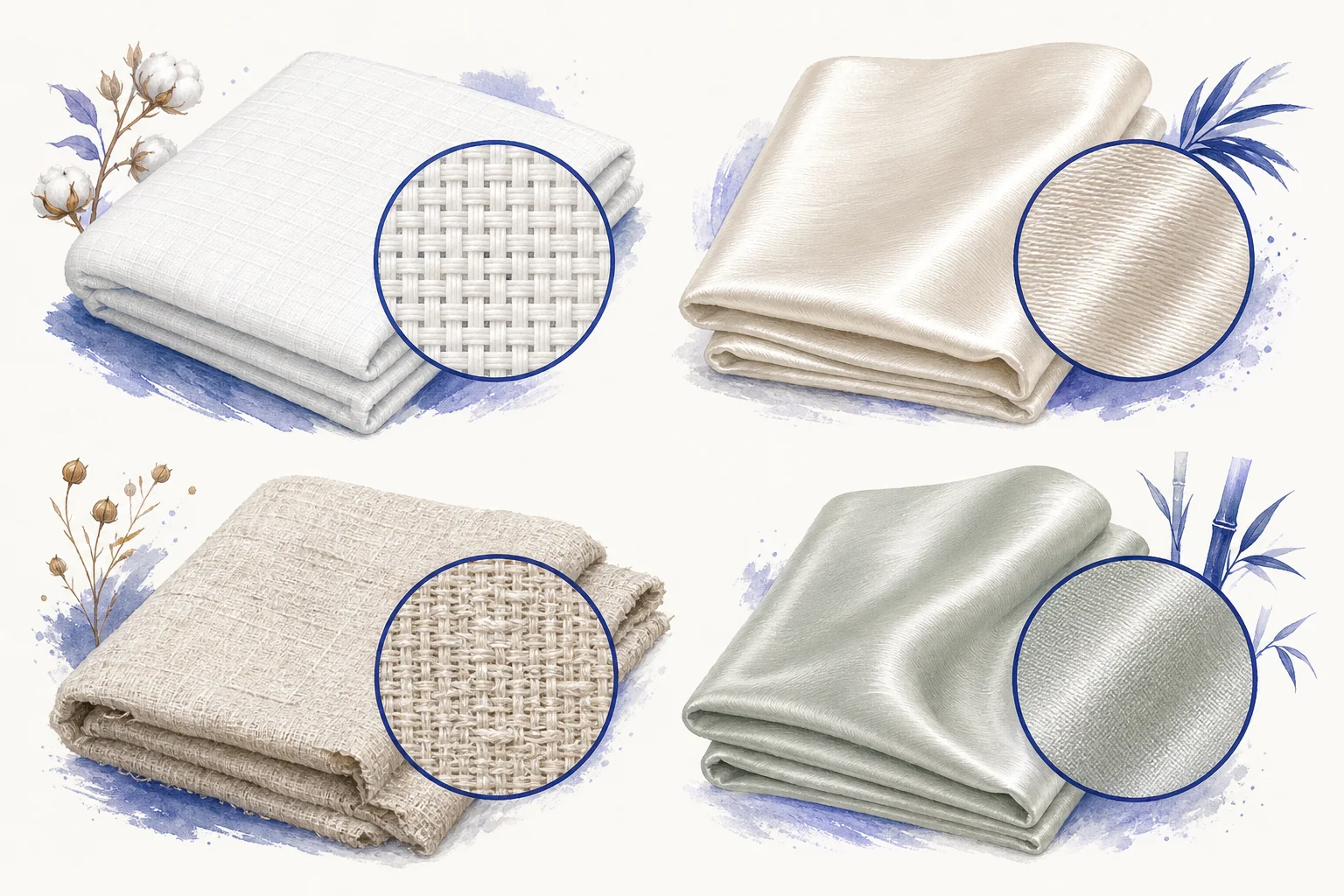
Cotton percale feels crisper and matte, while cotton sateen feels smoother and more lustrous. Bamboo-derived rayon is commonly woven for a fluid, silky hand.
Compare fabric weight, weave, surface finish and shrinkage guidance. A dense cotton sateen may feel smoother than a lightly woven bamboo blend, so category stereotypes are unreliable.
Neither fiber guarantees a cooler duvet system
Both fabrics can absorb moisture, but bedroom humidity, weave openness, finishes and the insert dominate the system. A light cover cannot neutralize an overly warm winter insert.
Choose insert warmth first, then use the cover for contact feel and laundering. Cooling claims need defined evidence rather than plant imagery.
Care determines long-term value
Follow the sewn-in label for water temperature, detergent and drying. Rayon constructions can lose strength or distort under harsh wet handling; cotton can shrink or wrinkle when care exceeds the product guidance.
Wash the removable cover separately from the bulky insert and repair weak ties or closures before laundering.
Audit organic and sustainability claims by scope
Bamboo grows as a plant, but that does not certify the chemicals, energy, wastewater, dyes or finished fabric. Organic language needs a named standard that actually covers the claimed stage.
For cotton, organic agricultural fiber and a certified finished textile are also different scopes. Read certificate numbers and product coverage instead of relying on green branding.
Use a six-line comparison
Record exact fiber percentages, weave, fabric weight, closure, internal ties and care. Then compare measured dimensions with the insert.
The best duvet-cover material guide owns the broader shortlist; this page owns only the bamboo-derived-versus-cotton fiber decision.
Frequently asked questions
Is bamboo or cotton better for a duvet cover?
Cotton offers broader weave and care choices; bamboo-derived rayon often feels smoother and more fluid. Construction, label transparency and care decide the better product.
Source: FTC bamboo textile guidance, CottonWorks home textile guide, Sleep Foundation bamboo vs cotton
Is bamboo bedding better than cotton?
Not categorically. Most bamboo bedding is regenerated rayon or viscose, while cotton is a natural fiber; each varies by weave, finish and manufacturing quality.
Source: FTC bamboo textile guidance, CottonWorks home textile guide, Sleep Foundation bamboo vs cotton
What is the healthiest material for a duvet cover?
No generic fiber proves health outcomes. Check complete fiber and finish disclosure, relevant certifications, care and any personal medical sensitivities with a qualified professional.
Source: FTC bamboo textile guidance, CottonWorks home textile guide, Sleep Foundation bamboo vs cotton
Is bamboo bedding really made from bamboo?
Its cellulose may originate in bamboo, but most soft products are rayon or viscose made from bamboo. FTC guidance requires that regenerated fiber identity to be disclosed.
Source: FTC bamboo textile guidance, CottonWorks home textile guide, Sleep Foundation bamboo vs cotton
Sources and editorial method
We checked definitions and practical distinctions against the sources below. Product recommendations live in separate buying guides with their own criteria and disclosures.
The bottom line
Compare the finished textile, not two plants. Cotton offers wider weave choice; bamboo-derived rayon offers a characteristically fluid hand, but exact fiber wording, care and claim scope matter more than the headline.