In one sentence
Choose a light cotton percale or well-specified linen cover as a practical cool starting point; lyocell can provide smooth moisture handling. Verify the legal fiber label, fabric weight if published, exact fit and care. Pair it with a genuinely lightweight insert.
Cooling-cover claims translated
| Label or fabric | Useful signal | Important limit |
|---|---|---|
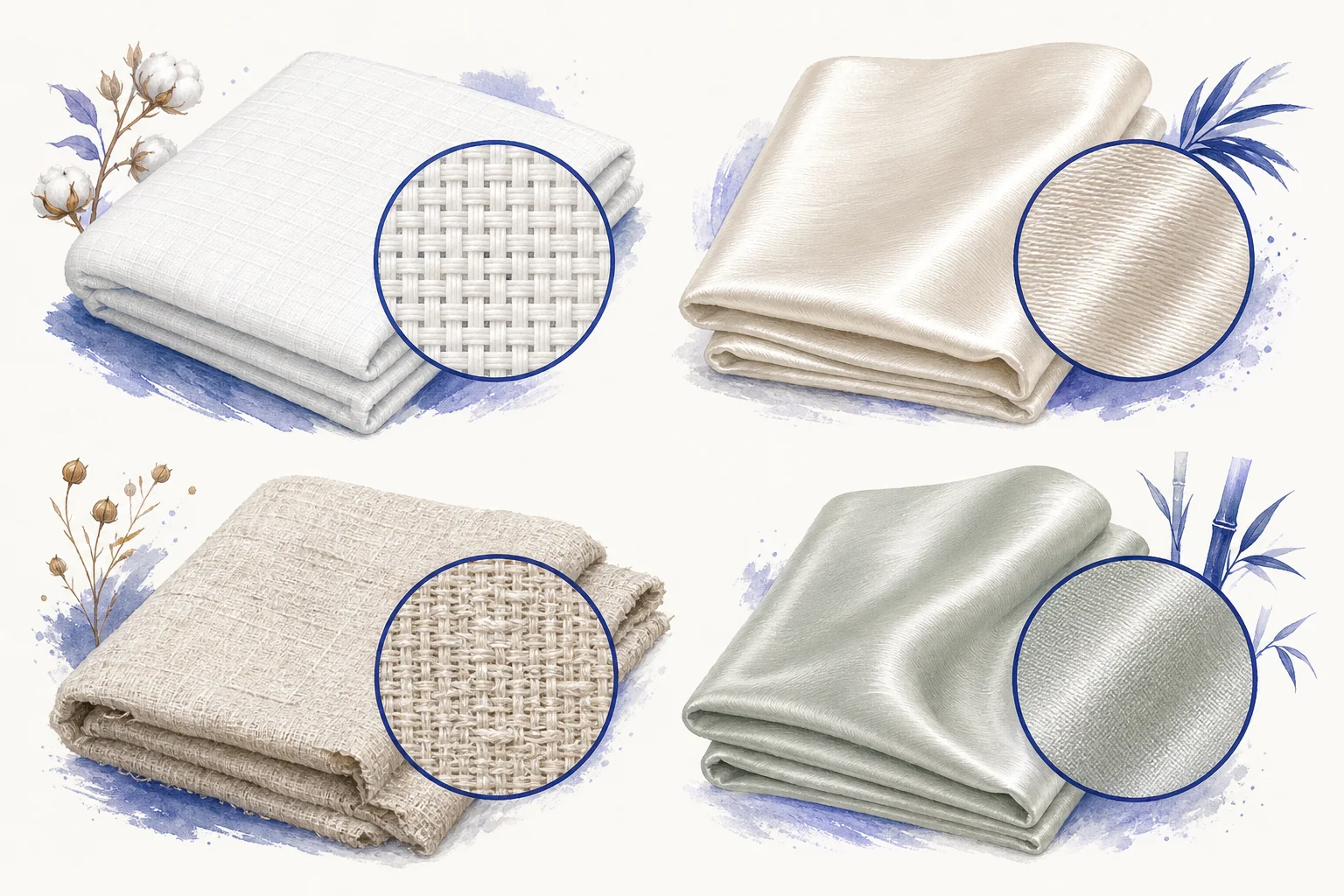
| Cotton percale | Crisp open-feeling weave | Cotton quality and weight still vary |
| Linen | Airy texture and moisture absorption | Can feel coarse and wrinkle visibly |
| Lyocell | Smooth hand and moisture management | Verify lyocell rather than plant-source shorthand |
| Rayon/viscose from bamboo | Fluid smooth feel | Plant headline does not describe the process |
| Cooling finish | May create an initial cool touch | Ask for mechanism, durability and wash evidence |
Set the right expectation
Useful for a warm contact layer
The cover can reduce clammy feel and improve washability when paired with a light insert.
Not a treatment for night sweats
Persistent or unexplained sweating can have medical causes; bedding cannot diagnose or treat them.
How we assess the category
We compare published fiber, weave, fabric weight, dimensions, closure, ties, care and substantiation for special finishes. We do not claim temperature-lab results.
The live DFS SERP is dominated by product collections and cooling claims. Our approach separates contact fabric from the insert and room so readers can identify the actual heat source.
Start with the whole sleep system
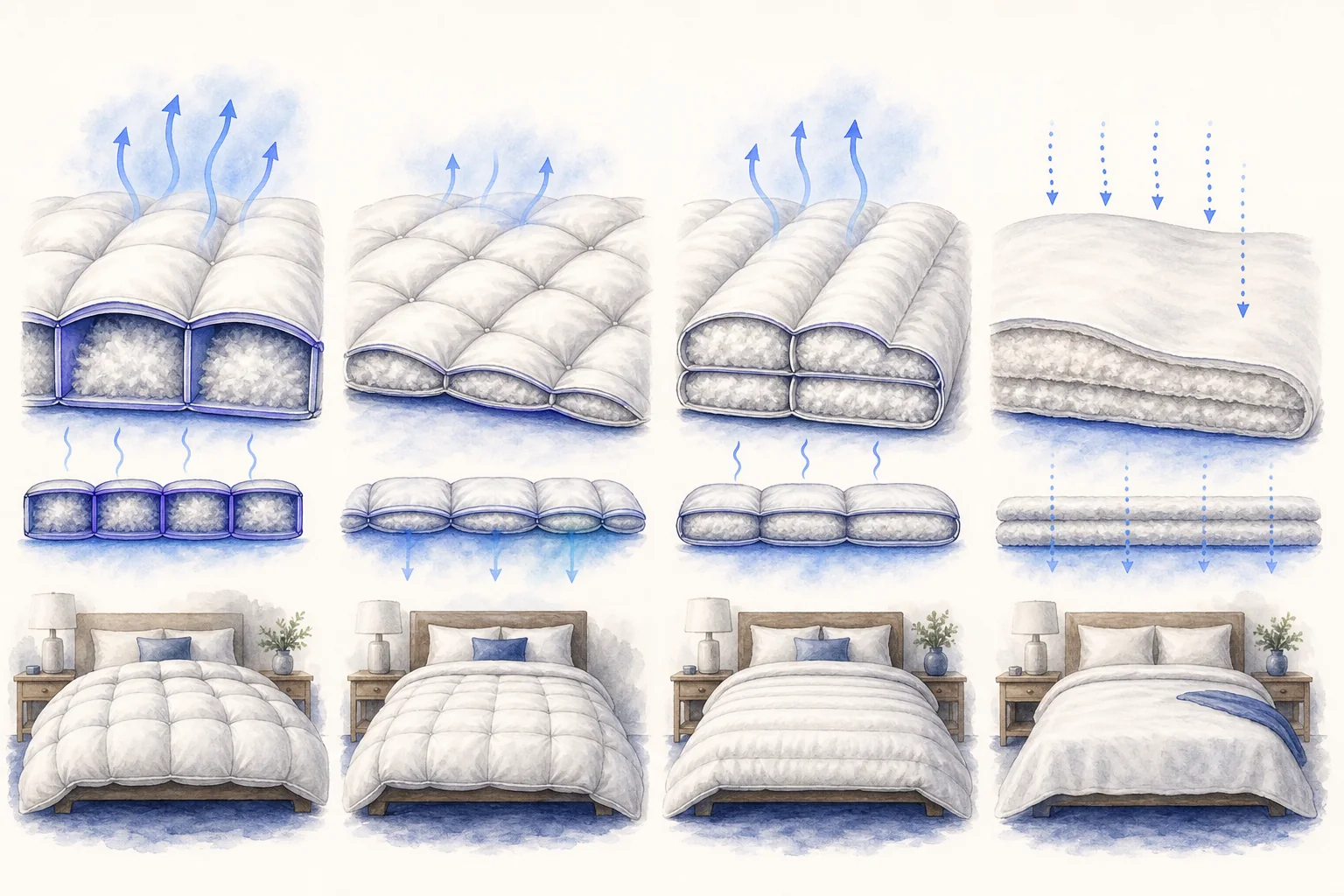
A thin cover around a winter-weight insert remains warm. Check insert fill and weight, mattress airflow, protector, sleepwear, humidity and room temperature before attributing everything to the cover.
Use the lightest complete system that stays comfortable rather than stacking multiple products marketed as cooling.
Weave and weight can matter more than fiber headlines
Percale generally feels crisper and less drapey than sateen. Linen has textured openness; lyocell tends to feel smoother. None is guaranteed cool without a real fabric specification.
Thread count alone does not measure airflow, and exceptionally high counts can reflect multi-ply counting or dense construction.
Interrogate cooling technology
Ask whether a claim refers to initial touch, moisture spreading, evaporation or measured heat transfer. Request the test method, comparison material and performance after laundering.
Do not infer that bamboo or eucalyptus remains as an intact fiber. Read the legal rayon, viscose or lyocell designation and the exact percentage.
Keep fit and care practical
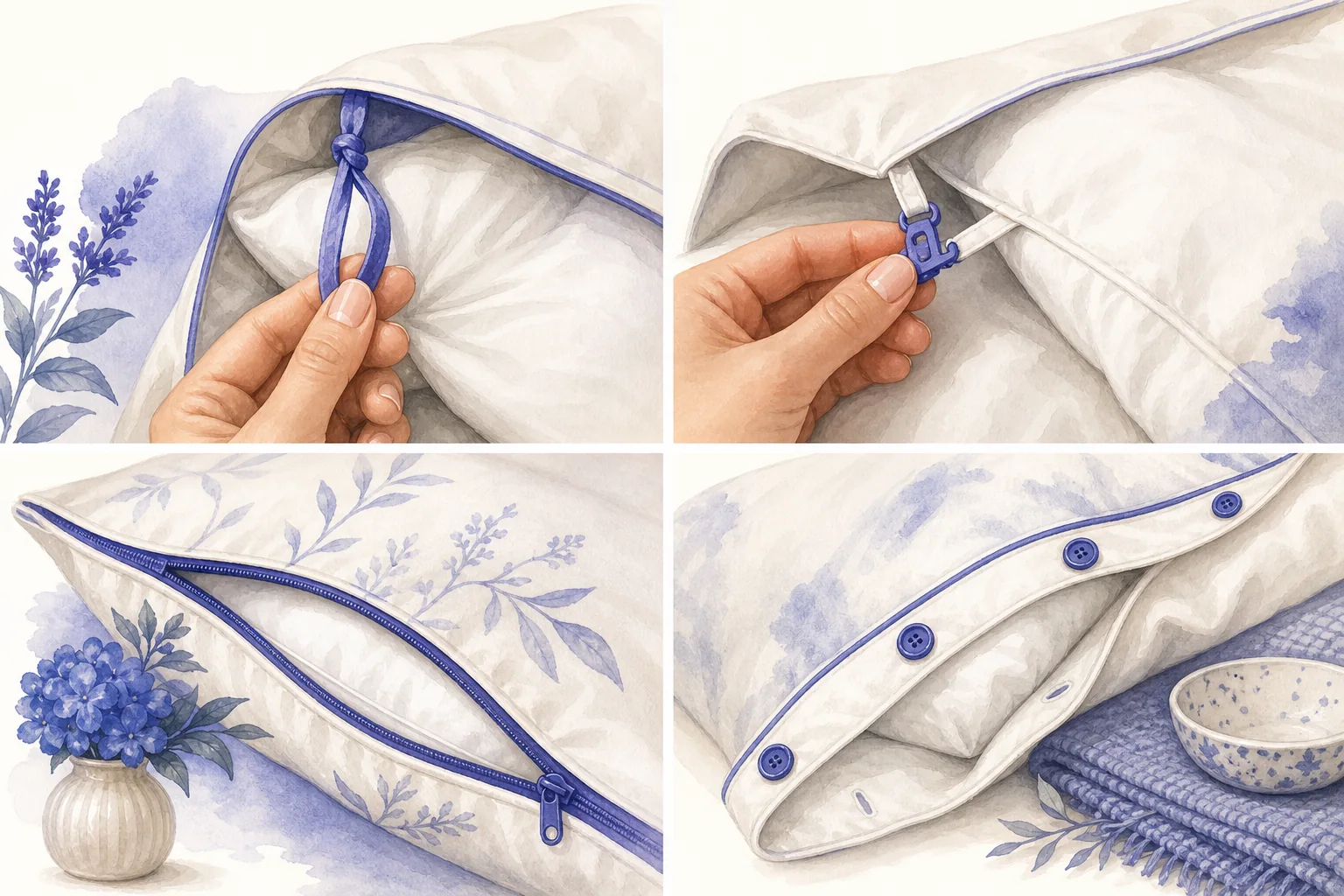
A cover that bunches creates local layers. Match dimensions, use compatible ties and avoid compressing the insert in an undersized shell.
Choose a fabric you can wash often enough for your exposure and follow the delivered label. High drying heat may damage some fibers, finishes or zipper components.
Use a claim-resistant shortlist
Record fiber percentages, weave, fabric weight, finish evidence, dimensions, closure, anchors and care. A cooling word without these facts is not a specification.
The retailer search is for discovery only; current results may mix covers and inserts, so confirm the selected product is a cover.
Frequently asked questions
What is the coolest material for a duvet cover?
There is no universal winner. Lightweight cotton percale and linen are strong airy starting points; lyocell can feel smooth and manage moisture. Finished fabric weight, weave and room conditions still matter.
Source: CottonWorks home textiles, FTC textile labeling guide, Sleep Foundation duvet-cover guide
Do cooling duvet covers really work?
A well-chosen cover can improve contact feel and moisture handling, but cannot cancel a heavy insert or warm room. Special finishes need method and wash-durability evidence.
Source: CottonWorks home textiles, FTC textile labeling guide, Sleep Foundation duvet-cover guide
Is bamboo cooler than cotton?
Most bamboo-marketed covers are rayon or viscose made from bamboo. Compare the finished regenerated fiber with the specific cotton weave instead of comparing plant names.
Source: CottonWorks home textiles, FTC textile labeling guide, Sleep Foundation duvet-cover guide
Should hot sleepers use a duvet cover?
A removable lightweight cover can be practical and washable, provided the insert is also suited to the room. Do not add a thick cover solely for protection.
Source: CottonWorks home textiles, FTC textile labeling guide, Sleep Foundation duvet-cover guide
Sources and editorial method
We checked definitions and practical distinctions against the sources below. Product recommendations live in separate buying guides with their own criteria and disclosures.
The bottom line
Cooling starts with a lightweight system. Use the cover to optimize contact feel and moisture handling, not to disguise an overly warm insert or unsupported technology claim.