
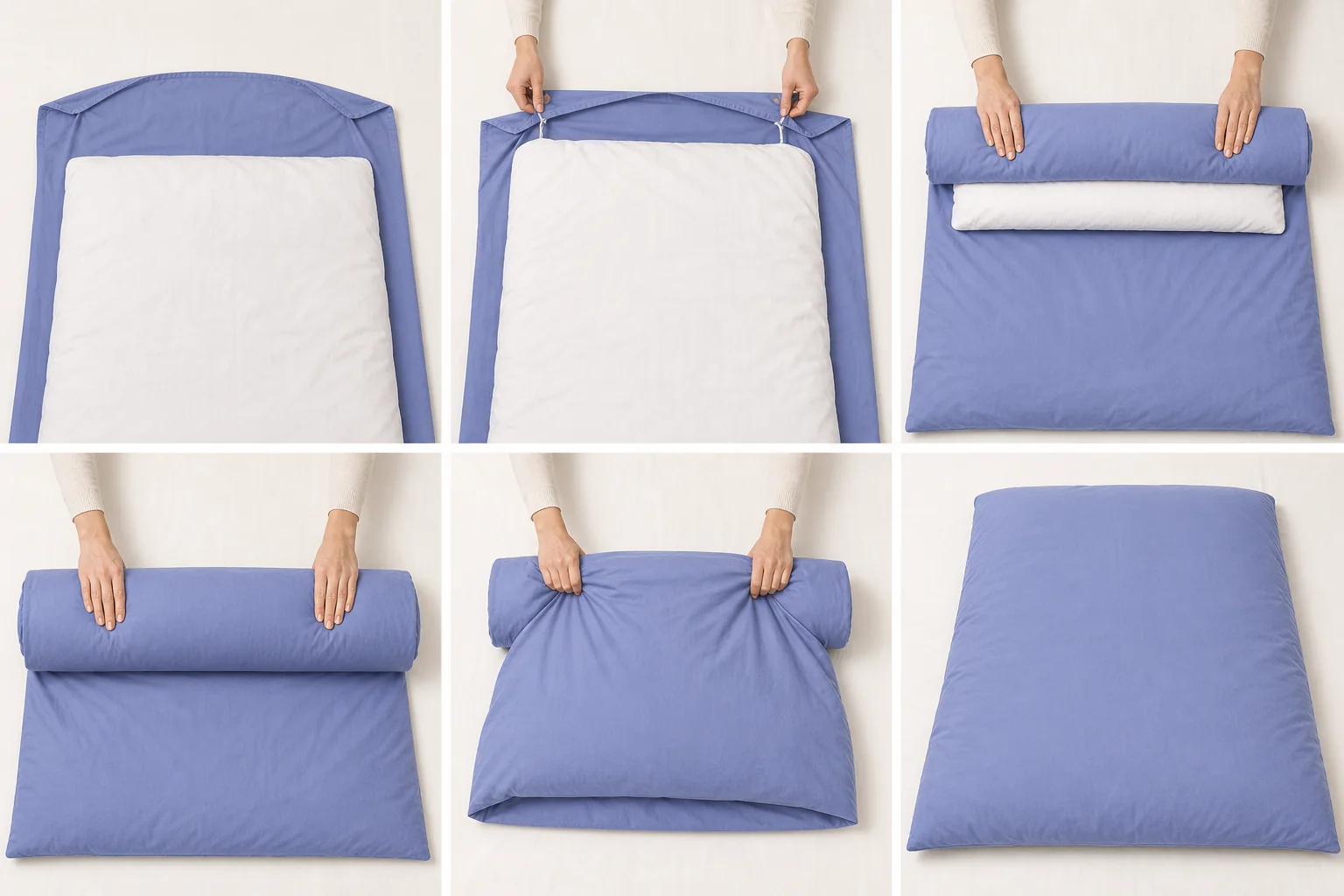
In one sentence
Choose a conventional foot zipper for a clean quick closure, or a two-/three-sided opening if easy insertion is the priority. Verify track length, slider protection, seam reinforcement, replacement policy, internal anchors, exact dimensions, fiber label and care.
Zipper systems compared
| Opening | Best for | Trade-off to inspect |
|---|---|---|
| Foot-edge zipper | Fast conventional closure | Opening width and protected slider |
| Two-sided opening | More access with less hardware than three sides | Corner stress and track length |
| Three-sided zipper | Peeling the cover open around the insert | More zipper to wash, protect and repair |
| Hidden zipper | Clean appearance and less skin contact | Whether the flap catches in the slider |
Who should—and should not—choose one
Useful for limited hand reach
A longer opening can reduce lifting and wrestling, but it is not a medical accessibility guarantee.
Skip a long zipper when…
You prefer individually replaceable buttons, dislike hardware or cannot obtain repair/replacement information.
What this guide evaluates
We compare published opening geometry, zipper protection, reinforcement, inner anchors, fiber, dimensions, care and returns. We do not claim repeated-cycle zipper testing.
DFS shows transactional intent dominated by specialist zipper systems, retailer categories and discussions. This page owns the buying task; our buttons-versus-zipper page owns the general closure decision.
Longer access is useful only when the track is durable
Inspect whether the opening spans only the foot or continues around sides. A longer track lets the insert lie flatter during fitting but adds failure length and hardware inside the wash.
Look for reinforced ends, a covered slider and clear instructions. Never force a zipper around trapped fabric or an overfilled cover.
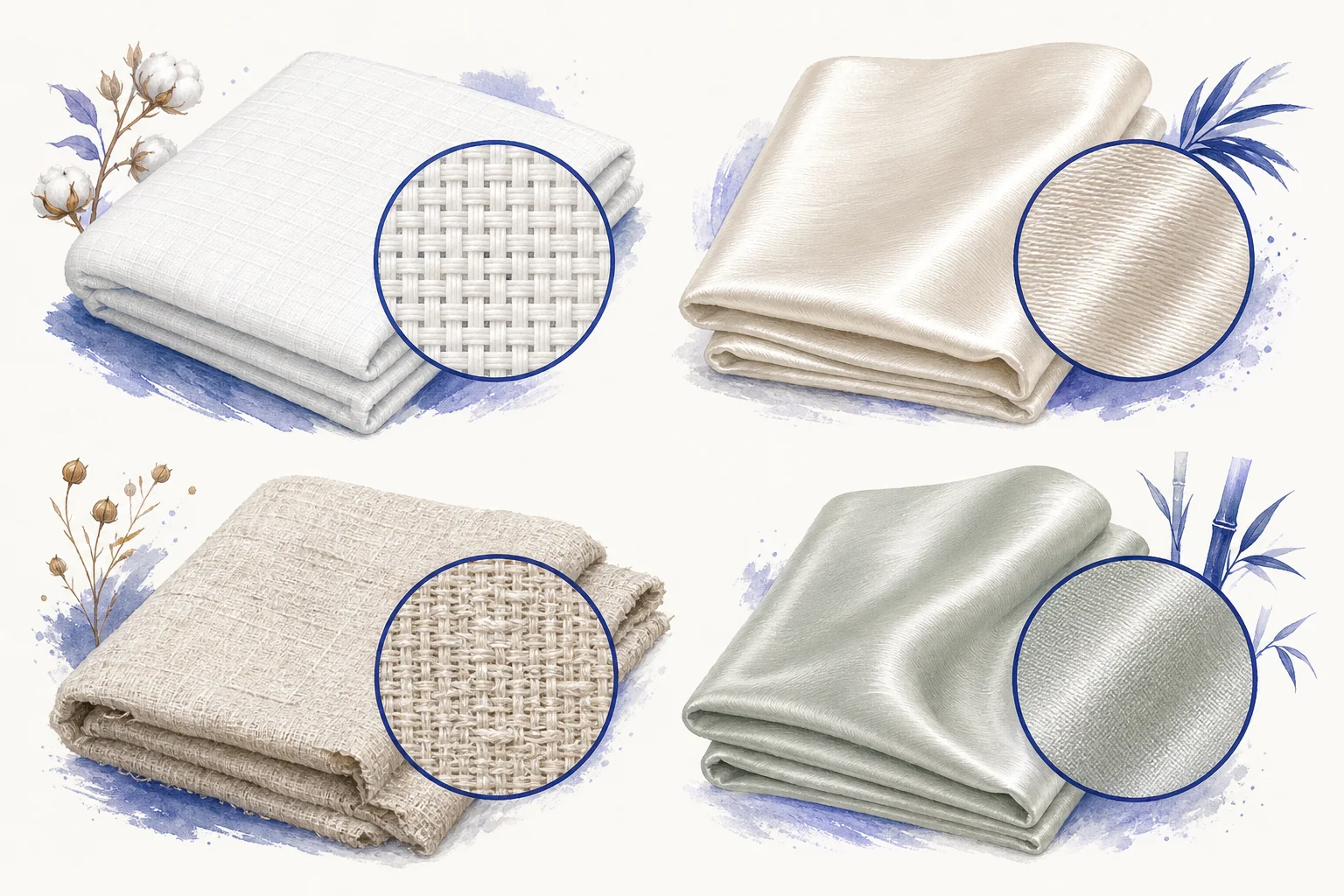
Fit and anchors still control movement
The zipper closes the opening; it does not secure the top corners. Match actual insert and cover dimensions and connect compatible ties to loops before closing.
A three-sided opening cannot compensate for an undersized cover that compresses loft or an oversized one that leaves empty fabric.
Buy the textile, not just the mechanism
Compare exact fiber percentages and weave because the cover touches skin and controls laundering. Cotton percale, sateen, linen and microfiber differ more in feel and drying than the word zipper suggests.
Check whether the zipper tape or decorative piping changes care limits for the complete item.
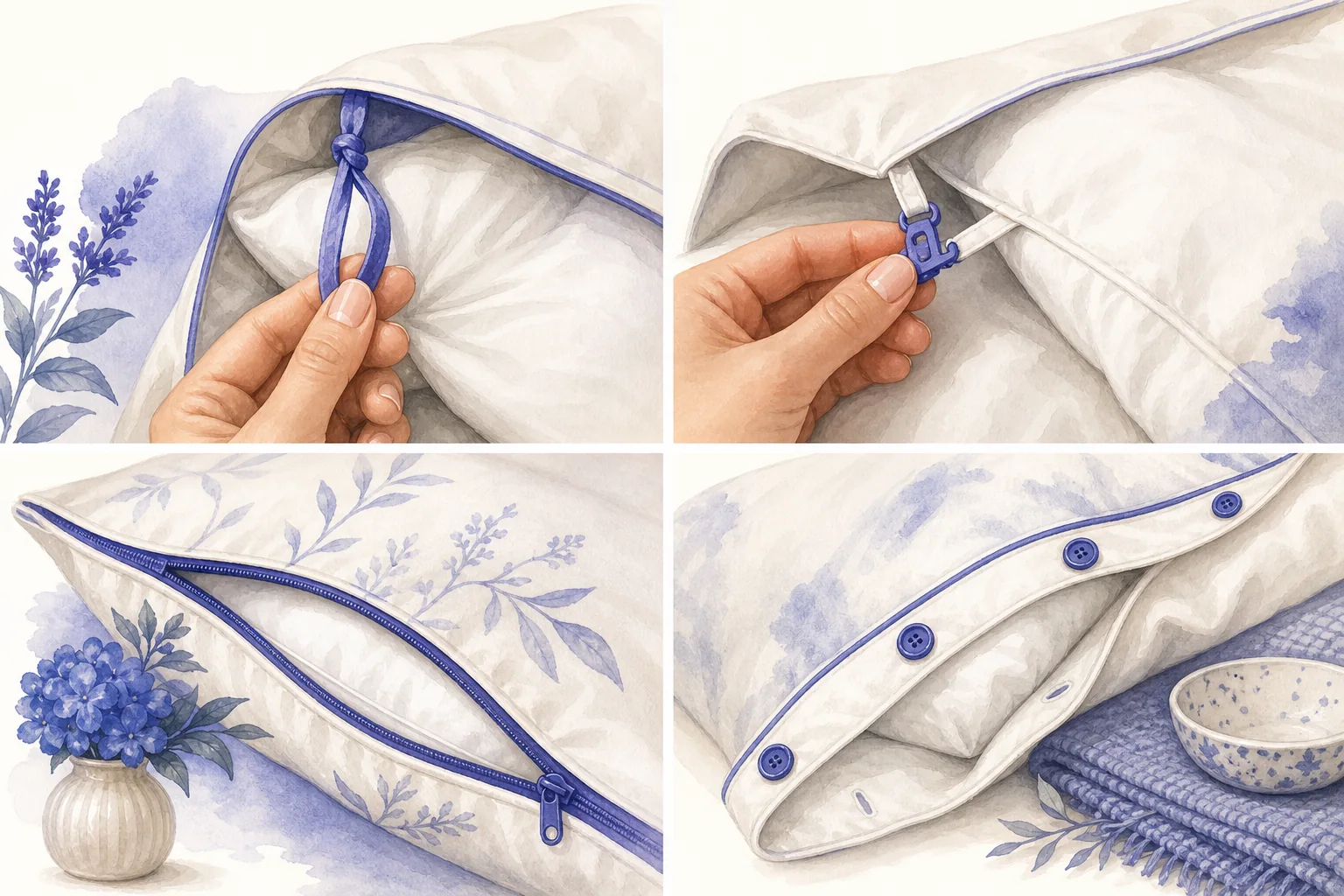
Plan for wear before it happens
Ask whether the slider or complete track is replaceable and whether warranty language covers closure failure. A locally repairable button can be simpler than a proprietary long zipper.
Close the zipper before washing when the maker instructs it, protect the slider and follow the complete cover's label.
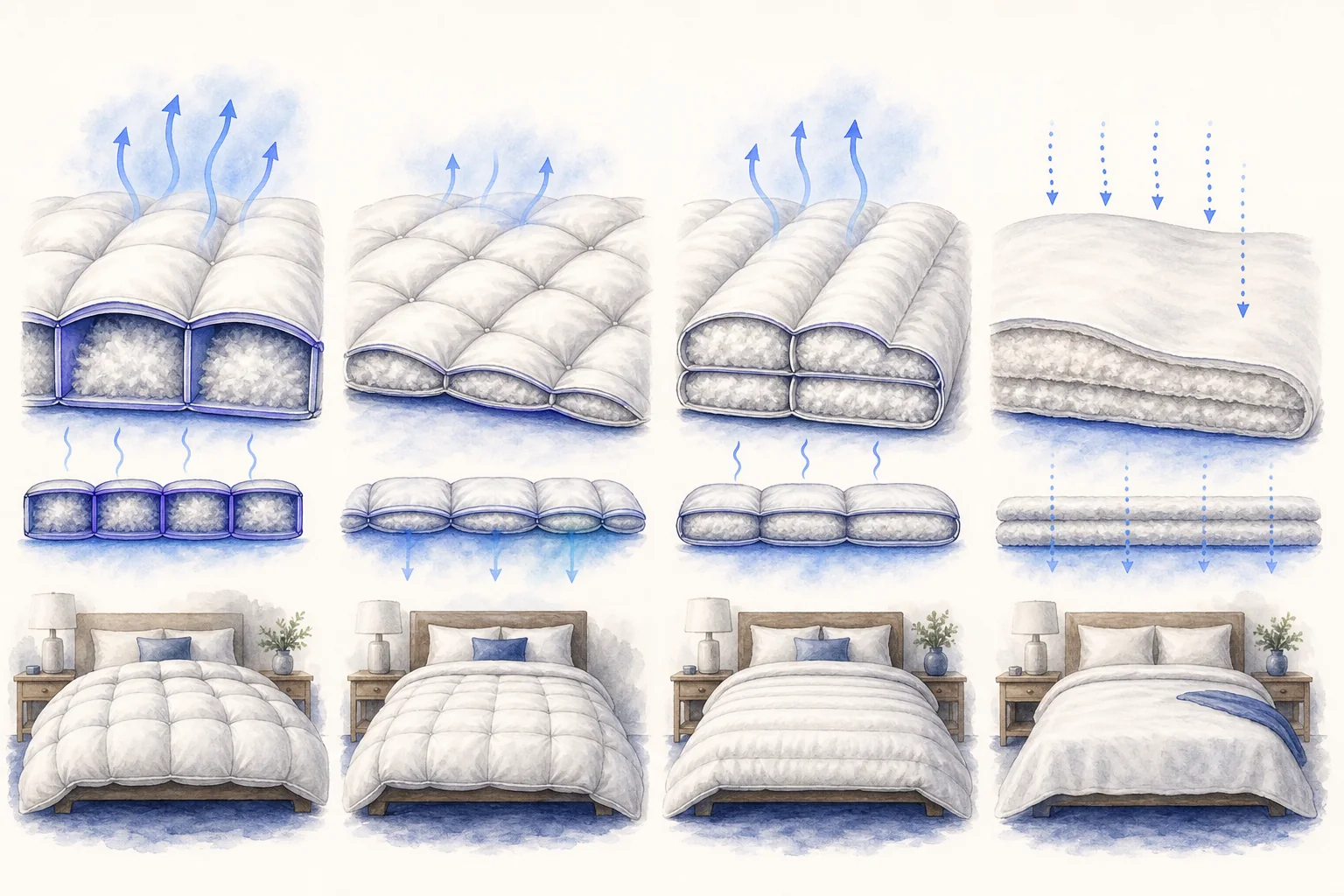
Shortlist by eight facts
Record opening sides, track length, slider cover, reinforcement, ties, exact dimensions, fiber/weave and care. Price comes after those facts.
The retailer search below may show conventional and multi-sided products. Verify which system the selected variant actually uses.
Frequently asked questions
Are zipper duvet covers better?
They are faster to close for many users, while buttons are easier to replace individually. Construction, fit and repairability decide whether a particular zipper cover is better.
Source: Crane & Canopy Nova cover, The Company Store duvet fitting guide, FTC household textile labeling guide
Is a three-sided zipper duvet cover easier to use?
It exposes more of the insert and can reduce lifting, but it adds a longer track that needs reinforcement, protection and compatible care.
Source: Crane & Canopy Nova cover, The Company Store duvet fitting guide, FTC household textile labeling guide
Can a duvet zipper damage the insert?
A protected slider used without trapped fabric should not, but exposed hardware, forcing or a tight mismatch can abrade or catch the insert shell.
Source: Crane & Canopy Nova cover, The Company Store duvet fitting guide, FTC household textile labeling guide
Do zipper covers still need ties?
Yes, if movement control is important. The zipper closes the access opening; internal ties or snaps connect to insert loops at separate points.
Source: Crane & Canopy Nova cover, The Company Store duvet fitting guide, FTC household textile labeling guide
Sources and editorial method
We checked definitions and practical distinctions against the sources below. Product recommendations live in separate buying guides with their own criteria and disclosures.
The bottom line
Choose zipper geometry for the fitting problem, then judge reinforcement, protection, anchors, textile and care. Fast closure is useful; unrepairable hardware is not.