
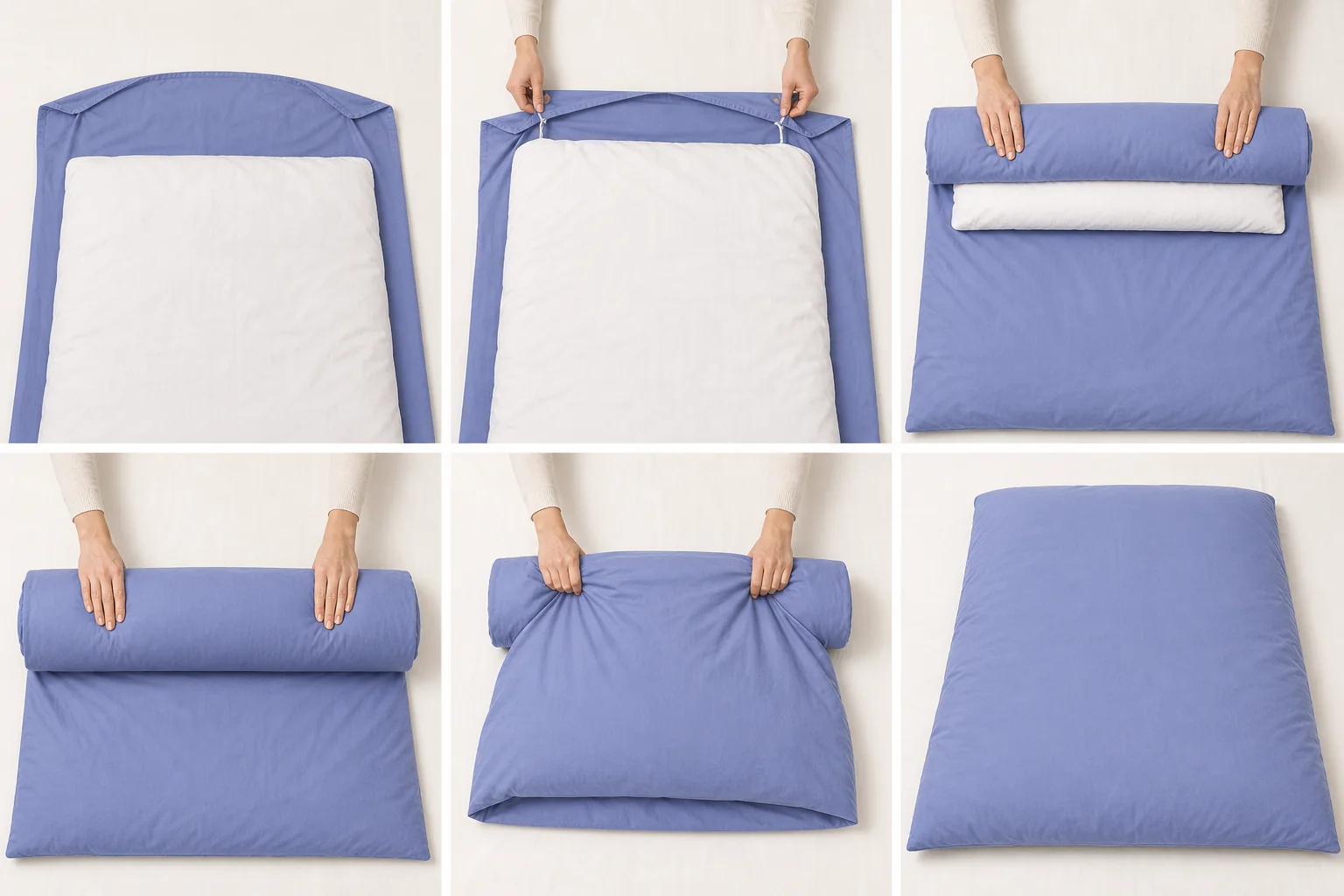
In one sentence
Use sewn cover ties and reinforced insert loops when available. If you choose clips, select padded purpose-made hardware, follow its instructions, place it away from face and body pressure, inspect it often and stop if it opens seams or creates a hard lump. Keep detachable parts and strong magnets away from children and pets.
Attachment options compared
| System | Advantage | Main caution |
|---|---|---|
| Sewn tie + reinforced loop | Soft, washable and purpose-built | Requires compatible points |
| Padded locking clip | No sewing and removable | Pressure can mark or tear fabric |
| Magnetic fastener | Quick attachment | Loose high-powered magnets can be hazardous |
| Sharp pin or safety pin | Common improvisation | Can puncture shell, release fill or open in use |
Who clips may—and may not—help
Temporary option for missing anchors
Use only after confirming cover and insert dimensions are compatible and the product is intended for bedding.
Avoid around vulnerable users
Loose parts, magnets and hard lumps require extra caution around children, pets and anyone who cannot detect or remove them.
How we evaluate clips
We compare mechanism, padding, locking method, part size, published instructions, care compatibility and the pressure placed on shell fabric. We do not claim long-cycle fabric testing.
DFS shows transactional intent plus real PAA questions about whether clips work. This page owns clip selection and safety; the shifting guide owns the broader diagnosis.
Measure before fastening
Clips cannot remove several inches of empty cover fabric or create missing insert width. Measure both layers and align all four edges before deciding that extra attachment is necessary.
If fill has migrated inside damaged chambers, holding the outer corners will not redistribute the internal material.
Prefer broad, padded contact
A purpose-made padded clamp spreads force better than a narrow jaw. Locking designs should resist accidental opening without requiring force that crushes the shell.
Do not assume a magnetic product is safer because it lacks teeth. Detached high-powered magnets can cause severe injury if swallowed and should be kept away from children.
Keep hardware out of pressure zones
Follow the product instructions. Corner or edge placement generally keeps a fastener away from the center of the body, but every bed and sleeper differs.
Use the minimum number needed, keep pieces fully enclosed by the cover where intended and count them during every cover change.
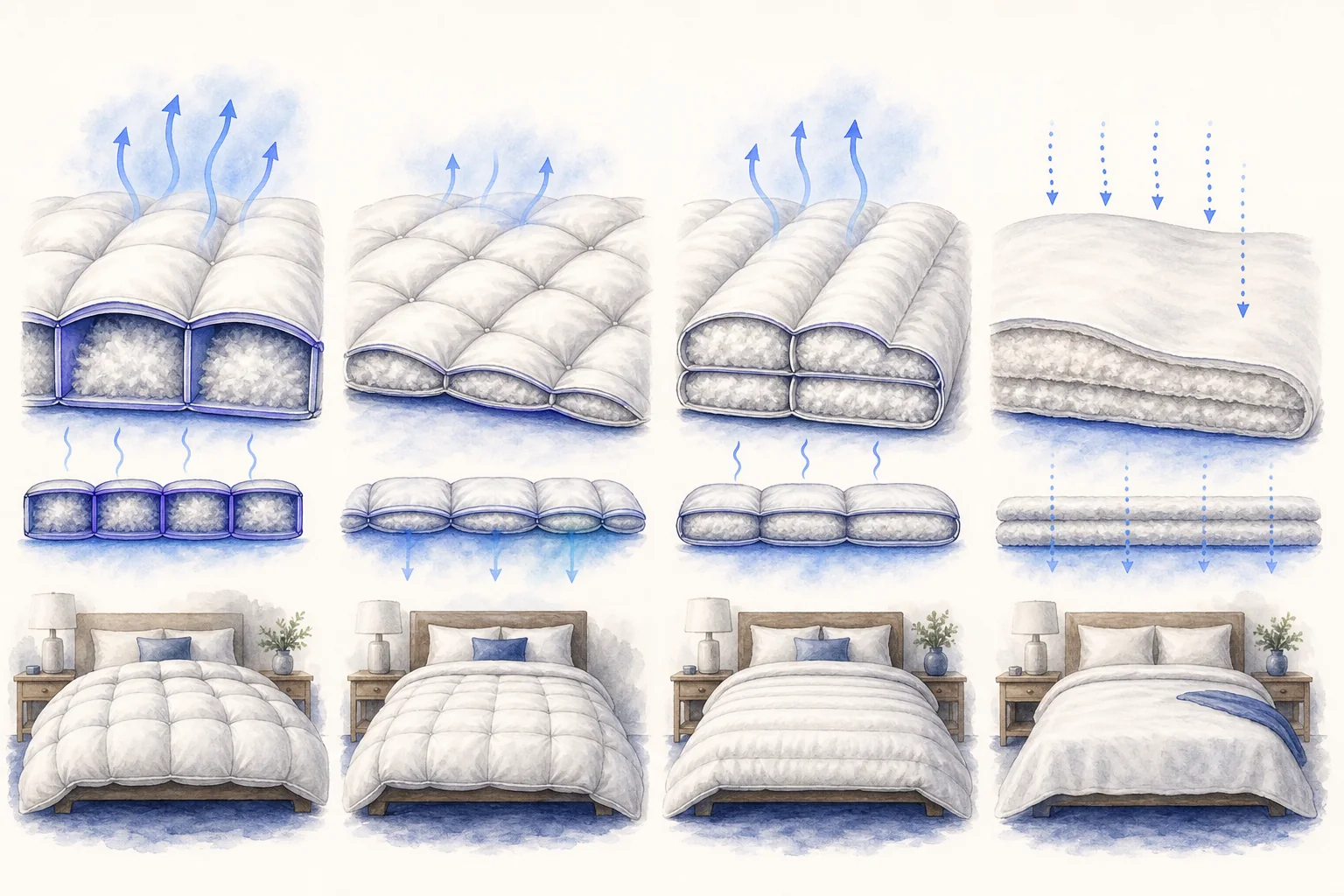
Inspect seams and parts routinely
Remove clips before washing unless the maker explicitly permits laundering in place. Check for cracks, weak locks, exposed edges, fabric thinning and escaping fill.
Stop using a fastener after any failure or if it creates discomfort. Repair a torn insert before reattaching it.
A sewn repair is often the durable fix
A professional or careful sewist can add soft fabric loops to structurally sound seams and matching ties to a cover. Do not stitch through fill chambers blindly.
A correctly sized cover plus four to eight soft attachment points is normally more predictable than multiple hard accessories.
Frequently asked questions
Do duvet clips work?
They can reduce relative movement at attachment points, but cannot correct major size mismatch, damaged chambers or uneven internal fill.
Source: CPSC magnet safety warning, The Company Store duvet fitting guide, Sleep Foundation duvet-cover guide
What are the best duvet clips?
Choose a purpose-made, padded, securely locking design with clear instructions and parts too large to become unnoticed hazards. There is no universal tested winner in this guide.
Source: CPSC magnet safety warning, The Company Store duvet fitting guide, Sleep Foundation duvet-cover guide
Can duvet clips damage a comforter?
Yes. Narrow or overtight hardware can abrade, puncture or concentrate stress on the shell. Inspect often and stop at the first sign of damage.
Source: CPSC magnet safety warning, The Company Store duvet fitting guide, Sleep Foundation duvet-cover guide
Are magnetic duvet clips safe?
Detached high-powered magnets are a serious ingestion hazard. Follow CPSC guidance, keep them away from children and pets and discontinue any product that can open or shed parts.
Source: CPSC magnet safety warning, The Company Store duvet fitting guide, Sleep Foundation duvet-cover guide
Sources and editorial method
We checked definitions and practical distinctions against the sources below. Product recommendations live in separate buying guides with their own criteria and disclosures.
The bottom line
Clips are a secondary attachment—not a fit repair. Prefer soft matched ties and loops; if clips are necessary, minimize pressure, control every part and inspect the fabric.