
Bedding basics
Can You Use a Duvet Cover Without an Insert?
Yes, an empty duvet cover can work as a very light summer layer—but it behaves more like two sheets sewn together than a duvet or comforter.
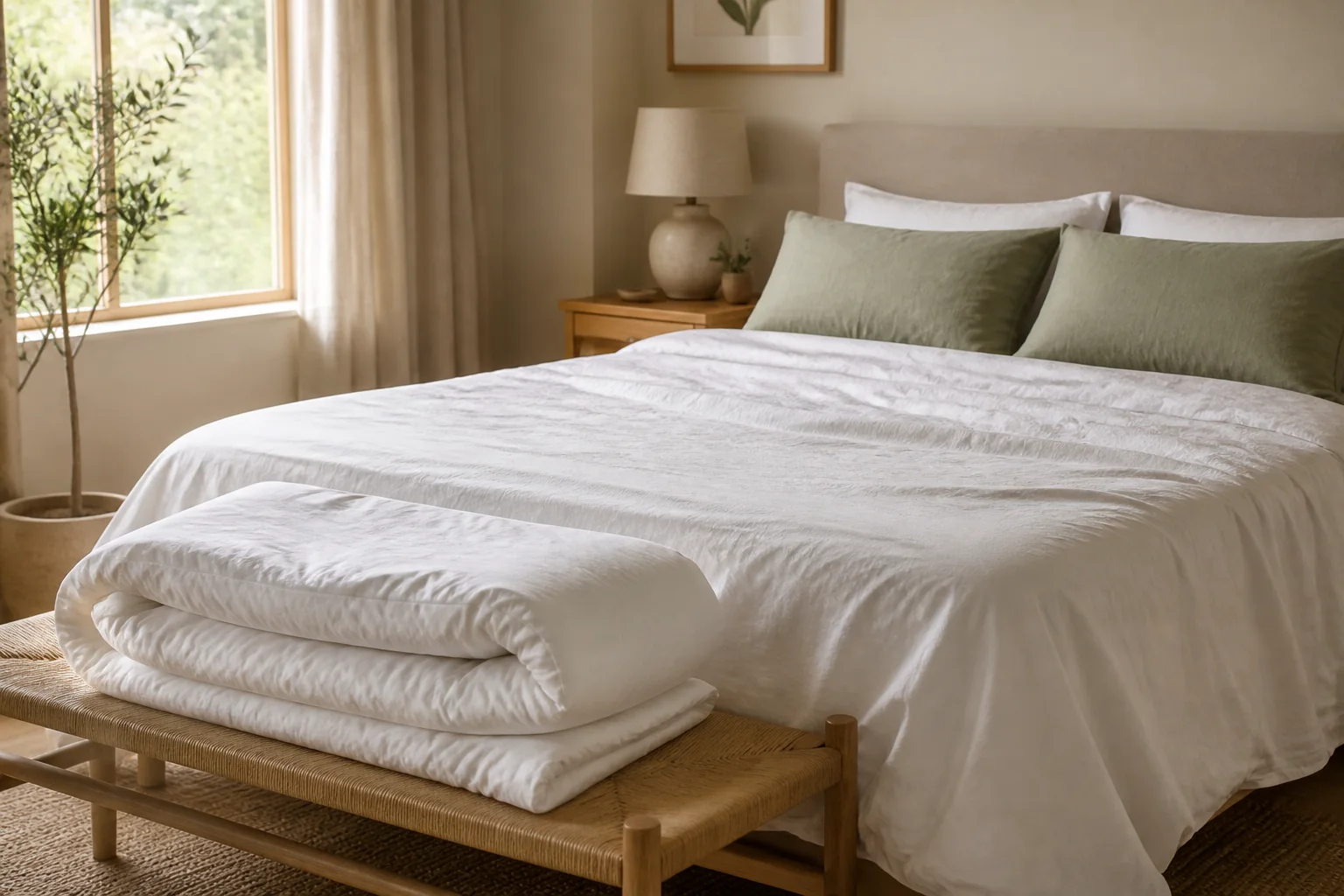
Disclosure: The Duvet Advisor is reader-supported. When you buy through links on our site we may earn an affiliate commission, at no extra cost to you. We only recommend products after comparing published expert research, verified specifications and clearly cited sources. How this works.
Quick take
You can sleep under an empty duvet cover when you want minimal weight and little insulation. It will not feel lofty or warm like a filled duvet, and the two fabric panels may twist or bunch. Use it alone for a hot room, add a thin blanket inside for modest warmth, or use the correctly sized insert when you need insulation and an evenly filled appearance.
1. The short answer: yes, but it is not a duvet
A duvet cover is a removable fabric shell designed to surround a duvet insert. IKEA describes it as a protective cover for the insert and notes that inserts are sold separately. With nothing inside, the cover remains usable fabric, but it no longer has the filled layer that supplies loft and most of the warmth.
Think of an empty cover as two sheet-like panels joined at the edges. That can be useful in a warm bedroom where even a light insert feels excessive. It is not a substitute for a winter duvet, and product photos showing a plump bed should not be treated as evidence that the cover alone will look or feel that way.
A concrete example: in a 76°F room, a cotton cover alone may be enough for someone who wants skin coverage without much insulation. In a 64°F room, the same person may need a blanket or insert. Those temperatures are examples for comparing scenarios, not universal comfort thresholds.
Related: What is a duvet?
2. When an empty duvet cover works well
The strongest use case is a hot night when you still want a light layer over your body. A breathable cotton, linen or similarly light cover can provide coverage without trapping the amount of still air held by a lofty insert. The finished weave, weight and drape matter more than the fiber name alone.
It can also serve as a temporary layer while the insert is being cleaned or fully dried. Another practical use is travel or a guest room where a washable cover is easier to store than an additional bulky comforter. Always wash a newly purchased cover according to its label before direct body contact.
This approach suits sleepers who like a flat, relaxed bed rather than a plush hotel look. If the goal is visible loft, warmth or a cover that stays evenly tensioned across the mattress, an empty shell is the wrong construction for the job.
Related: Best duvet-cover material
3. How warm is a duvet cover by itself?
Usually, not very warm. IKEA identifies the insert as the fluffy, warm component of a duvet system. The cover contributes fabric weight and changes airflow at the skin, but it lacks the down, feathers, wool, silk or synthetic batting that creates an insulating layer.
Compare three setups on the same bed: an empty cotton cover is the lightest; a thin woven blanket placed inside adds modest weight and insulation; a light-warm insert adds loft and a more stable filled shape. Change one layer at a time so you can tell whether discomfort comes from insulation, fabric feel or room conditions.
Do not assume that linen is always cooler or flannel is always warmer without checking the actual product. Fabric density, brushing, finishing and total weight change how a cover feels. The sewn-in fiber and care labels are more reliable than a broad marketing category, while personal warmth remains room- and sleeper-dependent.
4. Why the empty cover bunches—and how to manage it
An unfilled cover has two loose panels that can slide against each other. Internal corner ties have nothing to hold, so rolling over can pull the upper panel farther than the lower one. The result may feel like a twisted sheet or create a heavy ridge near the closure.
Start by fastening every button, snap or zipper and orienting the closure at the foot. Spread both panels flat before bed rather than shaking the cover like a filled duvet. If it still twists, fold it once lengthwise and use it as a narrower top layer, or switch to a single-layer flat sheet or summer blanket.
Do not attach the empty cover to the mattress or improvise hard clips near the sleeping area. If you place a blanket inside, connect only compatible soft attachment points and make sure the blanket dimensions closely match the cover. A large mismatch recreates the same shifting problem.
Need the complete duvet system?
Compare duvet covers by material, dimensions, closure, internal ties and care before choosing the insert that goes inside.
Compare duvet covers5. Can you put a blanket inside instead?
Yes, when the blanket is washable, undamaged and close to the cover's dimensions. This creates a lightweight layered system, but it does not automatically behave like a purpose-built insert. A knit throw may stretch, a small blanket may collect in the center and a heavy blanket can strain corner ties that were not designed for it.
For example, an 88-by-92-inch cotton blanket inside a roughly similar Full/Queen cover has a better chance of lying evenly than a 60-by-80-inch throw. Compare published measurements rather than relying on Queen or King names, because nominal sizes vary between manufacturers.
Check both care labels before combining them. The safest shared wash setting is the one permitted by both items, and the assembled pair must still fit the machine with enough room to move. Remove the blanket before laundering if the labels, colors or drying requirements differ.
Related: Duvet-cover size chart
6. Better alternatives for common situations
For the lightest possible contact layer, use a flat sheet: it is one panel, so it cannot twist internally. For a little more substance without duvet loft, choose a woven summer blanket or lightweight quilt. For adjustable warmth, use a light insert that matches the cover and add a separate blanket only when the room is colder.
A coverlet is another useful daytime and warm-weather option. It is designed as a finished outer layer rather than an empty container. That distinction matters when you want tidy edges, deliberate texture and no unused closure or internal ties.
Choose based on the job. Empty cover: minimal warmth and easy styling changes. Flat sheet: simplest light layer. Coverlet or quilt: finished appearance with modest body. Duvet insert: loft and insulation. No single option wins every room and season.
Related: Coverlet vs quilt
7. Washing and direct-skin use
When the empty cover touches your body, treat it as the contact layer in your laundry system. Wash it on the schedule appropriate for sheets and direct-use bedding, shortened after heavy sweating, illness, spills or pet contact. Follow the exact cover label for water temperature, bleach, drying and ironing.
The FTC requires fiber-content and care information for covered textile products, but that does not make every cotton cover interchangeable. A printed cotton cover, a linen blend and a zipper-trimmed design can specify different cycles. Read the attached label instead of copying a setting from another cover.
Close zippers and other fasteners as directed, avoid overloading the drum and dry the cover completely before folding or returning it to the bed. Inspect ties and seams after washing; an empty cover used as a blanket puts normal sleep movement directly onto those details.
Related: How often to wash a duvet cover
8. A simple decision rule
Use the cover alone if the room is warm, you want almost no insulation and you accept a flat, potentially wrinkled layer. Put a closely sized light blanket inside if you need a small warmth increase and both care labels are compatible. Use a proper insert if you need loft, stable fill distribution or meaningful insulation.
Try the empty cover for one or two nights before buying anything. Note whether you wake cold, push it away, feel the panels twisting or like the low weight. That real scenario tells you which function is missing: warmth, stability, softness or simply visual fullness.
The limit is important: a duvet cover does not acquire an insert's performance because it is marketed in a styled bedroom photo. Treat the cover as fabric and the insert as insulation, then build only the combination your room and routine require.
What helps
- Very light for warm rooms
- Easy to remove and wash
- Lets you test whether you need an insert at all
Tradeoffs
- Provides little insulation
- Two loose panels can twist or bunch
- Looks flat rather than lofty
People also ask
Can a duvet cover be used alone?
Yes. It works as a very light, low-insulation layer, especially in a warm room. Expect it to lie flat and potentially twist because there is no insert holding the two fabric panels apart.
Can you sleep with only a duvet cover?
Yes, if its fabric, cleanliness and warmth suit you. Wash it as a direct-contact bedding layer and follow the sewn-in care label. Switch to a sheet if the two-panel construction bunches.
Are you supposed to put something inside a duvet cover?
That is its intended design: a duvet insert normally supplies loft and warmth while the removable cover protects it. Using the cover empty is an optional warm-weather adaptation, not the standard filled setup.
What can I use instead of a duvet insert?
For little warmth, use the empty cover or a flat sheet. For modest warmth, use a closely sized washable blanket if its care and attachment needs are compatible. A coverlet or quilt is a more finished standalone layer.
Sources and editorial method
We cross-check health context, textile definitions and practical guidance against authoritative sources. We do not present generated copy or published specifications as hands-on testing.